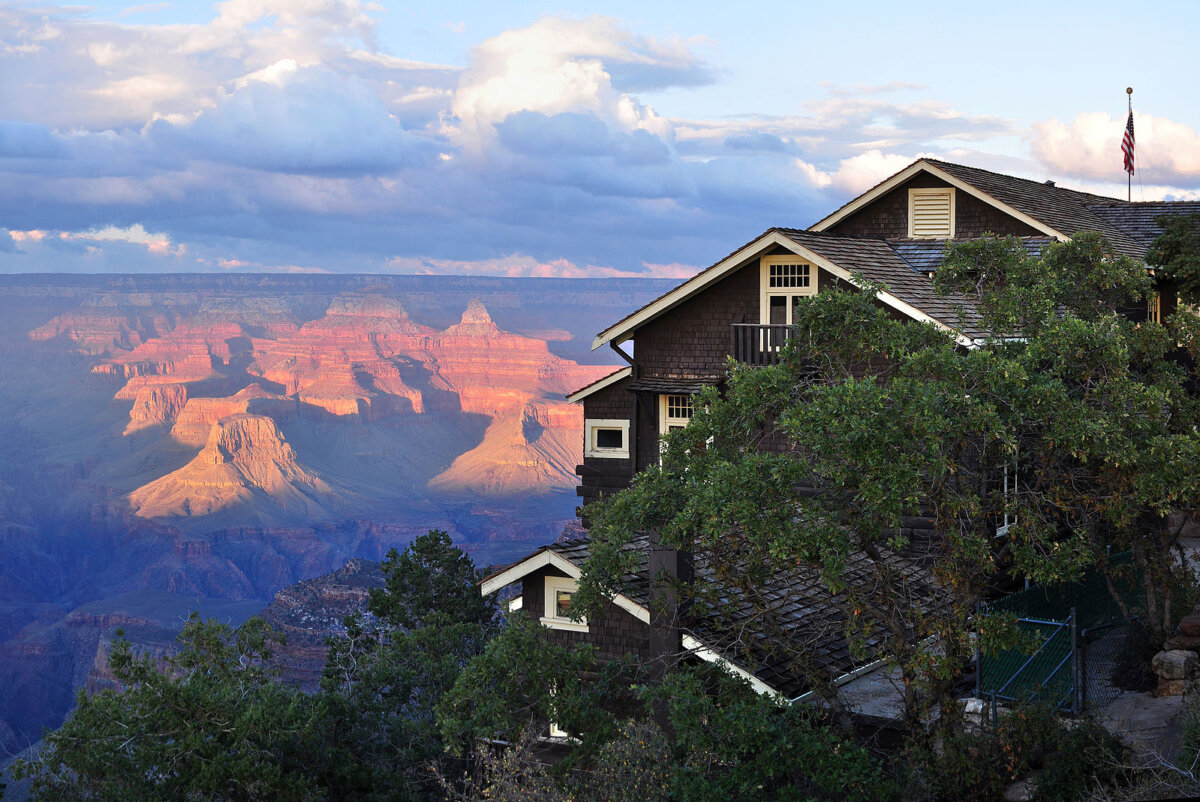
In the first years of the 20th century, when the Grand Canyon was still a remote frontier rather than a global symbol, two brothers from Pennsylvania positioned themselves—quite literally—on the edge of history.
Ellsworth and Emery Kolb arrived at the South Rim not as scientists or government officials, but as photographers with an instinct for timing, spectacle, and the emerging power of images. Their work helped define how Americans came to see the canyon. In doing so, they became early pioneers of commercial photography in one of the nation’s most dramatic landscapes.
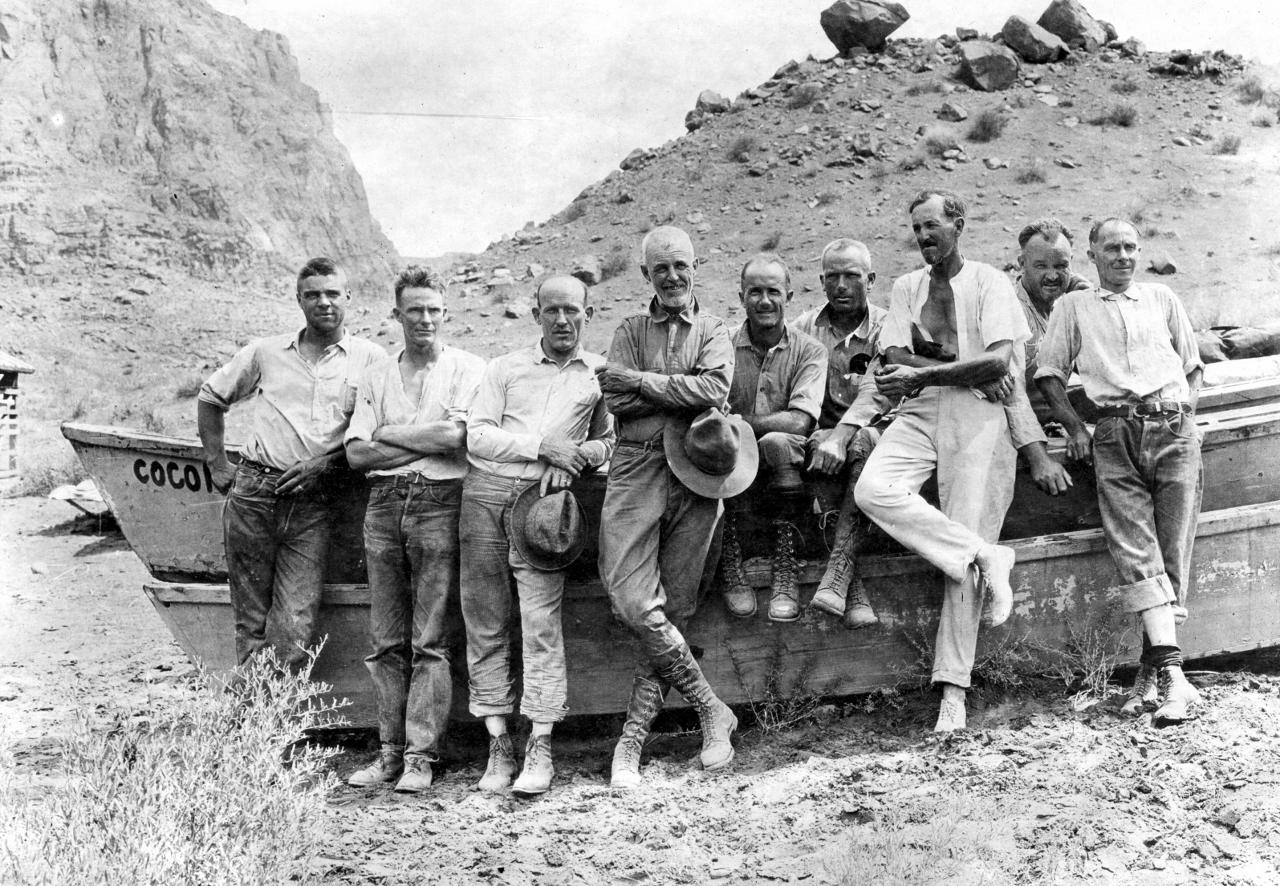 The Grand Canyon survey party poses on Aug. 1, 1923, for a photo at Lees Ferry. Emery Kolb at the far right was head boatman. (Public Domain)
Two Adventurous Brothers
Ellsworth L. Kolb, born in 1876, reached the Grand Canyon in 1901, at a moment when rail access to northern Arizona—strengthened by the Santa Fe Railway and its affiliates—was making the South Rim increasingly reachable to tourists from the East and Midwest. The canyon was still raw, minimally developed, and only beginning to register as a destination rather than an ordeal.
Ellsworth quickly recognized that these travelers—many encountering such a landscape for the first time—wanted tangible proof of their experience. Photography offered that testimony. A year later, he sent for his younger brother, Emery C. Kolb, born in 1881, who arrived in 1902 with a camera, musical talent, and an appetite for adventure.
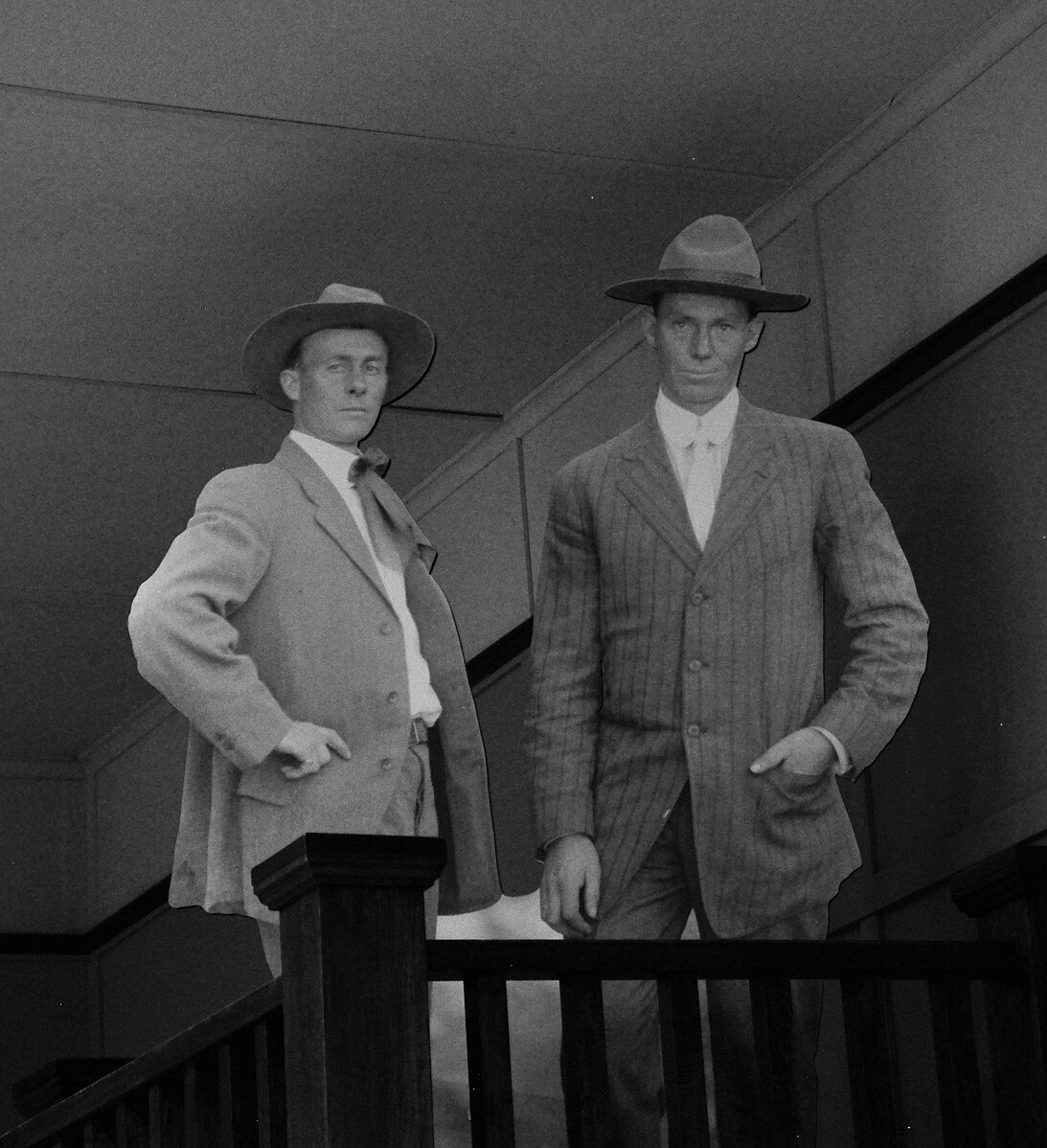 The Kolb brothers, on a balcony overlooking the Historic Kolb Studio Residence’s art gallery. (Kilarnee/CC BY-SA 2.0)
The brothers began humbly, setting up a tent near the Bright Angel Trailhead, where mule parties descended into the canyon. They photographed tourists at the brink of the cliff and promised finished prints upon their return.
The work was arduous. Reliable water for photographic development was scarce on the rim, and the Kolbs often hauled supplies from springs and streams below, timing their work to the rhythms of the trail. They raced to process images before mule trains returned, turning speed and endurance into a competitive advantage. The system worked and quickly proved profitable.
By 1904, the brothers began constructing a permanent base of operations: what became known as Kolb Studio. It was perched directly on the canyon rim at the head of the Bright Angel Trail. Built incrementally over the next two decades, the studio served as both home and business, a multi-story structure anchored to Kaibab limestone, its balconies projecting over open air. Visitors passed through its doors for photographs, but also for conversation, stories, and the peculiar intimacy of standing inside a working home suspended above the abyss.
Adventurous Minds
From the start, the Kolbs understood photography as experience, not merely as documentation. Their images captured more than geology; they conveyed scale, motion, and human presence—mule trains winding downward, figures reduced to silhouettes against stratified walls, light cutting across stone. These photographs circulated widely, appearing in albums, postcards, and illustrated lectures that carried the Grand Canyon into parlors, schools, and town halls far from Arizona.The canyon became familiar long before it became accessible.
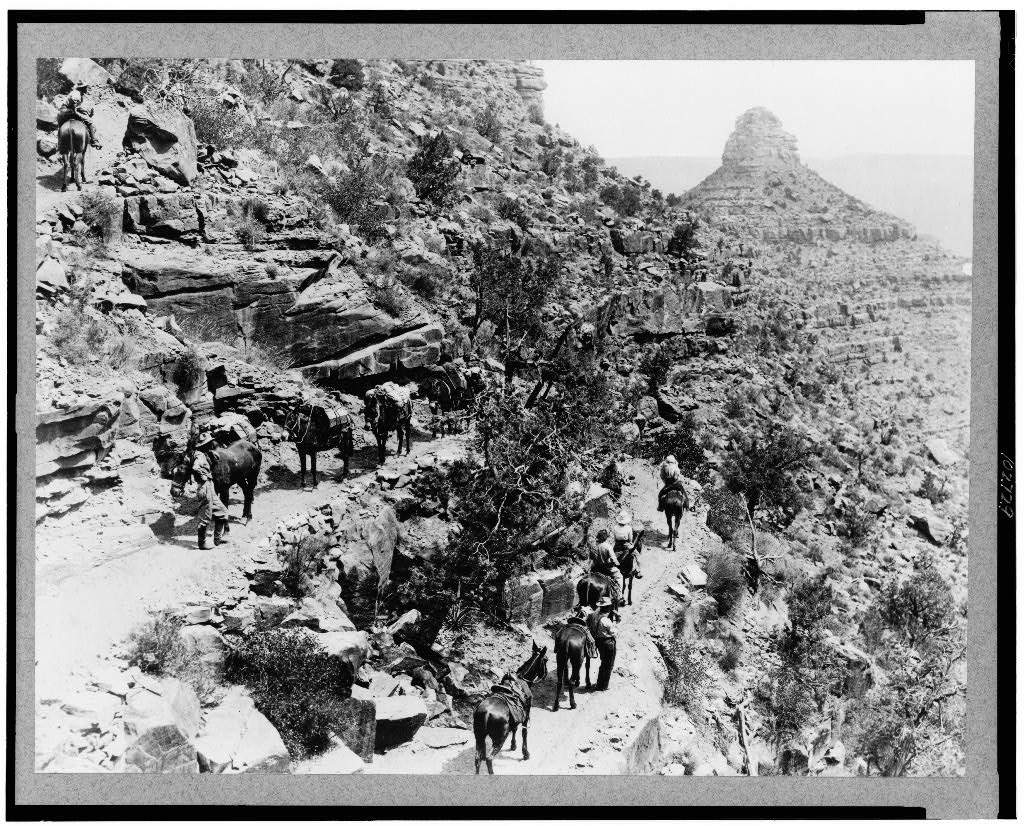 A 1920 photograph showcases the convoluted switchbacks in Arizona’s Grand Canyon. (Public Domain)
Their most ambitious undertaking came in 1911, when the brothers embarked on a hazardous journey down the Colorado River through the canyon. While earlier river expeditions had taken place, few had attempted the passage with cameras, and fewer still with the intention of public exhibition. Carrying a heavy, hand-cranked motion-picture camera, the Kolbs filmed rapids, portages, and near disasters along a route that tested both their endurance and their equipment.
Back at the rim, their “Grand Canyon film” became a centerpiece of Kolb Studio. Visitors crowded into a small auditorium to watch the brothers’ journey unfold onscreen. Films were often accompanied by live narration—or frequently delivered by Emery himself. For decades, their films was shown regularly, offering audiences a vicarious descent into places most would never see. It was entertainment, education, and advertisement all at once. Perhaps no other single attraction did more to cement the Kolbs’ reputation beyond still photography.
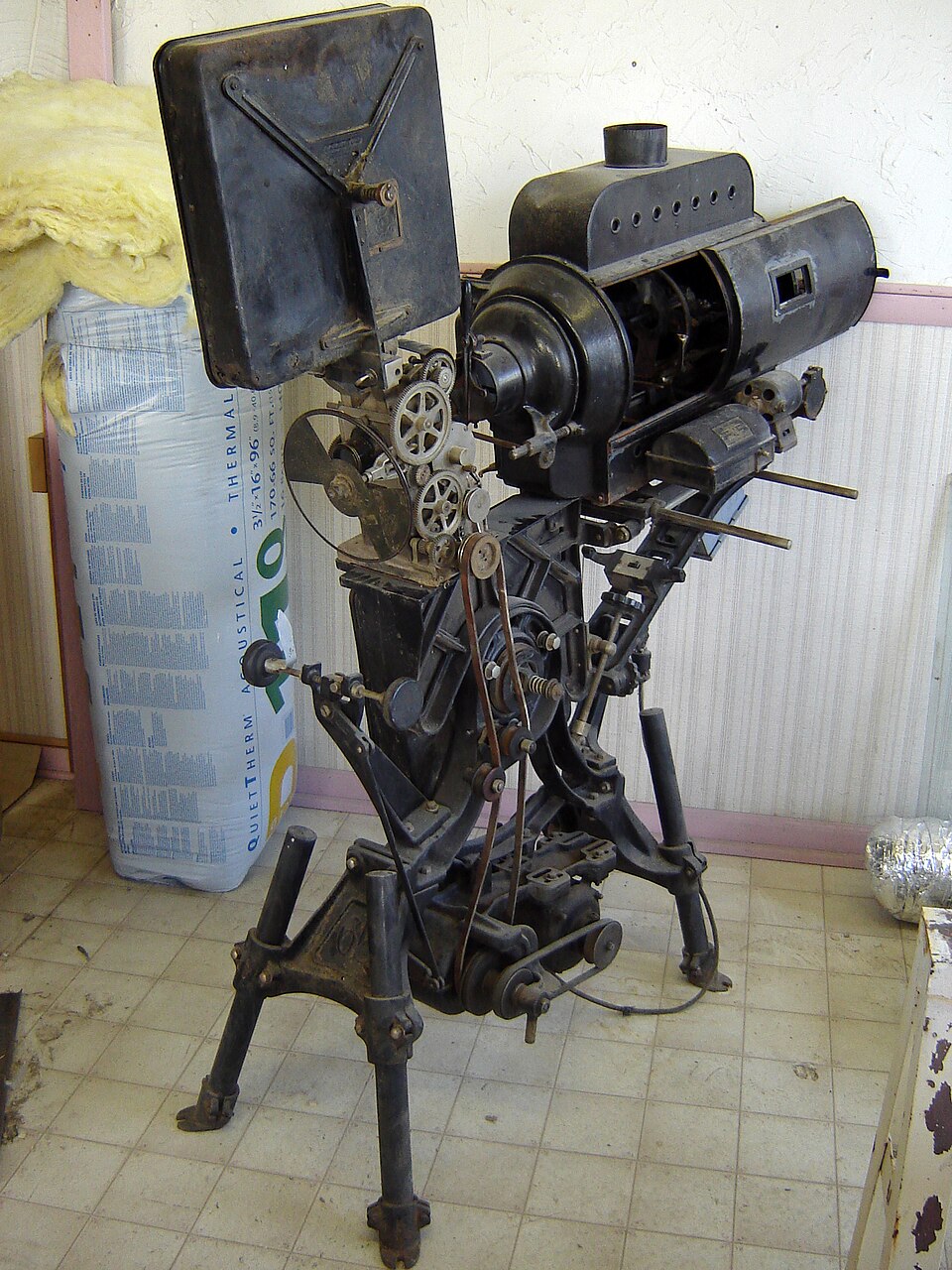 The original 35mm Peerless projector that the Kolb Brothers used from 1915 until the 1960s. It was rediscovered in 2006. (TM/CC BY 2.0)
The brothers’ success wasn’t without conflict. As tourism at the canyon expanded, larger commercial interests—most notably the Fred Harvey Company—sought to consolidate concessions, including photography. The Kolbs resisted fiercely, navigating contracts, territorial disputes, and shifting federal oversight to maintain their independence. Their survival amid far more powerful competitors speaks not only to their talent behind the camera, but to their persistence and business acumen in an increasingly regulated landscape.
In the 1920s, the brothers’ partnership dissolved. Ellsworth left the Grand Canyon and eventually settled in California, where he died in 1960. Emery remained at Kolb Studio, continuing the business and living on the rim for more than half a century. He became a fixture at the canyon, greeting visitors, telling stories, and maintaining the studio until his death in 1976 at 95.
By that time, the Grand Canyon had been a national park for decades, and the world the Kolbs helped introduce had changed dramatically. Millions now visited annually, carrying cameras of their own. Yet Kolb Studio endured. Though threatened with removal in the mid-20th century as park standards shifted toward architectural uniformity, it was preserved through historic designation.
In the 2010s, it was restored. Today, it operates as a gallery and bookstore managed by the Grand Canyon Conservancy, displaying the brothers’ photographs, equipment, and films.
 Between 2013 and 2014, the foundational components of the Kolb brothers’ home was restored for generations to come. (Terri Attridge/CC BY 2.0)
The Kolbs didn’t invent photography, nor were they alone in documenting the American West. But they were among the earliest photographers to build a sustained, successful commercial enterprise within a national park setting. They recognized early that photography could mediate wilderness and public imagination—that images could transform distant geography into personal experience. The modern visitor’s instinct to frame the canyon, capture proof of presence, and carry the landscape home in visual form owes something to their example.
More than a century later, the light still falls across the same stone, and visitors still pause where the Kolbs once set their cameras. The canyon remains vast, indifferent, and uncontainable. But thanks to the Kolb brothers, it was among the first American places to be truly seen—seen in a way that permanently altered how the nation imagined its own scale.
What arts and culture topics would you like us to cover? Please email ideas or feedback to features@epochtimes.nyc