On a cold December afternoon, the 24-gun frigate, Alfred, floated in the Philadelphia harbor. Aboard the ship stood 28-year-old John Paul Jones, a lieutenant in the recently formed Continental Navy. For Jones, the tense situation he found himself in was new. Earlier that spring, political turmoil turned into military violence. The small Massachusetts towns of Lexington and Concord had witnessed two bloody skirmishes. The British colonists had hit a breaking point, but there was still hope for reconciliation between the colonists and their king. A symbol of that hope began to flutter in the Pennsylvania wind.
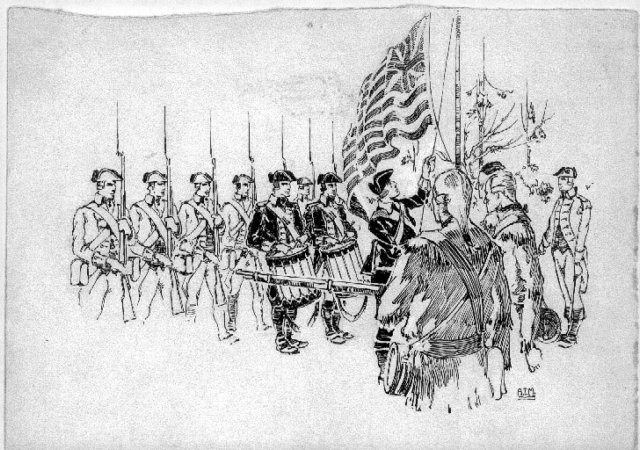
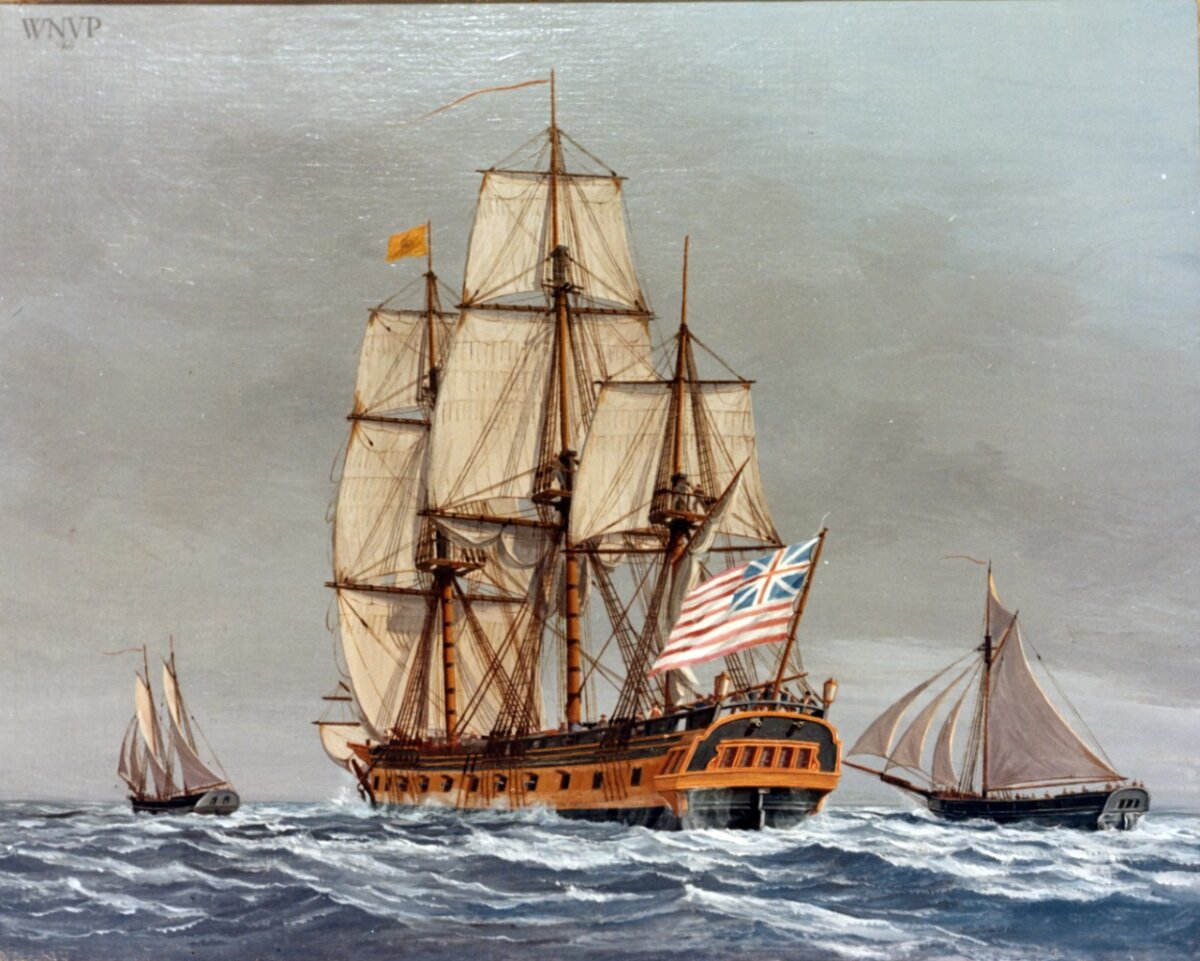
That symbol was the Grand Union Flag with its Union Jack in the top left corner adjoined with 13 alternating red and white stripes. On Dec. 3, 1775, the Alfred was commissioned as the flagship of the Continental Navy’s new eight-ship squadron. As Jones raised the Grand Union, the Alfred became the first location to fly the flag. It was not until Jan. 1, 1776, that the Continental Army, under the watchful eye of George Washington, unfurled the flag.
Previously, on Oct. 13, the Second Continental Congress established the Continental Navy. The following month, on Nov. 2, locals in Passamaquoddy, Nova Scotia, issued a petition to the congress in Philadelphia. The petition was in hopes of joining “the association of the North Americans, for the preservation of their rights and liberties.” Nova Scotia empathized with the American cause and nearly joined the fight as the 14th colony. Although this didn’t happen, their petition did influence Congress’s decision.
The petition began with the request “That two Battallions of Marines be raised consisting of one Collonell, two Lt. Collonells, two Majors &c. (officers as usual in other Regiments) that they consist of five hundred Privates each Battalion, exclusive of Officers.”
The Creation of the Marines
The Continental Congress formed a five-man committee, made up of Silas Deane, John Jay, Stephen Hopkins, John Langdon, and John Adams, to discuss the petition and what, if anything, should be done in response. The discussion resulted in Congress resolving on Nov. 10 that followed the petition’s request for officers and men, and “that particular care be taken, that no persons be appointed to office, or enlisted into said Battalions, but such as are good seamen, or so acquainted with maritime affairs as to be able to serve to advantage by sea when required.”
Before this resolution, several colonies already had their own marines, with some conducting military action during the early months of the war. Nonetheless, it was on Nov. 10 that the Continental Congress established the Continental Marines. Congress commissioned Samuel Nicholas as the Marines captain.
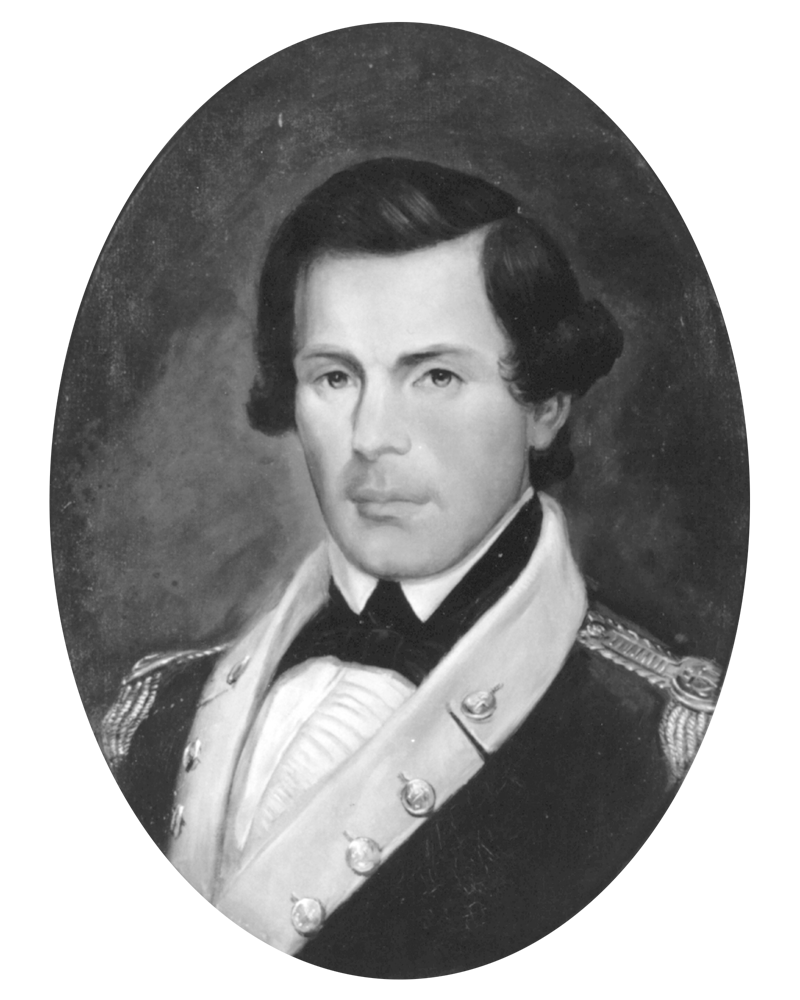
Nicholas’s commission was less about his military experience and more about his network among “good seamen” and those “acquainted with maritime affairs.” Born to a prominent Quaker family, Nicholas received an exceptional education, was accepted into the Schuylkill Angling Organization, an elite social club. He then co-founded the Gloucester Fox Hunting Club, one of America’s first hunting clubs.
His connections in Philadelphia were only amplified when he became owner of the Conestoga Wagon Tavern, which had been part of his wife’s dowry. He also frequented the Tun Tavern, which is where he most likely began recruiting volunteers for the new Continental Marines. (Tun Tavern is traditionally considered the birthplace of the United States Marine Corps.) Nicholas was able to recruit enough men to form the requested two battalions.
Options of Attack
To command the eight-ship squadron, however, the Continental Congress relied on the seasoned Rhode Island merchant captain, Esek Hopkins, whose brother was on the aforementioned five-man committee. Hopkins was not only named commander of the squadron, but commander in chief of the Continental Navy.
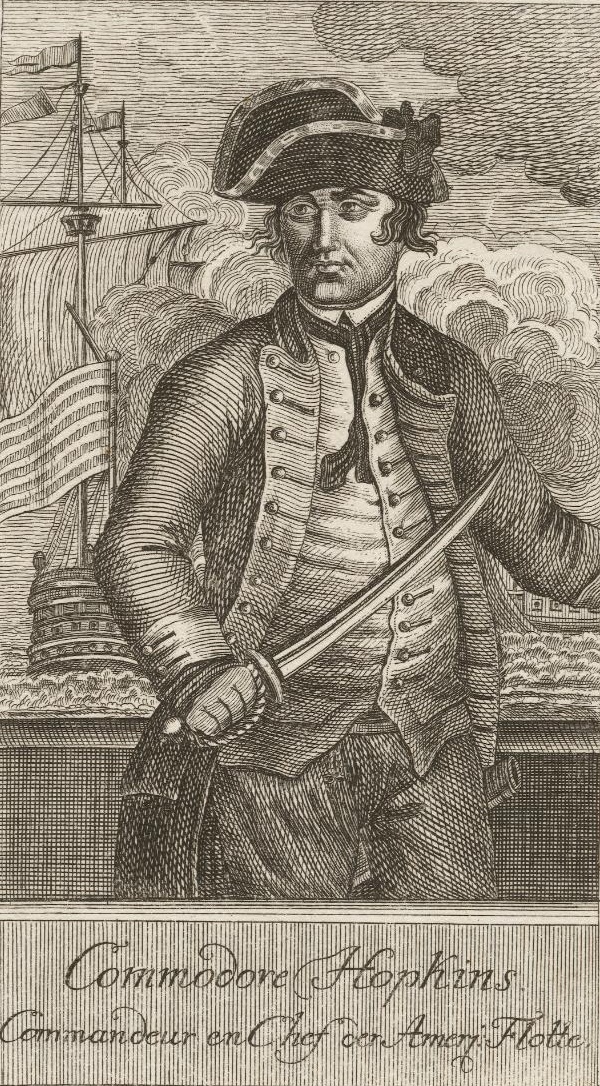
On Jan. 5, 1776, Continental Congress issued orders to Hopkins to sail for the Chesapeake Bay and “search out and attack, take or destroy all the Naval forces of our Enemies.” He was then to sail for Rhode Island and do the same. At the time of these orders, however, a cold front had frozen the Delaware River, keeping the ships stuck for several weeks. During that time, the British Navy added to its strength in the Chesapeake.
While the ice thawed, Hopkins considered options aside from confronting the British Navy in the Chesapeake or along the Rhode Island coast. George Washington had made it abundantly clear in late 1775 that his greatest need was gunpowder. Subsequently, information had made its way to Congress, indicating “a large quantity of powder in the Island of Providence.”
This Providence was not in Rhode Island, but rather The Bahamas, and on Feb. 17, Hopkins’s squadron set sail accordingly. By March 1, the squadron had reached Great Abaco Island in The Bahamas. A strong storm swept through causing the Hornet and the Fly to ram into each other. No one was killed, but the Hornet was forced to return to Philadelphia for repairs.
The First Amphibious Invasion
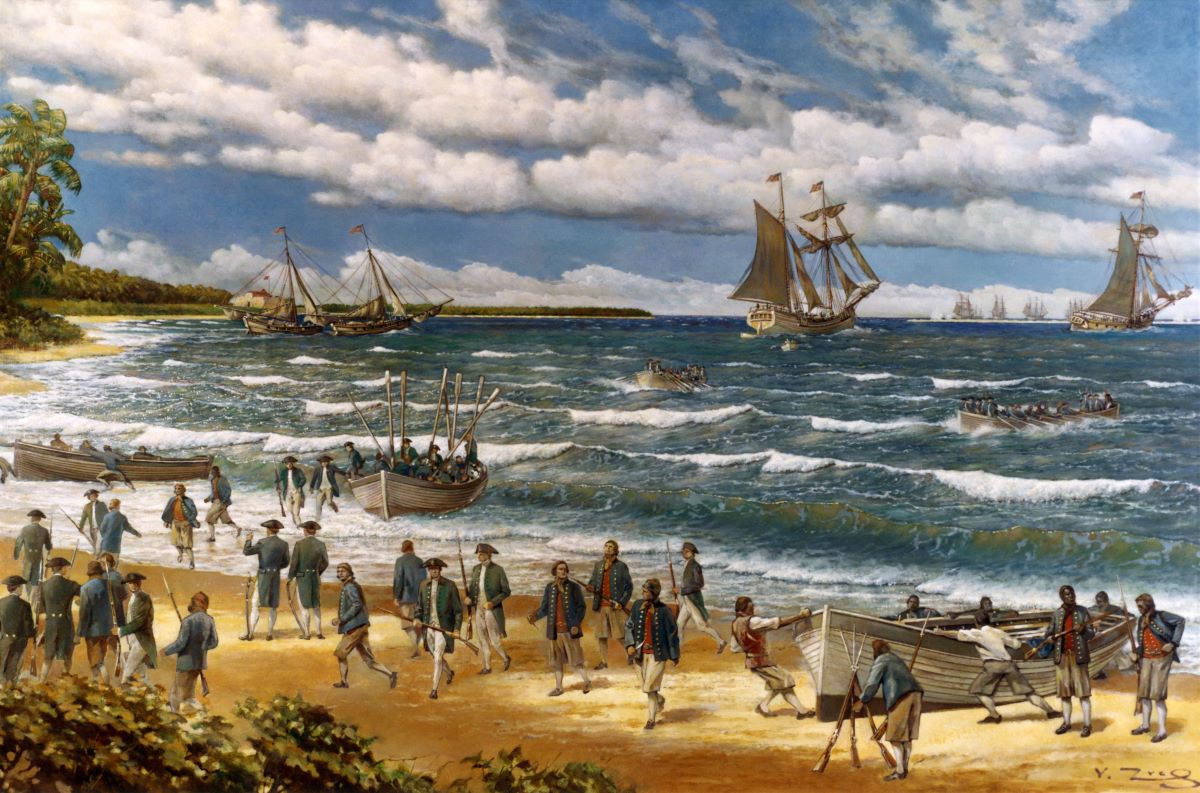
Great Abaco Island is about 75 nautical miles north of New Providence, and, while sailing near the island, the Americans captured two British merchant sloops. Hopkins decided that these two ships, along with the American sloop, Providence, would carry the 234 Marines and the 50 sailors who would storm the beach.
On the morning of March 3, the ships neared the island’s coastline. New Providence was defended by two old forts that were in desperate need of repair. Fort Montagu and Fort Nassau were the targets of Hopkins’s designs. Unfortunately, Hopkins accidentally sailed past the intended spot and was sighted by the British. This setback did not alter the plan.
It was during this week in history, on March 3, 1776, at dawn, that the American Marines, led by Capt. Nicholas, made their first amphibious invasion.
“We then ran in and anchored at a small key three leagues to windward of the town, and from thence the Commodore dispatched the marines with the sloop Providence and schooner Wasp to cover their landing,” reported Lt. John Paul Jones, who waited aboard the flagship, Alfred. “They landed without opposition.”
Not a Complete Success
Fort Montagu was the first to be secured. Hopkins informed Governor Montfort Browne that his troops would not harm the residents or their property as long as they did not resist. The following morning, Browne surrendered Fort Nassau. But he did not do this until he had safely removed nearly all of the island’s gunpowder that was stored in the fort to another ship—an opportunity only afforded to the British because Hopkins failed to blockade the harbor. The gunpowder was taken by a British ship to St. Augustine, Florida.
Irate, Hopkins commanded his men to strip the island of all of its muskets, artillery, mortars, cannons, and the small remaining amount of powder. The commander also decided that Browne would be part of the squadron’s cargo. On March 17, the squadron left New Providence to return home.
On April 4, Hopkins’s squadron captured two British ships: the six-gun schooner, Hawk, and the eight-gun brig, Bolton. Two days later, Alfred was presented with a momentous battle against a British warship: the 20-gun HMS Glasgow. The battle was brief, as the Glasgow’s barrage tore through the Alfred’s tiller ropes, leaving it incapable of chasing the Glasgow. The British ship escaped.
The Continental cohort of ships arrived in New London, Connecticut on April 8 to a welcoming crowd. Having conducted a successful mission and having participated in what would be considered the Marines first amphibious invasion, the Continentals were heralded as heroes.
“I beg leave to congratulate you on the success of your Expedition,” John Hancock, president of the Continental Congress, wrote Hopkins. “Your account of the spirit and bravery shown by the men affords [Congress] the greatest satisfaction.”
Hopkins, Nicholas, and Jones
Congress’s satisfaction, however, was nowhere complete. It criticized Hopkins for not having put up a better fight against the Glasgow and for disobeying its direct orders. His time as commander in chief of the Continental Navy was an era of criticisms, eventually leading to his suspension in March 1777 and his dismissal in January 1778.
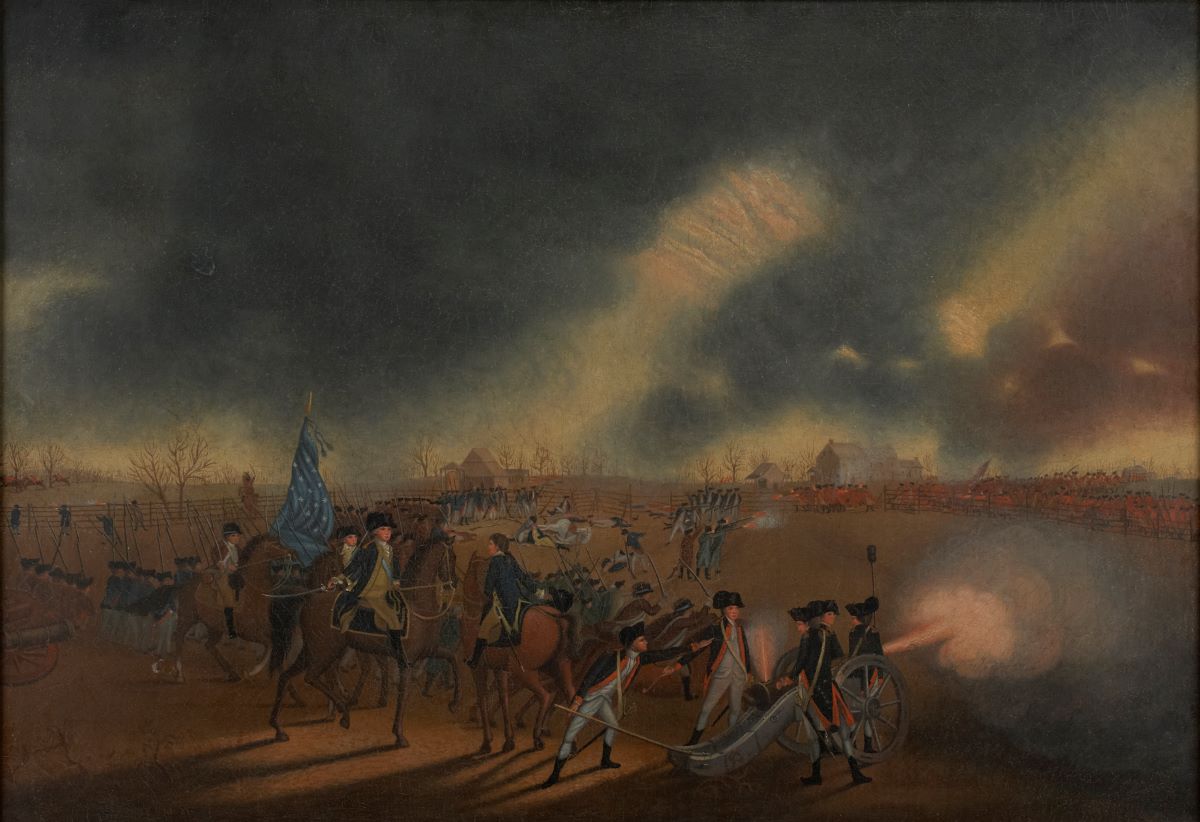
For Nicholas, he maintained his prominent role as leader of the Marines, and was called upon by Washington to join him during the winter of 1776 to 1777. The Marines took part in the successful Battle of Princeton, which ensured the colonists’ revolutionary efforts would continue. He returned to Philadelphia in 1778, where he became the first commandant of the Marine Corps, a position he held until the end of the war.
John Paul Jones rose through the ranks and went on to enjoy a successful naval career in the Continental Navy, achieving lasting popularity when he attacked the British coastline and became a legend with his battle against and capture of the 44-gun HMS Serapis. Jones is considered the Father of the American Navy.
Never miss a This Week in History story! Sign up for the American History newsletter here.
What arts and culture topics would you like us to cover? Please email ideas or feedback to features@epochtimes.nyc