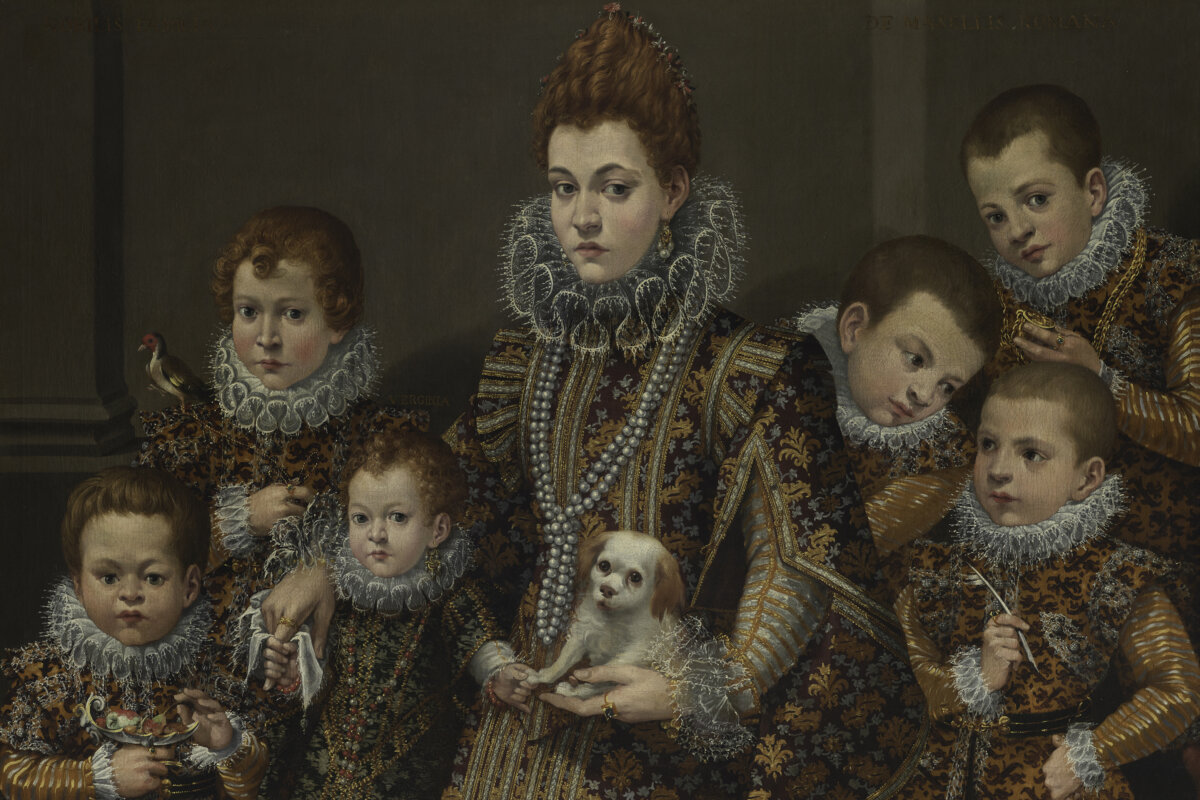
Lavinia Fontana was a mother of 11 children and one of the most celebrated painters of the 16th century. She did not see these as contradictions. She created portraits and altarpieces that reflected the two sides of her life: care and responsibility at home and ambition in her professional world. Rather than separating these worlds, she brought them into conversation through art, portraying women, children, and domestic relationships with depth and dignity.
This balance is especially evident in her family portrait “Portrait of Bianca degli Utili Maselli and Her Children.”
A Career Painter

Fontana married fellow painter Gian Paolo Zappi when she was 25, and together they went on to have 11 children. Zappi assumed many of the domestic responsibilities, allowing Fontana to continue her professional practice alongside family life. In the 1580s, Fontana became the preferred portraitist among Bolognese noblewomen as well as prominent intellectual and civic figures associated with the University of Bologna.
Her first public commission, “Assumption of the Virgin,” was completed in 1584 and was soon followed by major altarpieces including another “Assumption of the Virgin,” “Consecration of the Virgin,” and “The Visit of the Queen of Sheba to King Solomon.” As Fontana’s portrait work brought her into elite patron circles, she moved comfortably between large-scale religious commissions and smaller, more personal devotional pieces, all while managing family responsibilities.
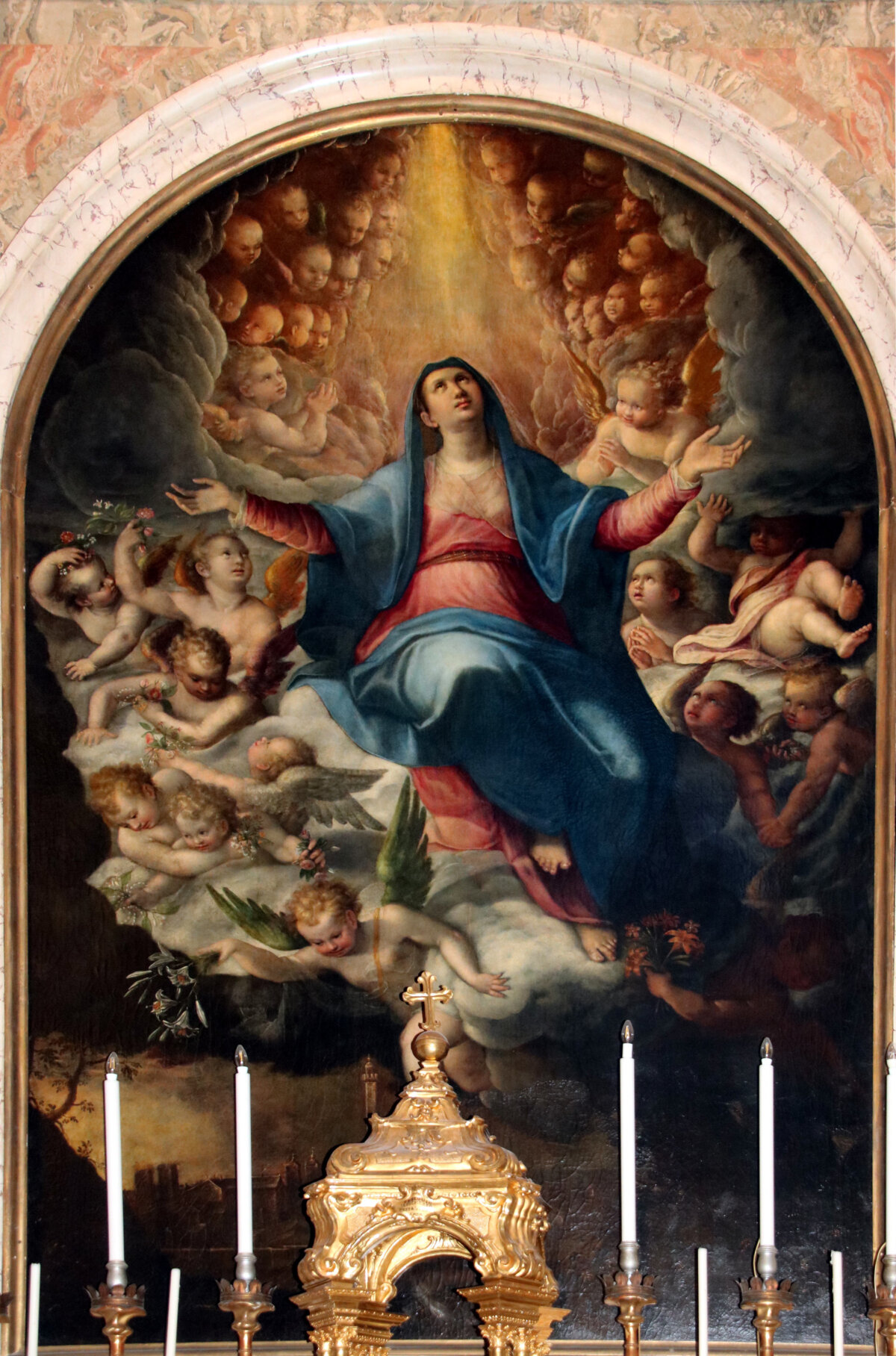
Her reputation eventually extended to Rome, where she relocated in 1604. There, she worked as a portraitist at the court of Pope Paul V and received significant honors. She was also elected to the prestigious Accademia di San Luca, an exceptional distinction for a woman artist of her time.
Mannerist Portraiture
She was widely admired for her ability to capture both a subject’s physical likeness and inner character with remarkable sensitivity. That dual strength is especially evident in “Portrait of Bianca degli Utili Maselli and Her Children.”
This versatility also reflects the stylistic language she inherited and refined within the mannerist tradition. Originating in 16th-century Italy, mannerism, from the Italian “maniera” meaning “style” or “manner,” emphasizes elegance, sophistication, and deliberate artifice rather than strict naturalism. It is often characterized by elongated necks and limbs, complex spatial arrangements, and saturated color palettes.
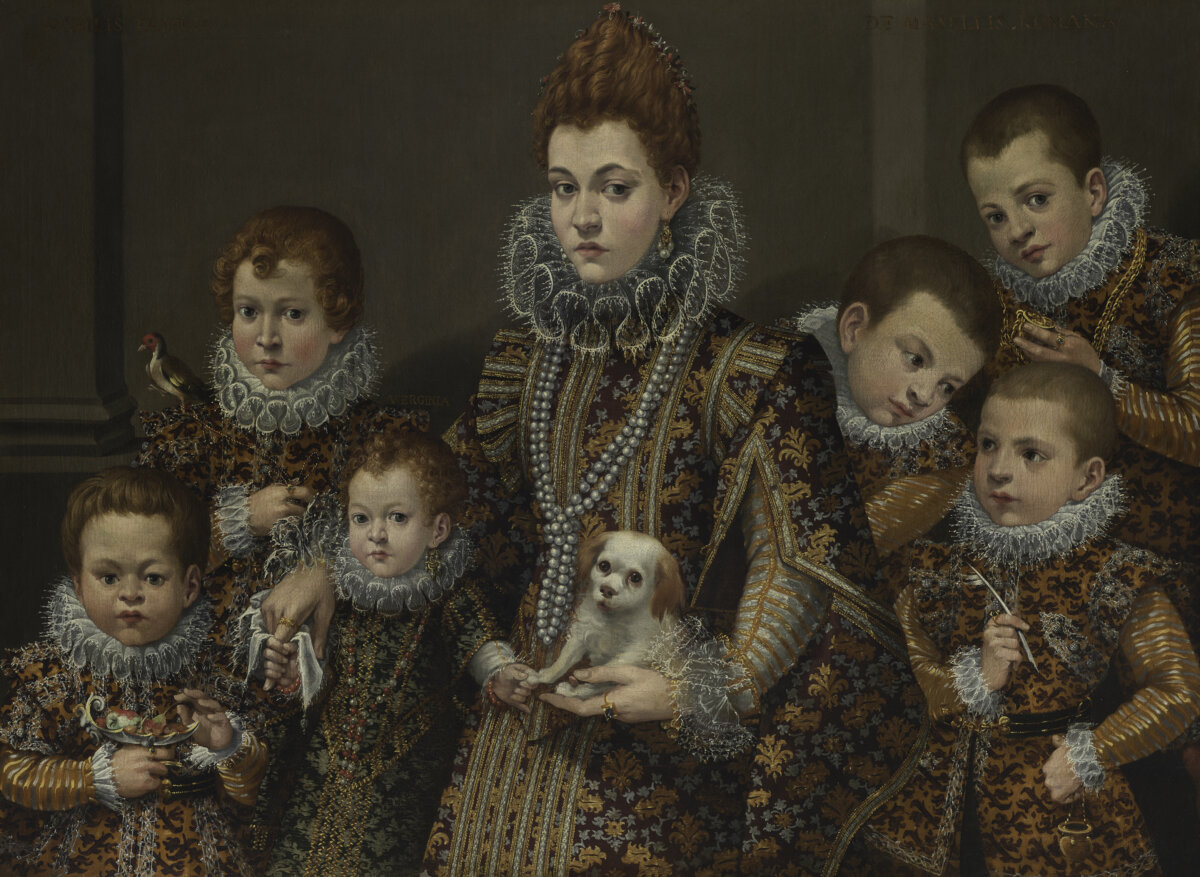
Fontana’s mannerist style is clearly evident in “Portrait of Bianca degli Utili Maselli and Her Children.” In this painting, Bianca is shown with her five sons and one daughter. Seated in a formal frontal pose, she appears both dignified and tender, as her youngest gently grasps her forefinger. Her flame-colored hair, pale cheeks, and the children’s coordinated attire anchor the composition.
Bianca’s children surround her in a carefully structured arrangement, each one vividly individualized through distinct expressions, gestures, and postures. The effect is both intimate and ceremonial. All but one hold symbolic objects: a quill and inkwell, a gold medallion, a songbird on a leash, a silver cup of figs, and a dog. These carefully chosen attributes suggest virtues while also hinting at each child’s identity and role within the family. Bianca’s sumptuous clothing, ornate jewelry, and controlled posture project both social authority and moral steadiness, while the children’s dress and objects reflect social norms.
“Portrait of Bianca degli Utili Maselli and Her Children” presents each member of the family as both an individual and part of a unified whole. Although the Mannerist style leans toward exaggeration, Fontana maintains a striking sense of authenticity in her depiction: Bianca exudes a maternal strength, while her children show the varied expressions of childhood. The result is a nuanced image that continues to resonate in its exploration of family life.
What arts and culture topics would you like us to cover? Please email ideas or feedback to features@epochtimes.nyc.