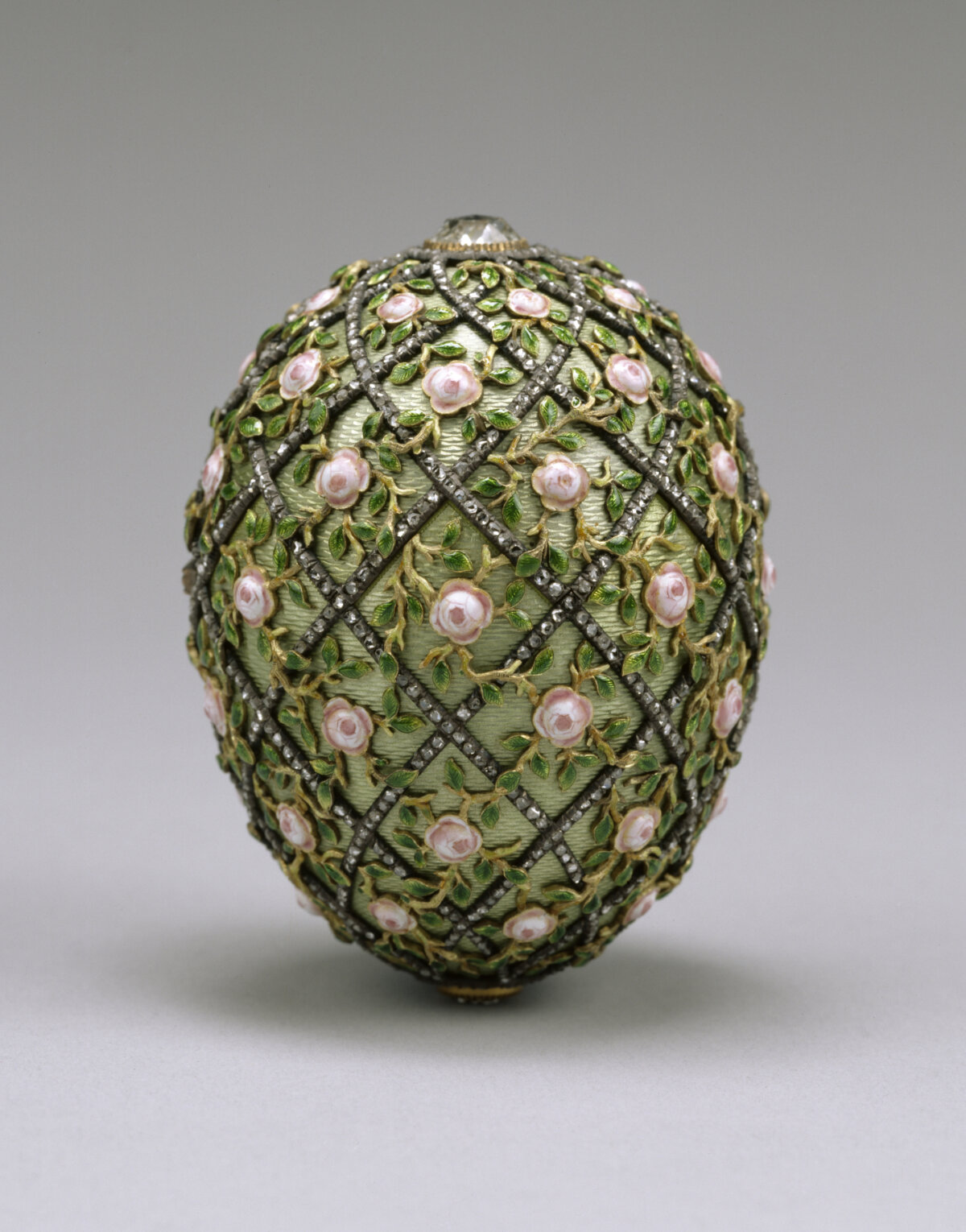
Few bonds survived the challenges of royal life quite like the one between Queen Alexandra of the UK and Czarina Maria Feodorovna of Russia. Born Danish princesses, these sisters married into two of Europe’s most powerful thrones and refused to let an empire stand between them. Their connection endured through letters, visits, and one glittering symbol of devotion: the Fabergé egg—precious, fragile, and reserved for the elite, just like their alliances.
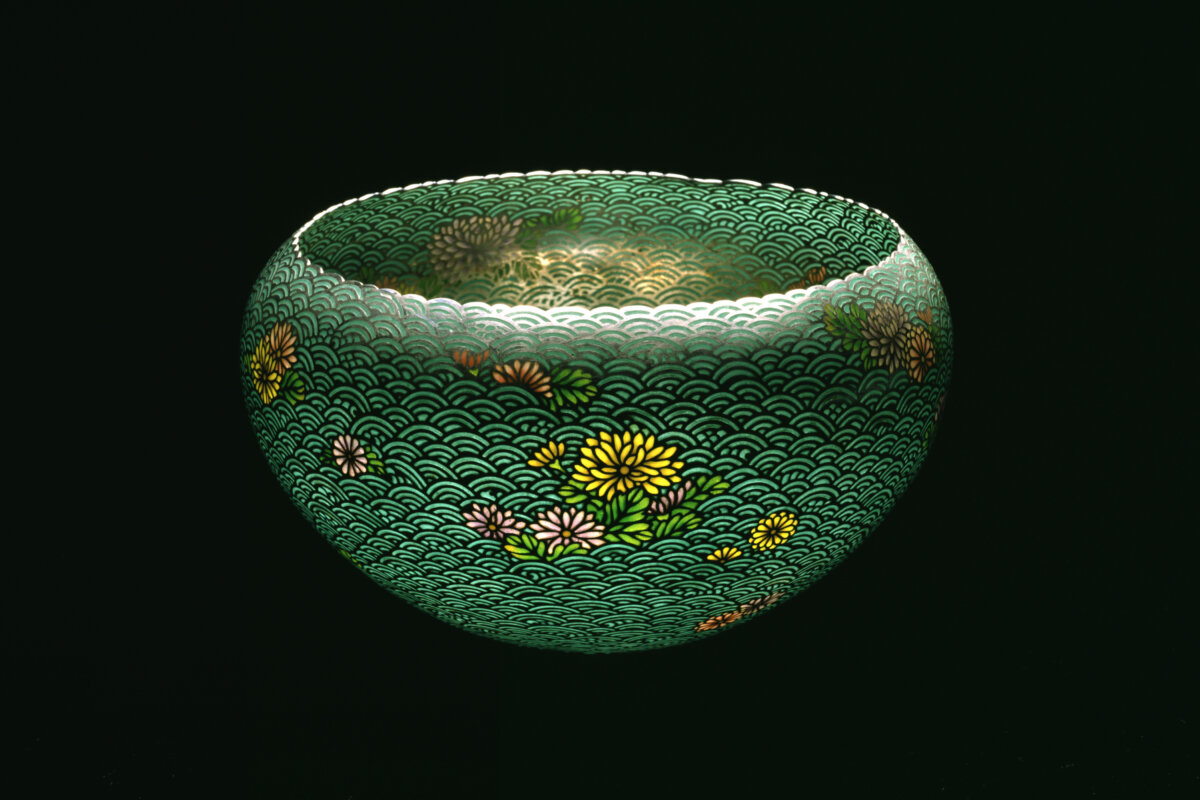
At the heart of those legendary eggs lies one of the most technically demanding enameling techniques in the history of decorative arts. Known as plique-à-jour, a French term meaning roughly “letting in daylight,” the technique transforms metal and glass into something resembling miniature stained-glass windows. Light passes directly through the finished piece, creating a glowing, jewel-like effect that has captivated artisans and collectors for centuries. However, achieving it requires extraordinary patience: A single piece can take months to complete, and failure rates remain high even among skilled artisans.
Ancient Origins, Fragile Survival
Long before Fabergé, plique-à-jour was already centuries old—historians trace its origins to Byzantium, with some evidence pointing as far back as the fourth century. Given the technique’s inherent fragility, which increases proportionally with the size of the piece, very few early examples have survived. Among those that have, the most significant may be the Mérode Cup, housed today in the Victoria and Albert Museum in London.
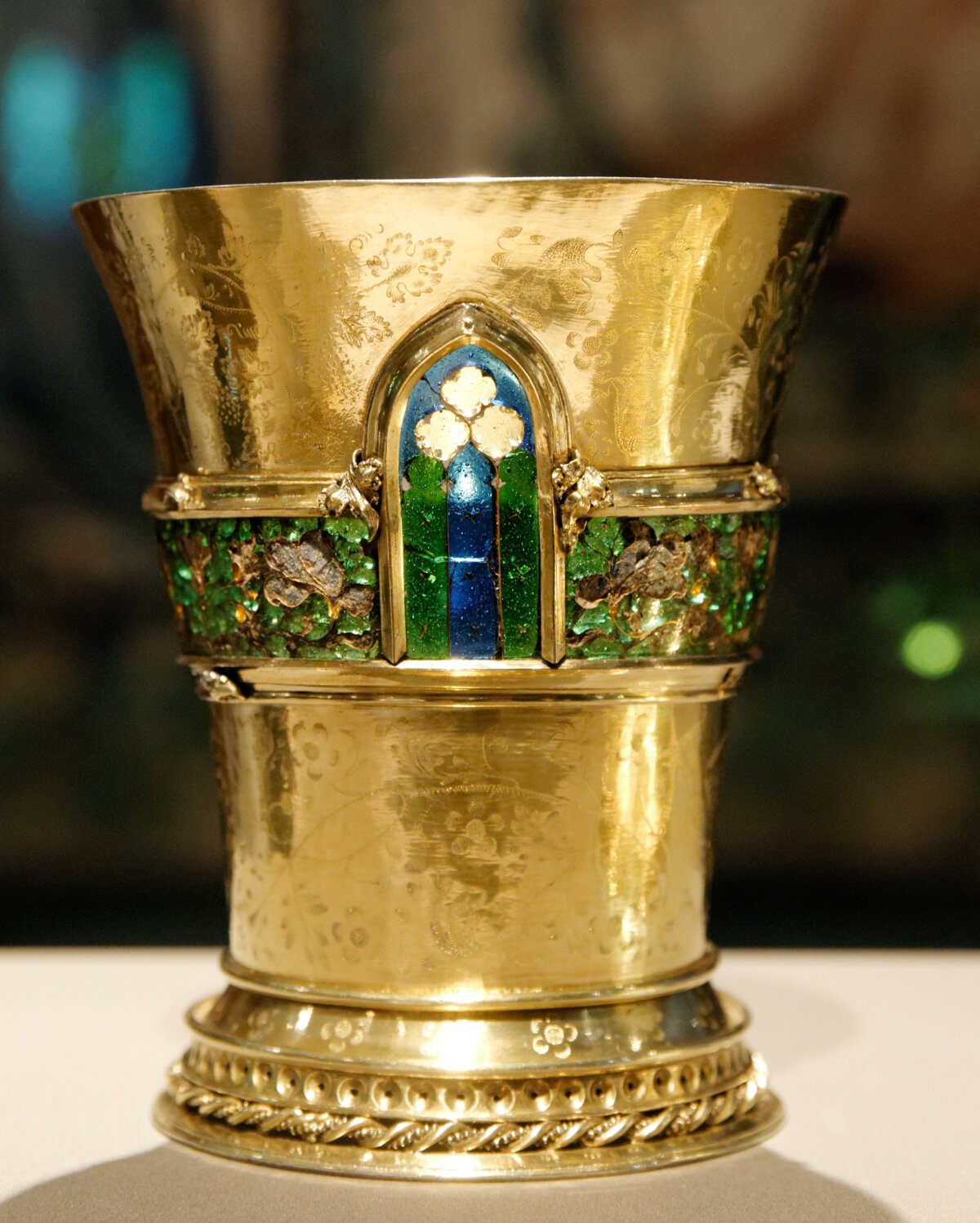
Crafted in Burgundy in about 1400 and later named for the Belgian noble family that once owned it, the silver-gilt cup is decorated with finely engraved birds, fruit, and vine leaves. Its panels of green, blue, and yellow-brown plique-à-jour enamel, set into the sides, cover, and base, seem to trap light within them, like fragments of colored ice. It remains the only surviving example of its kind from that era.
The Kievan Rus, an Eastern European civilization, also made significant contributions to the technique, developing a distinctive approach using a lattice of silver wire. Tragically, nearly all of these works were lost following the Mongol invasion of the 13th century.
4 Paths to the Same Effect
Yet the spirit of the technique survived, taking root across different cultures and evolving into four primary methods for creating plique-à-jour: filigree, pierced, shotai shippo, and Cloisonné on mica. The filigree method, sometimes called Russian plique-à-jour, involves soldering gold and silver wires together to form cells. These are then filled with ground enamel and fired repeatedly, typically 15 to 20 times, until each cell is complete.
In the pierced method, a jeweler’s saw is used to cut shapes from a metal sheet. The process begins with a small drilled hole large enough to admit the blade, which is then guided around the desired design until the metal falls free, leaving an open cavity ready for enamel powder.
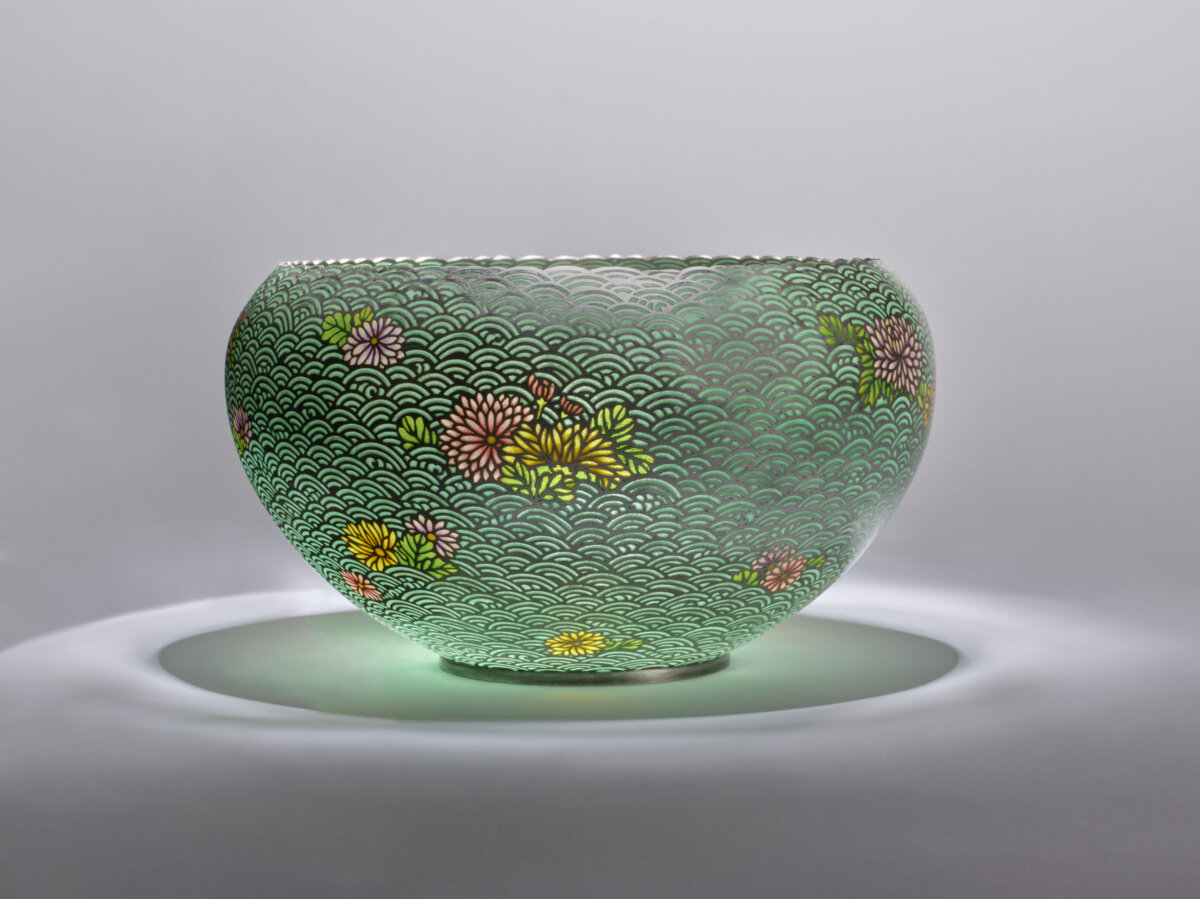
Japanese artisans developed a third approach known as shotai shippo. Sometimes called “lost-base” enamel, the technique builds a transparent enamel design onto a copper form; once the enameling is complete, the copper is dissolved in acid, leaving only a translucent shell of wire and enamel.
A fourth method, cloisonné on mica, applies enamel over a mineral-based mica backing, which is removed once the work is complete.
A Renaissance in Russia and Beyond
Different as these four methods are, they share a common demand: extraordinary skill, hard-won through years of practice. That mastery found its fullest expression in the technique’s remarkable 19th-century revival, particularly in Russia and Scandinavia.
Master craftsmen, including Pavel Ovchinikov and Ivan Khlebnikov, working within the tradition later associated with the House of Fabergé, elevated the technique to new heights. It was through those workshops that the eggs exchanged between Alexandra and Maria became more than personal keepsakes. They were among the finest expressions of a centuries-old craft, made possible by artisans who had spent lifetimes mastering a method that most of their peers had abandoned.
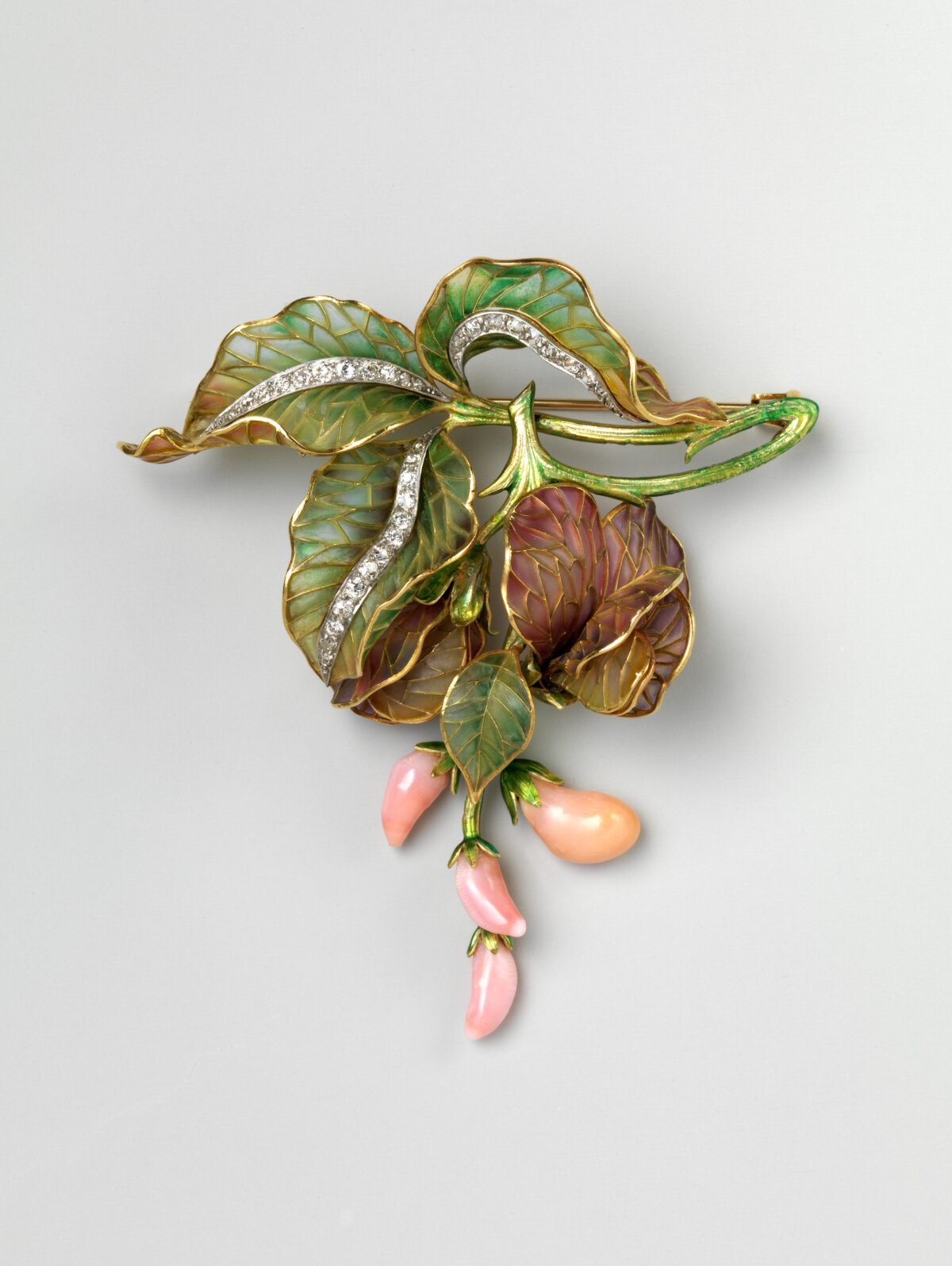
The Art Nouveau movement of the early 20th century gave the technique renewed artistic purpose. In New York City, the firm Marcus & Co. produced a celebrated brooch now held in the Metropolitan Museum of Art. With its sculpted pink pea blossoms and leaves shading naturally from one green to the next, the piece embodies the organic sensibility that defined Art Nouveau design.
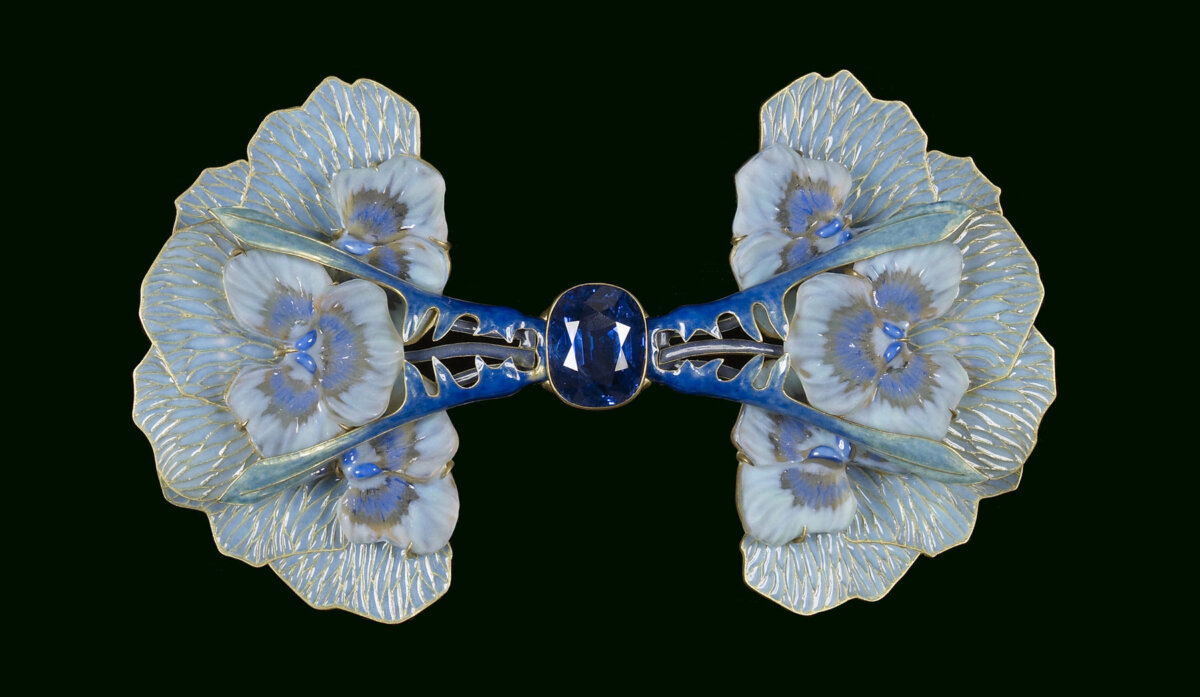
If Marcus & Co. demonstrated what plique-à-jour could achieve in jewelry, French designer René Lalique showed what it could become as art. His “Pansy Brooch”—acquired by collector Henry Walters at the 1904 World’s Fair in St. Louis and now displayed at the Walters Art Museum in Baltimore—combines molded glass blossoms with openwork enameled petals and a central sapphire. At nearly five inches wide, its scale suggests that it was conceived more as sculpture than wearable jewelry. Within a few years of creating it, Lalique abandoned jewelry entirely, turning his attention to molded glass in the Art Deco style.
Keeping the Flame Alive
One who dedicated himself to preserving the tradition was Valeri Timofeev, born in Riga, Latvia, in 1941. After relocating to Moscow at age 26, Timofeev built a career in jewelry before expanding to larger-scale enameling inspired by pre-revolution Russian traditions.
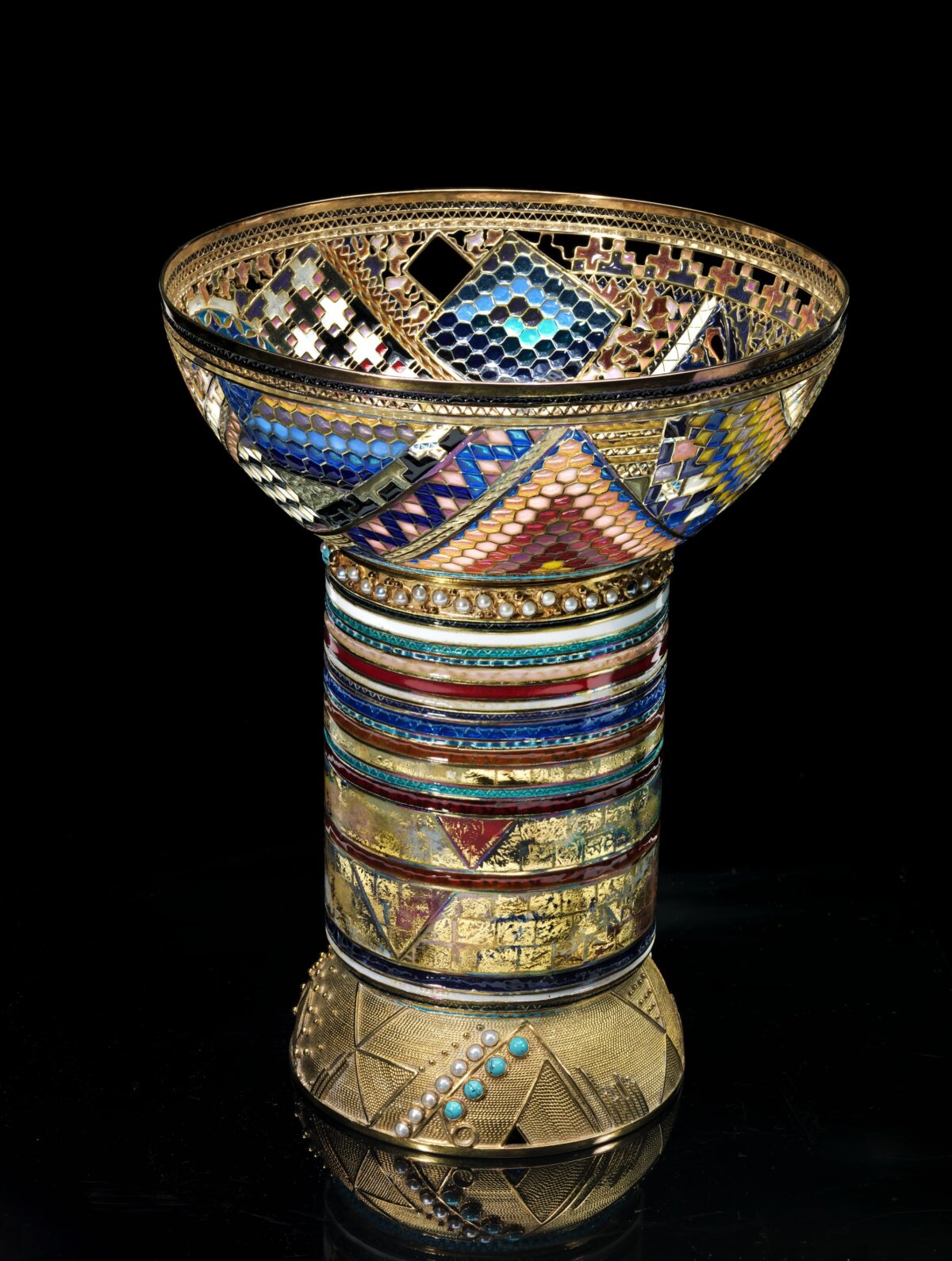
He gained international recognition for his work adapting historical methods, including plique-à-jour, champlevé, and en plein, often incorporating gemstones, silver gilding, and filigree wire into functional yet deeply artistic objects. In 1995, he created “Chalice,” worked in fine and sterling silver with a 24-karat gold plate and set with garnets, pearls, turquoise, hematite, and tiger’s eye. The plique-à-jour enamel running throughout stands as a testament to what the technique can achieve in contemporary hands.
Today, plique-à-jour remains rare. Technical complexity is part of the challenge, but the deeper obstacle is generational: Too few masters have passed the craft on, leaving few artists today equipped to attempt it. The fact that the tradition survives at all owes much to artisans who understood that mastering a craft and preserving it are, in the end, the same act.
What arts and culture topics would you like us to cover? Please email ideas or feedback to features@epochtimes.nyc.