


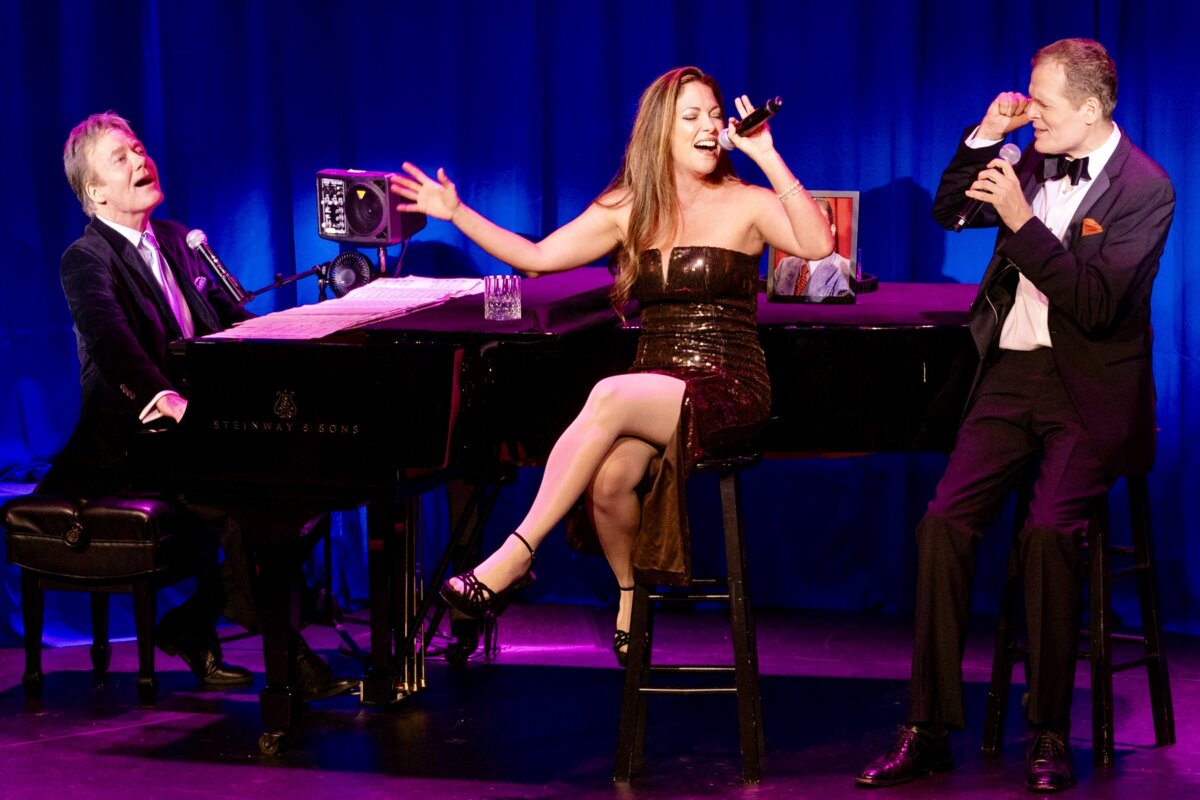
NEW YORK CITY—It is virtually impossible to cover all of the ballads, show tunes, and semi-forgotten hits performed by Frank Sinatra. The music great made approximately 1,500 studio recordings during the course of his career. The performers admit as much at the beginning of “Our Sinatra: a Musical Celebration” at the Marjorie S. Deane Little Theater.
Conceived and created by Eric Comstock, Christopher Gines, and Hilary Kole, the production is now celebrating its 25th anniversary with a reunion of its original cast. The three stars of the show try to shoehorn as much of Sinatra’s musical canon as possible into its 90-minute running time. Although the performers’ enthusiasm and sincerity is without question, the ultimate result is something of a mixed bag.
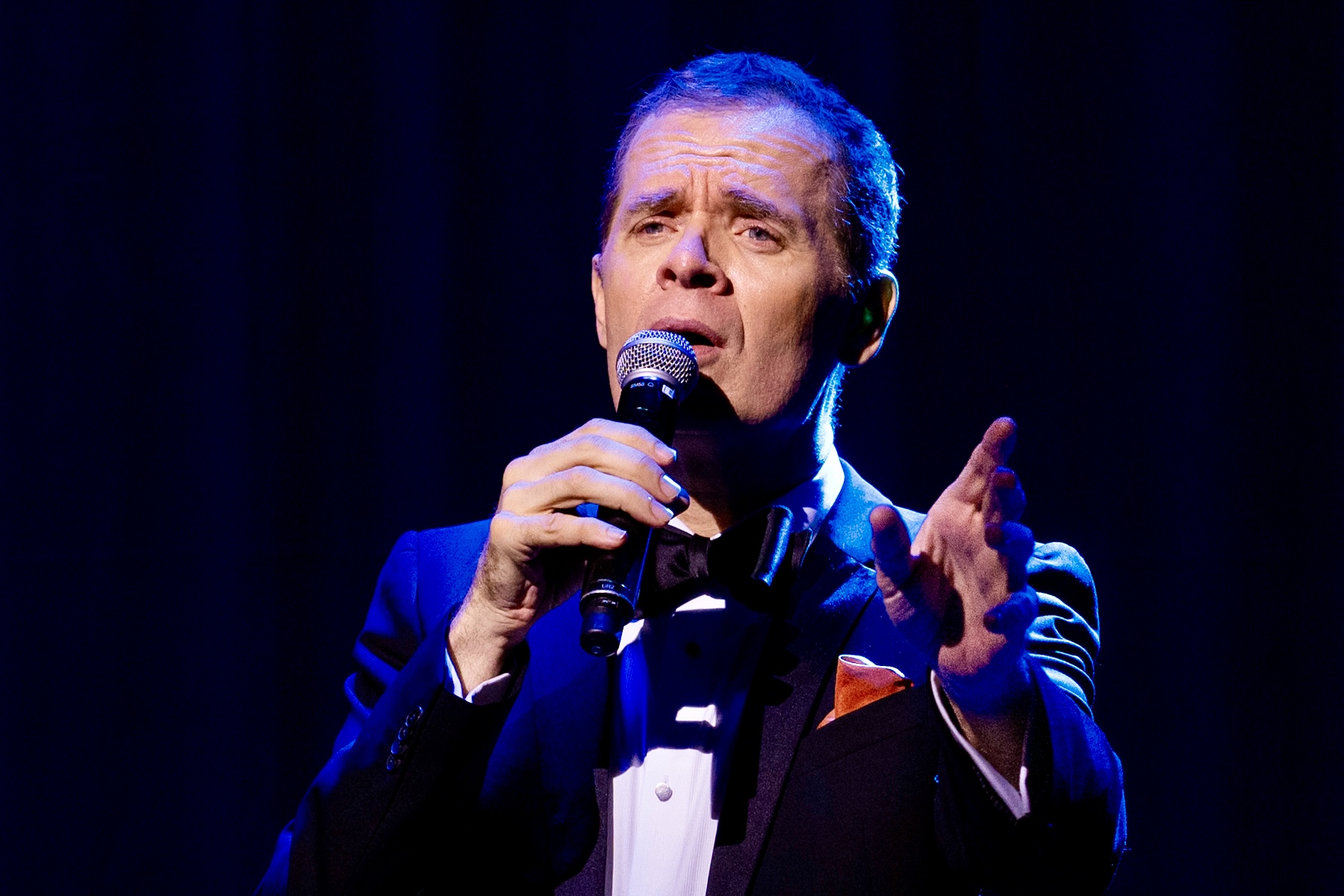 Christopher Gines in “Our Sinatra: A Musical Celebration.” (Russ Rowland)
Things start out well enough with what quickly becomes a pattern. The trio offers various full tunes that Sinatra became known for and then switches to snatches of similar offerings. This includes songs from some of the 58 films in which he appeared (“Chicago,” “New York, New York”); his “Salon Songs,” which showcase feelings of love, loss, and loneliness (“In The Wee Small Hours Of The Morning”); and Sinatra’s affinity for the works of composer Cole Porter. Sinatra’s recordings of Porter’s songs are often the versions most remembered today (“Night and Day,” “Oh Look at Me Now,” and “I’ve Got You Under My Skin.”)
Jay Leonhart is on bass. Comstock, who serves as the show’s music director and provides musical accompaniment on piano, comes closest to actually channeling Sinatra’s presence when he sings, thanks to his vocal cadence and mannerisms. He was particularly in sync with the wistful “Everything Happens To Me” and “One For My Baby.” The latter is sung both alone and later with Gines and Kole.
Gines achieves channeling Sinatra in the classic Oscar Hammerstein-Jerome Kern tune “Ol’ Man River,” which Sinatra sang in the MGM musical “Till The Clouds Roll By.” Kole is able to put over the songs she sings quite well, especially the title tune from the Sinatra film “The Tender Trap.” Another highlight occurs when Comstock and Gines team up to perform “The One I Love Belongs to Somebody Else.” It’s a bouncy number mixed with sadness, mutual sympathy, and an unexpected surprise at the end.
Mixed with the musical offerings are bits of trivia that help to illustrate both the effect Sinatra had in rediscovering forgotten or otherwise obscure songs or showing his appreciation for the composers and songwriters who helped him along the way. The most enthralling story of all is one Kole tells; her father, a performer in his own right, was incredibly affected her by hearing Sinatra’s music when he was half a world away from home.
The show concludes with Comstock, Grines, and Kole performing a medley of more than 25 of Sinatra’s biggest hits. Lastly, a rousing version of “New York, New York” brings the audience to their feet. While there isn’t a single number in this finale that felt like it didn’t belong, the overall effect feels rather rushed. No song gets a chance to be fully appreciated before the next one begins.
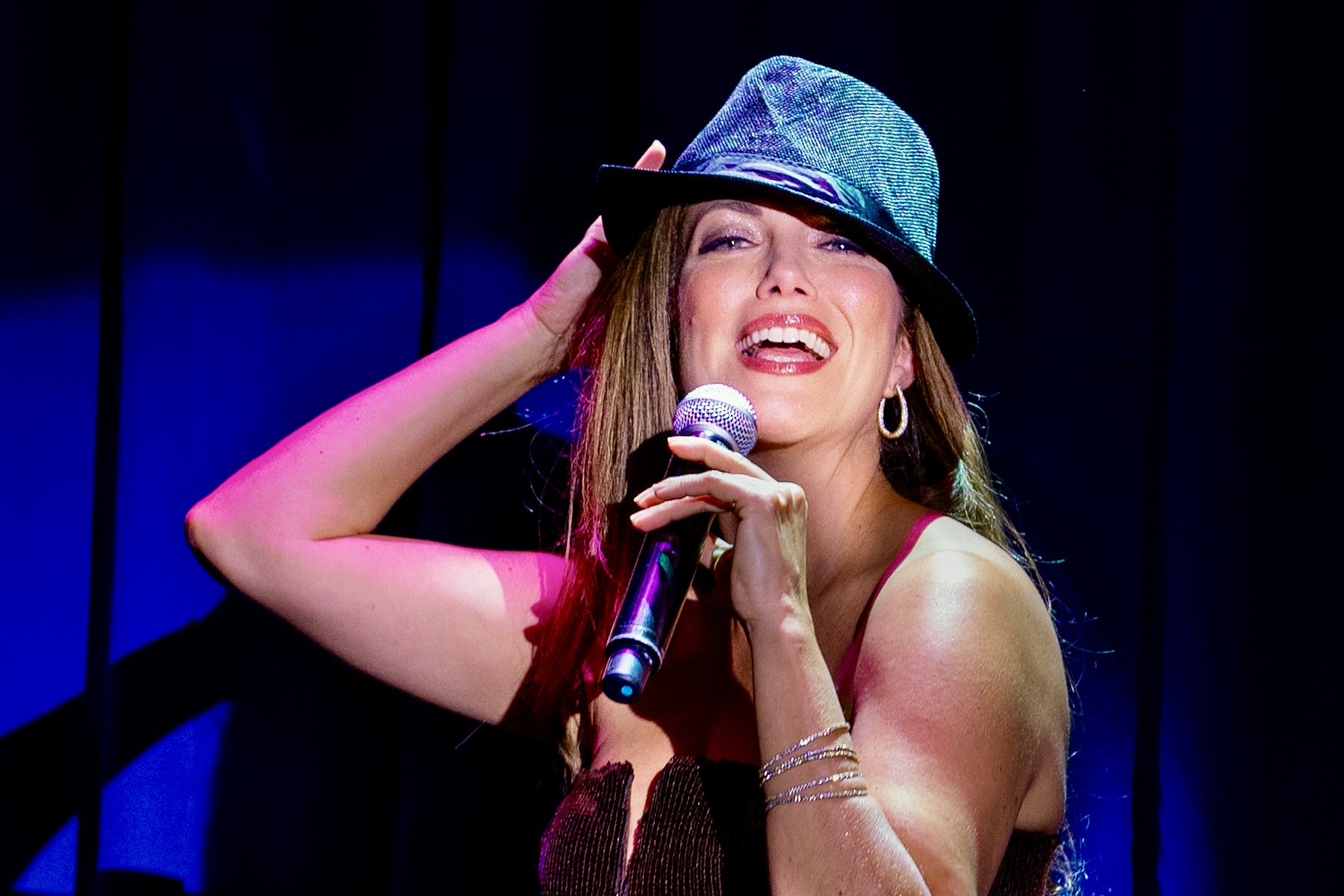 Hilary Kole in “Our Sinatra: A Musical Celebration.” (Russ Rowland)
In Need of Polishing
Unfortunately, many of the show’s changes in musical styles feel uneven. Comstock, Gines, and Kole, as well as director Kurt Stamm, seem so determined to tell the story of Sinatra’s impact on the Great American Songbook that the show lacks the intimacy that naturally accompanied many of his songs. The audience members should feel that they are the only one in the room, and that the singer is performing the songs directly to them no matter how big the audience. Ironically, the company returns to the point time and time again regarding how Sinatra seemed to inhabit the numbers he performed.
It didn’t help that the production was plagued with numerous technical problems. The chief issue was Matt Berman’s sound design. All three performers were at times terribly loud. In addition, many of the songs aren’t presented in their complete form, which often robbed them of their emotional impact. There was no way to hear anything close to all of Sinatra’s repertoire in the time presented, but the show would have had a far greater impact if the show focused on one area or theme of his output. And, it would have been nice if the show program had included a song list.
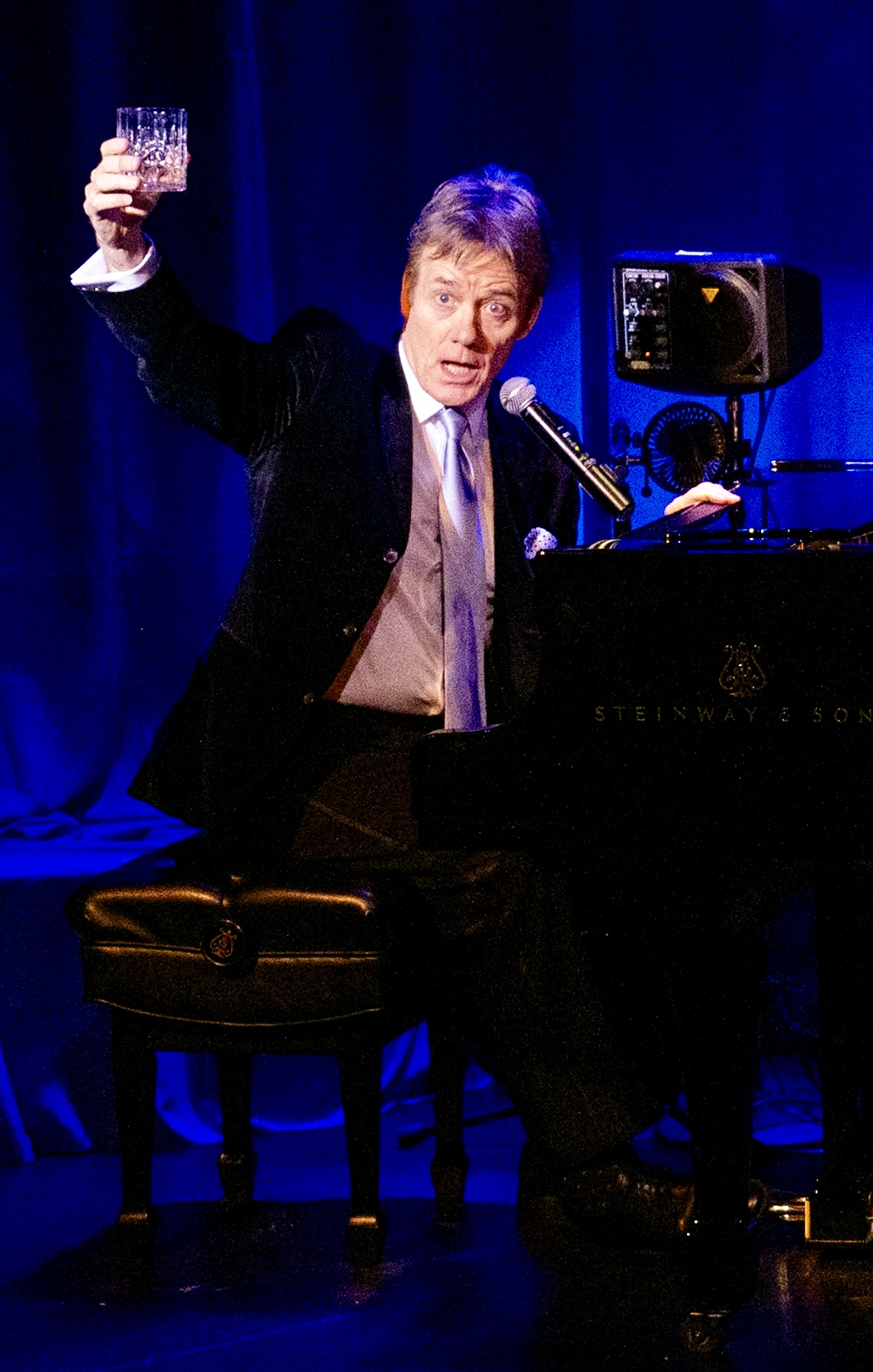 Eric Comstock in “Our Sinatra: A Musical Celebration.” (Russ Rowland)
“Our Sinatra” is certainly enjoyable enough, with performers that give it their all. They clearly haven’t lost the love they have for their subject in the years since this revue was first staged. Yet it often feels like they try too hard to do too much, and end up doing not quite enough.
‘Our Sinatra: a Musical Celebration’
The Marjorie S. Deane Little Theater
10 W. 64th St., New York City
Tickets: 212-912-2618 or OurSinatra.com
Running Time: 1 hour, 30 minutes (no intermission)
Closes: Nov. 29, 2026
What arts and culture topics would you like us to cover? Please email ideas or feedback to features@epochtimes.nyc
