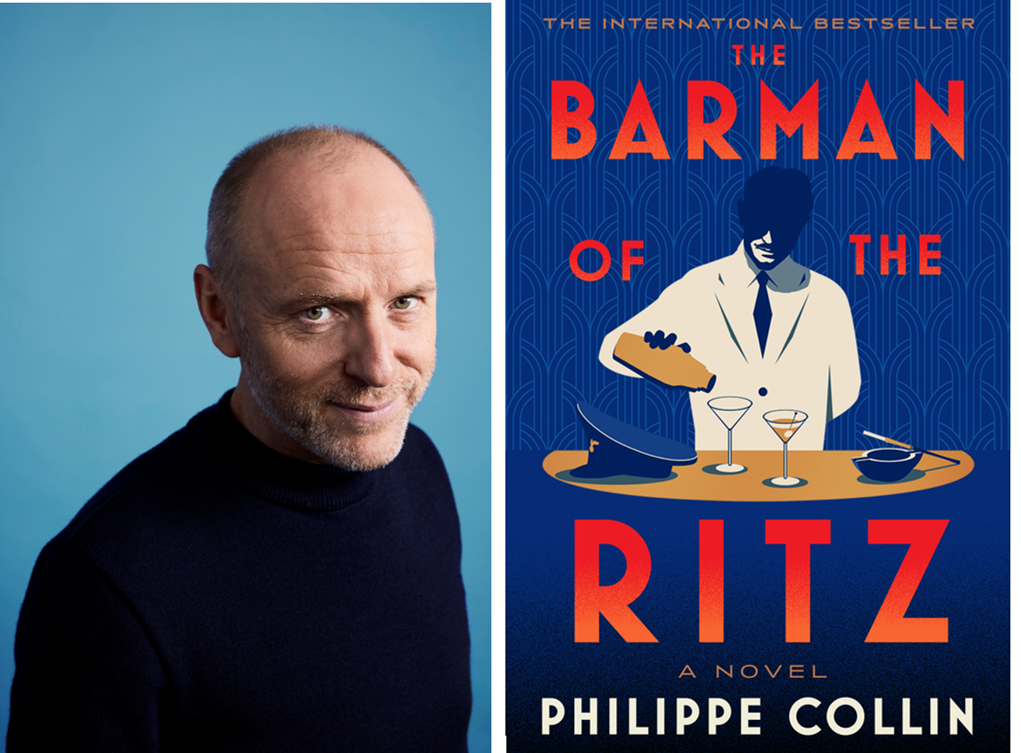
“The Barman of the Ritz” by Philippe Collin begins with the line: “Tomorrow, German troops will march into Paris. France has dissolved like a lump of sugar in a glass of absinthe.” When your story is about a barman living in the center of Paris during WWII, many people would consider that pitch-perfect.
Collin was a radio show producer in France for over 20 years, but he’s always maintained a keen interest in history. In 2021, he created a podcast series, “Face à l’histoire,” that has been downloaded over 40 million times.
“Barman” is based on the true story of Frank Meier, the man who literally wrote the book on cocktail mixing in 1936: “The Artistry of Mixing Drinks.” Collin’s fictional account, his debut novel, of the man’s life was originally released in French in 2024 and has sold over 350,000 copies to date, having been translated into 30 languages.
Shaken and Stirred
The story is told from Frank Meier’s perspective. He’s Austrian-born and the head bartender at the Ritz’s Petit Bar, a cozy place for the crème de la crème of French society. Frank regularly comes into contact with prominent figures, including Hemingway, Fitzgerald, Churchill, Chanel, and the Duke of Windsor.
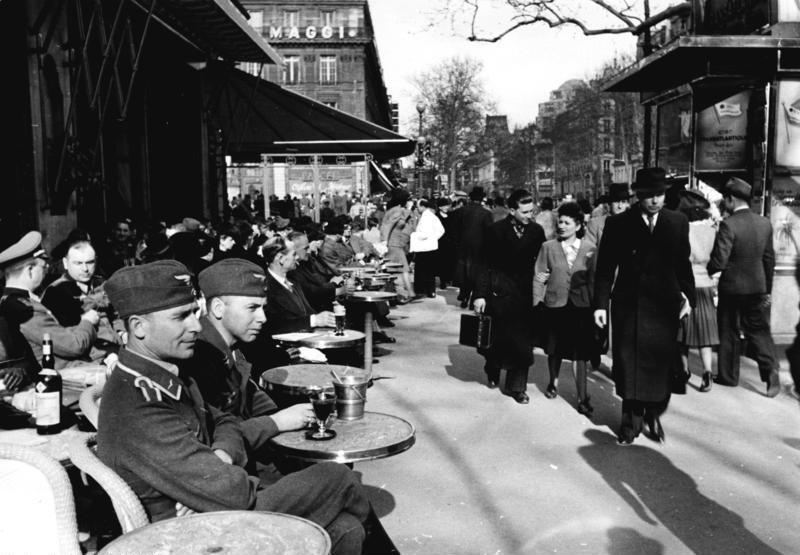
As German forces enter and occupy Paris in June 1940, Frank must decide whether to stay or leave. He’s managed to pull himself out of a desperately impoverished background to open one of the top bars in France. Starting over in his 50s will be exceptionally difficult. His memories of the trenches during WWI aren’t easy to forget, and seeing the Germans obliterate his adopted country’s defenses rankles him greatly.
To make matters more difficult, he’s also Jewish. Though his background has been well hidden for most of his life, there’s always the terrible risk that it’ll come out. In the end, Frank chooses to remain at his post.
The renowned and elegant Ritz receives special status and becomes a gathering place for senior German officers. Hermann Göring himself (“the Ogre,” as Frank privately calls him) takes over the Imperial Suite; he demands elaborate furnishings and enormous quantities of hot water for his frequent baths.
Tightrope Over Cocktails
Under German occupation, Frank begins navigating a newly dangerous political and social environment. A guest named Col. Hans Speidel is someone Frank knew previously. His attitude now is decidedly cordial as he instructs Frank to prepare drinks for German officers. But who is Speidel within the Reich? How closely must Frank watch his step around him?
Charles Bedaux was a regular before the occupation, a traitorous man who openly celebrated the German victory. He may be a sycophantic weasel, but he’s also very dangerous. Frank soon recognizes that he must cooperate, or at least appear to cooperate, with the occupiers and collaborators to preserve his position and protect the people around him.
One of those people is Luciano, his Italian teenage apprentice. Luciano is also Jewish, and he escaped Mussolini’s racial laws by coming to France. Frank protects him by concealing his identity and obtaining a forged Swiss passport for him.
As the occupation continues, Frank’s relationship with Blanche Auzello, the wife of the Ritz’s manager, becomes increasingly complicated and important to him. Blanche is an American-born Jew who previously received Frank’s help in concealing her identity through false documents.
Blanche, however, has also become addicted to morphine, with Frank being partially responsible for her dependency. Frank worries about her withdrawal from the drug; he also fears what would happen if the Ritz’s owner discovered their secret. He’s become romantically attracted to Blanche, complicating things further.
Cheers
As WWII stories go, Collin’s choice of setting is relatively unusual, though undeniably enticing. While many might dream of being a regular at an exclusive, luxurious social venue, looming threats and the ubiquitous specter of fascist war crimes make for a riveting and unnerving contrast.
Frank is a fascinatingly complex main character, trapped for years in a thorny web of moral quandaries and conflicting loyalties. He isn’t a saint or a villain, just a man trying to do his best. He often faces choices where lives are in the balance and no option is good, which makes him all the more relatable.
As the conflict progresses, we see how the different characters cope. The already thin sheen of civilization begins to wear off. As the tide turns against Germany, everyone grows more desperate. Betrayals are easy to come by, but trust is an entirely different matter.
Using a distinctly French voice, Collins shows how the fog of war ends up blanketing everyone in Paris, heroes and villains alike. All the while, Frank must maintain his composure, serve his customers with a smile, and help his friends, even as he risks losing everything.
It’s easy to see why this inside story of Paris during the Nazi occupation became such a runaway bestseller overseas. There’s little doubt that it could match that success here in the United States.
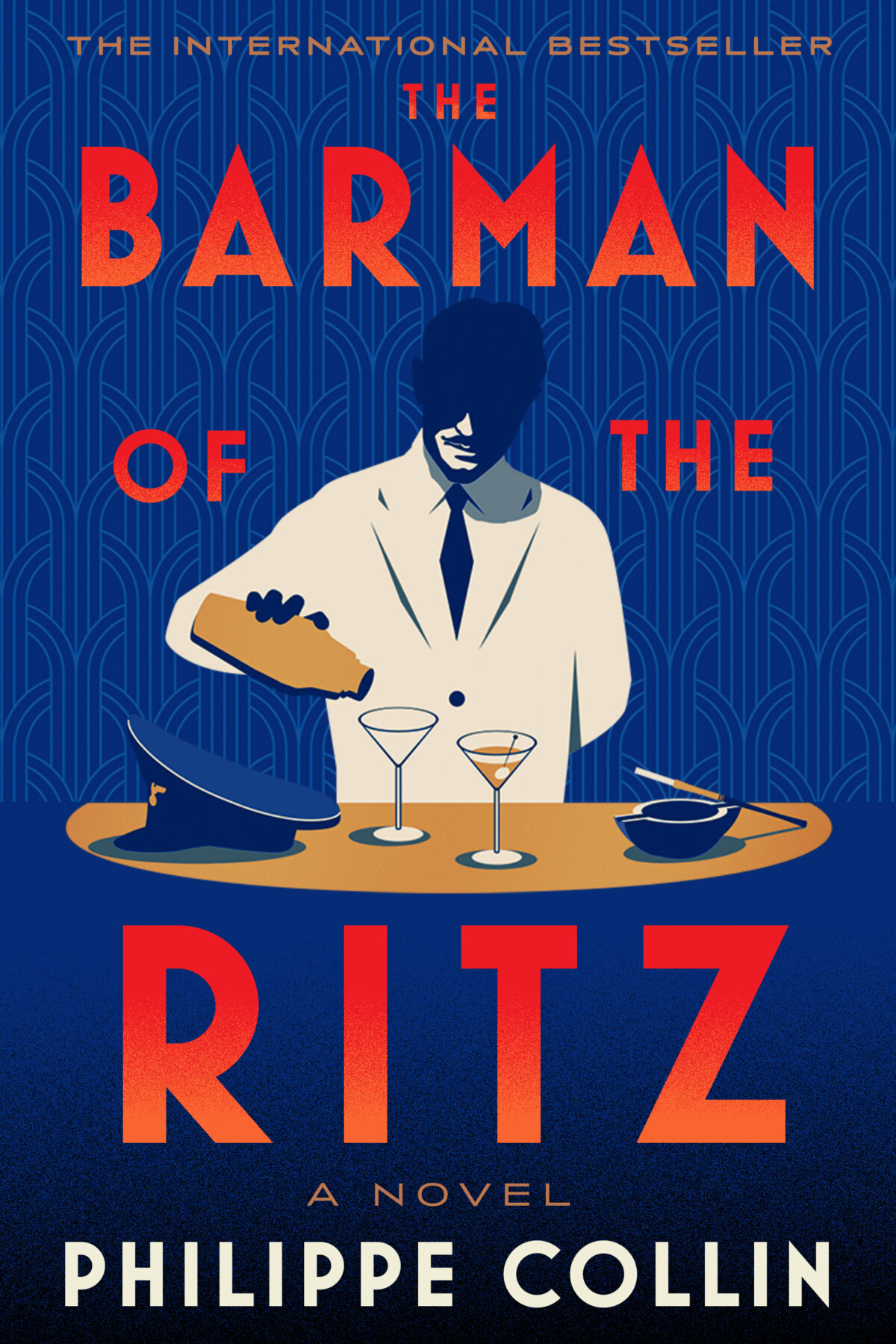
‘The Barman of the Ritz: A Novel’
By Phillipe Collin
Scribner: Sept. 1, 2026
Hardcover, 400 pages
What arts and culture topics would you like us to cover? Please email ideas or feedback to features@epochtimes.nyc