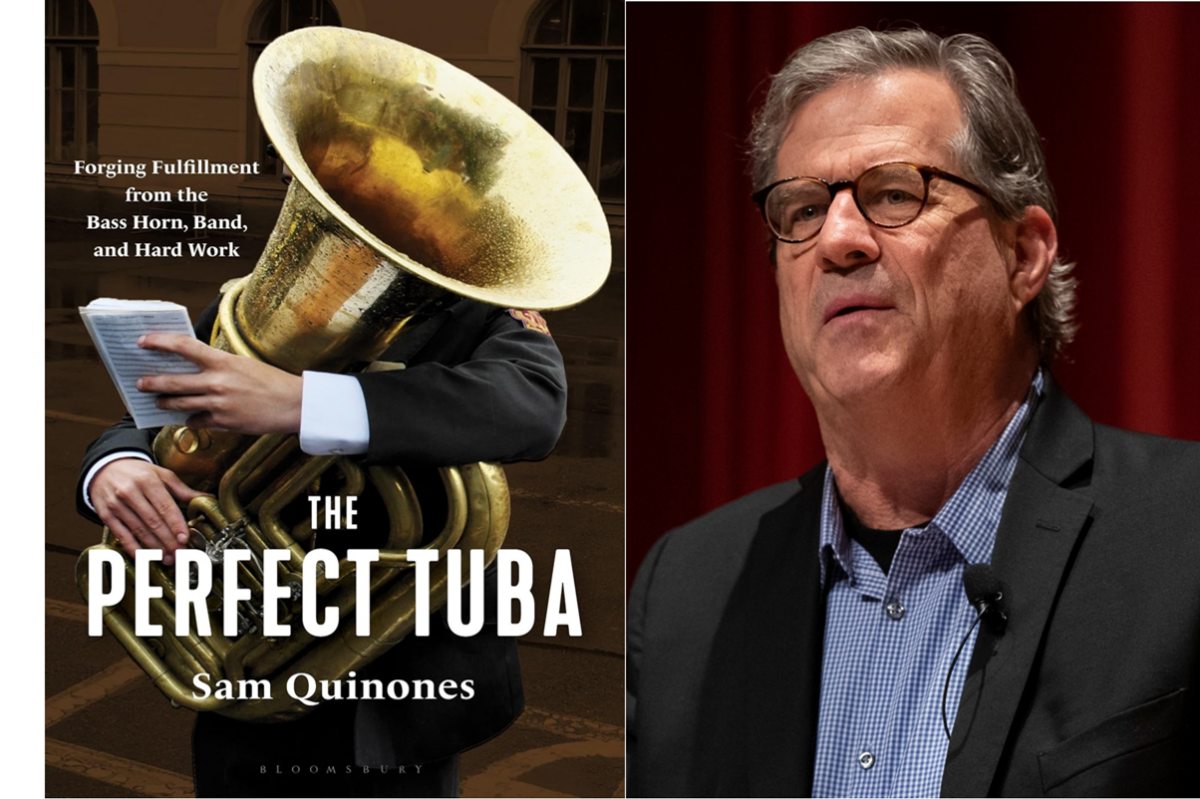
The tuba is the one of the youngest orchestral brass instruments, invented in 1835. Like many youngest children, it gets little respect. The solo repertoire for tuba is limited. No one ever got rich or famous playing the tuba. Tuba players tend to be the kid arriving last at the first band class or the one who has to take an instrument the school issues.
Yet the tuba is one of the most important instruments in an ensemble. As the bass, it provides the foundation for a band or orchestra’s sound. Its outsider reputation yields the tuba a cachet. Tuba players are countercultural—the ones proud not to be one of the cool kids.
The tuba first drew Sam Quinones’s attention while on the crime beat of a major newspaper. Having a tuba at a party is a sign of success among some Mexican Americans, including those cartel drug lords hold. Quinones noticed this phenomenon and wrote about it. Finding tuba stories elsewhere, he soon began collecting them. They were quirky, mostly positive, and even uplifting.
After writing several depressing books on crime and drug addiction, he wanted an upbeat project. He found it in the world of tuba. This book—the result—looks at tubas, tuba players, tuba centers and events, and the cultural impact of the instrument.
The author introduces the tuba, presenting the its three varieties: the concert or orchestral tuba, the sousaphone, and the euphonium. The concert tuba’s bell points skyward, and the tubist holds it in front of him. The sousaphone, commonly used in marching bands, encircles the player, with the bell pointed forward. The euphonium looks like a smaller concert tuba; it is a tenor tuba.
One ongoing thread winding through the book is the tuba’s construction and quality. The book’s title comes from two tubas made by York & Sons in the 1930s. Prototypes for a line of tubas intended for world-class orchestras, their unique sound quality makes them the Stradivarii of the tuba world. Quinones describes the failed attempts to duplicate these instruments by both companies and individuals.
He wraps that thread around two others. One looks at renowned tuba players. Big Bill Bell’s 1950s tuba record album changed the way people looked at tubas. Arnold Jacobs, of the Chicago Symphony Orchestra, revolutionized the way people play tuba. “Tuba Fats” Lacen in New Orleans shaped its street music scene. H.E. Nutt was the longtime director of the VanderCook College of Music during the 20th century. He took a special interest in low-income students’ interest in brass instruments.
TUBA
Quinones takes readers through some of the high points of tuba history. The 1973 Tuba happening, known as the “Tuba Woodstock,” at Bloomington, Indiana, was a five-day symposium of tuba players and teachers. The symposium brought tuba players together for a once-in-a-lifetime gathering. The creation of the Tubists Universal Brotherhood Association (TUBA) shaped tuba for a generation.
He also visits places with active tuba scenes. In the 1980s and 1990s, a vast flock of tubists converged to play in Epcot and with Disney World bands in Orlando, Florida. The tuba scene was fueled by the Dixieland tradition in New Orleans. In the Hispanic community in Southern California, the tuba assumed cult status in the 21st century.
He also highlights ways in which tubists show their chops. Playing “Flight of the Bumblebee” as a tuba solo is one way to demonstrate mastery. The musical concert, TubaChristmas, holds annual solo and ensemble tuba concerts across the United States during the holiday season.
A final thread follows the bands of two poor Rio Grande school systems. H.E. Nutt mentored teachers there in programs he developed as a late-career project. Despite the poverty of the communities and the lack of private music lessons, both schools have been regular competitors in the state band championship contests.
Quinones shows the positive effects of participation in the band program. Those in it develop self-discipline and self-confidence which they carry the rest of their lives. They stay away from the narcotics and human-trafficking gangs. Many go on to music careers. It adds constructive prospects in a community with few opportunities.
These themes run throughout the book, frequently intertwining. They highlight the small and interconnected nature of the tuba community. While a few colleges have massive tuba sections in their marching bands, most bands have far fewer, usually two to four.
Professional positions are scarce, and professional tubists know one another, forming a kind of family. At the same time, because they are widely separated, tubists are usually isolated from each other, lacking day-to-day comradery shared among musicians of more popular instruments.
The result is a charming book. It reveals the quirky nature of the tuba scene. Readers are introduced to unexpected insights into a neglected instrument and those who play it.
“The Perfect Tuba” will surprise and delight readers and the tuba will never again seem dull or lackluster.
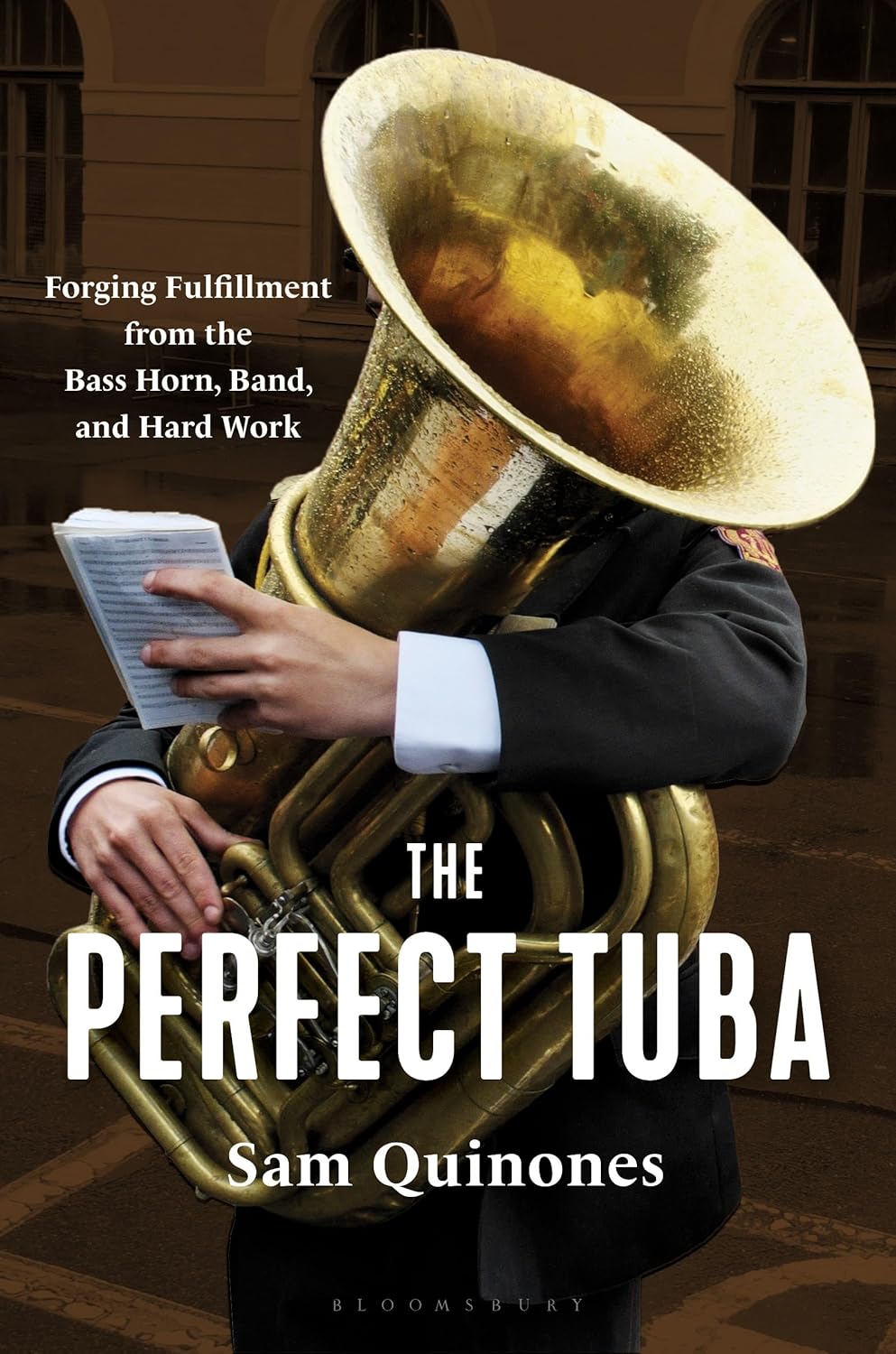
‘The Perfect Tuba: Forging Fulfillment from the Bass Horn, Band, and Hard Work’
By Sam Quinones
Bloomsbury Publishing: Sept. 30, 2025
Hardcover, 384 pages
What arts and culture topics would you like us to cover? Please email ideas or feedback to features@epochtimes.nyc