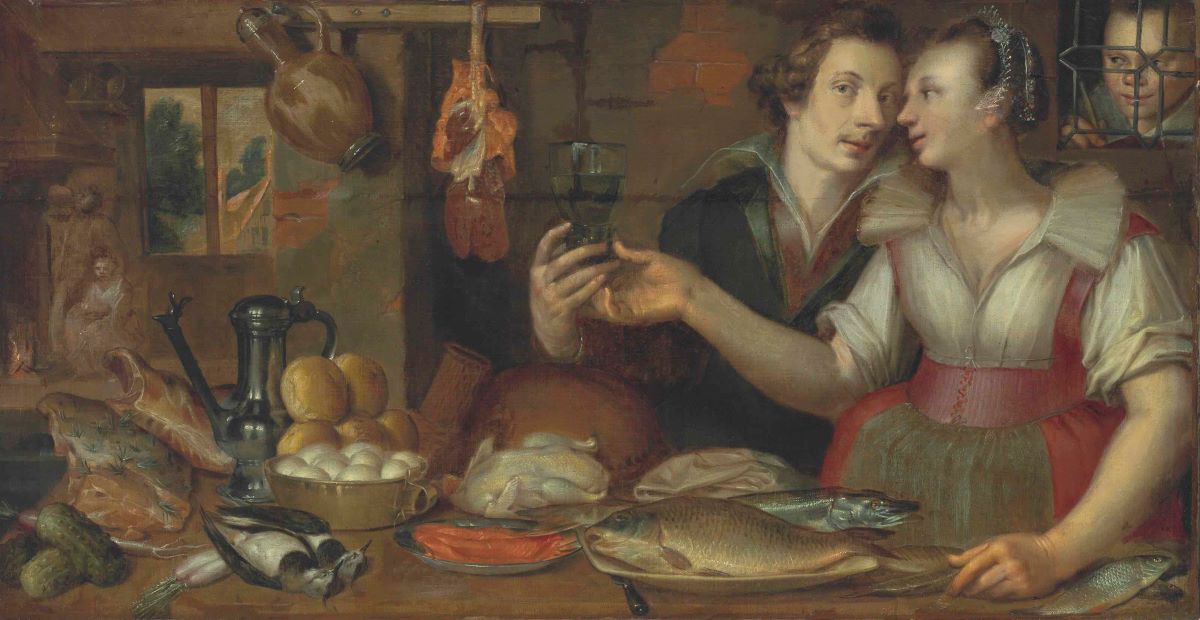
In her short story “The Penningtons’ Girl,” L.M. Montgomery follows a young gentleman, Winslow, who must reckon with his love for a hired maid, Nelly. With such class differences, Montgomery questions whether Winslow cares only for Nelly’s appearances and possessions, or for her soul and personality.
The House Across the River
After suffering from a fever, the gentleman Winslow moves to the country to live with his friends, the Beckwiths, while he recovers his strength. One day, while living out his prescribed country living, Winslow visits the Penningtons, whose house he regularly visits, since it’s across the river from the Beckwiths. He approaches the kitchen and finds himself face to face with a beautiful young woman, whom he concludes is Mrs. Pennington’s new maid.
He asks her for a drink of water and then asks if he may rest a while before he leaves. She kindly assents, but when she brings apples out to peel, Winslow finds that she is far different from all of Mrs. Pennington’s other hired maids. This maid, named Nelly, doesn’t jest or play with Winslow, but conveys a general disregard for his presence.
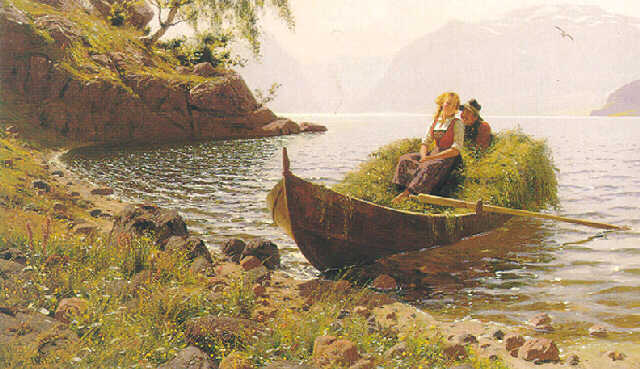
Winslow begins haunting the Penningtons’ house after this first encounter with Nelly. He then starts regularly taking Nelly out in the boat and escorting her to Sunday sermons. All at once, Winslow discovers that he is in love with this simple, poor maid with poor grammar. Such a realization startles him, especially because of stark class differences, but his negative thoughts cannot prevent him from visiting her every day.
To Love the Pilgrim Soul
However, Winslow’s love is tested one day when he and Nelly, while rowing on the river, encounter some of his city friends picnicking along the bank. These friends invite the couple to join them in their picnic. While Nelly insists that they join his friends, Winslow refuses at first, feeling shame and embarrassment from his friends’ looks. Yet at Nelly’s insistence, he bravely steps ashore, determined and ready to resist all objections.
The picnic starts fairly well, the men treat Nelly kindly, though the women treat her with stiff cordiality. Unfortunately, things turn cold when one of the local boys arrives and exclaims: “If there ain’t Mrs. Pennington’s hired girl!” This announcement causes the women to completely snub Nelly and Winslow to become grim, while “wait[ing] on her with ostentatious deference.” Nelly endures with poise and seeming disregard, but right after lunch, she jumps into the boat and rows away, leaving Winslow with his friends.
Later that night, when he visits her, Nelly tells Winslow that she will be leaving. Her father, she says, has found them a house finally and wants her to join him. Winslow is bewildered—what is he to do without Nelly?
Through this story, Montgomery illustrates the various trials couples and friends endure that test the strength and foundation of their love and friendship. She demonstrates the need to love others for who they truly are, rather than for anything they might or might not possess. For if relationships are founded upon artificial or transitory factors, they will fade and falter with change.
William Butler Yeats puts it perfectly in his poem “When You Are Old”: “How many loved […] your beauty with love false or true;/ But one man loved the pilgrim soul in you,/ And loved the sorrows of your changing face.” Thus, true love and friendship sees a person’s soul and loves it in its pilgrimage through life. The true friend or lover remains faithful, even when the face or circumstances change. True love loves the pilgrim soul, for it illuminates and beautifies the face.
What arts and culture topics would you like us to cover? Please email ideas or feedback to features@epochtimes.nyc