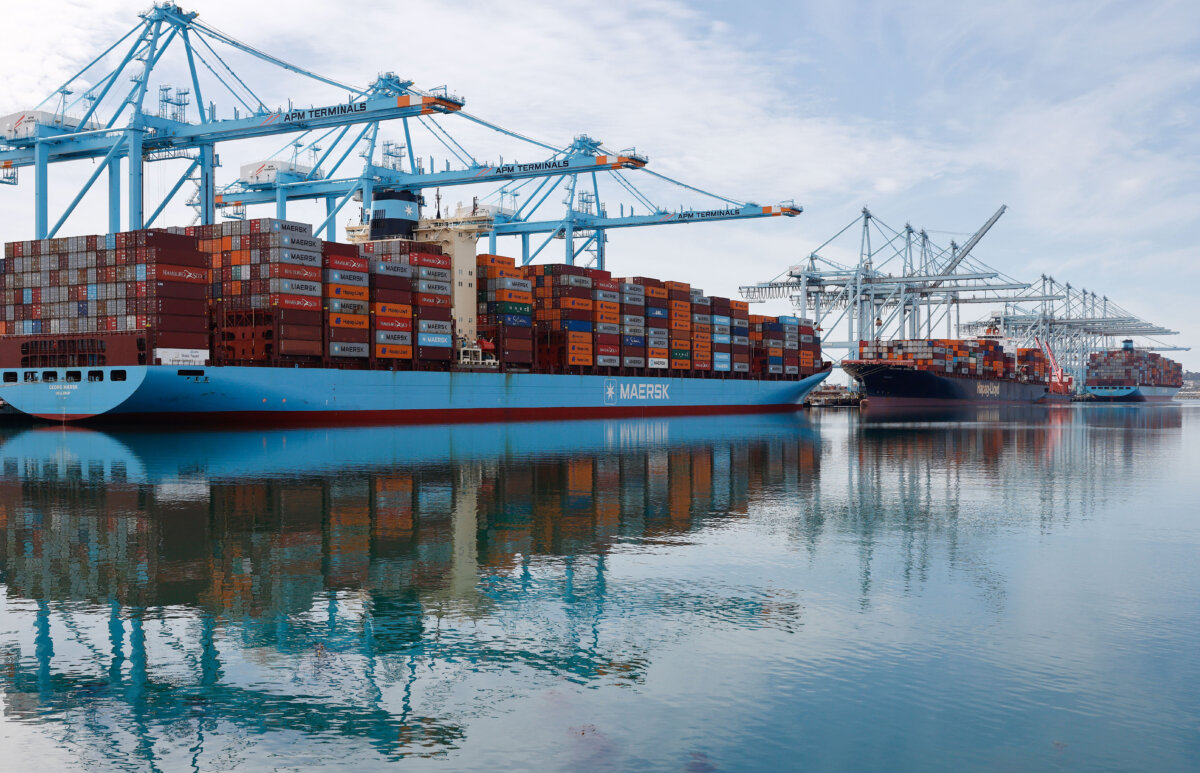

A federal judge on March 6 gave the Trump administration more time to start refunding about $166 billion in levies collected under the president’s global tariff structure that the Supreme Court recently invalidated.
Judge Richard K. Eaton, who sits on the U.S. Court of International Trade (CIT), suspended the order he had issued earlier last week requiring the government to immediately begin the process of issuing refunds of duties implemented via the executive orders under the International Emergency Economic Powers Act (IEEPA).
Eaton said the decision was made after considering a filing from a U.S. Customs and Border Protection (CBP) official, who had told the CIT that its current systems are not equipped to handle a surge of refund claims immediately.
“CBP has never been ordered to, nor has it attempted to, process a volume of refunds anywhere near the volume of total entries and Entry Summary lines on which IEEPA duties have been deposited,” Brandon Lord, director of the CBP’s trade policies program, said in a declaration to Eaton filed March 6.
The CBP director said in his filing that his agency had collected around $166 billion under the Liberation Day tariffs, tied to 53 million entries from more than 330,000 businesses.
Lord said that the CBP was working on a streamlined process that would spare importers from filing individual lawsuits, using the automated commercial environment (ACE), which importers already use to submit, track, and correct customs entries.
“CBP is making all possible efforts to have this new ACE functionality ready for use in 45 days,” the agency told the court. “This new process will require minimal submission from importers.”
President Donald Trump had imposed reciprocal rates under the IEEPA on dozens of countries.
The Supreme Court ruled in a 6–3 decision on Feb. 20 that the tariffs, which the president called the “Liberation Day” tariffs, were unconstitutional because the president did not have the authority to levy them under the IEEPA.
New 10 Percent Global Tariffs
Following the Supreme Court’s decision, Trump imposed a 10 percent global import tariff regime under Section 122 of the Trade Act of 1974, a statute that authorizes temporary tariffs of up to 15 percent to address “fundamental international payments problems.” The duties can remain in place for up to 150 days and would require congressional approval to extend beyond that period.
These new tariffs face a legal challenge from a coalition of attorneys general from 24 mostly Democrat-led states.
The lawsuit argues that Section 122 has never been invoked and can be used only under limited circumstances, such as to address “large and serious balance-of-payments deficits” and to prevent an “imminent and significant depreciation of the dollar.” The lawsuit says that the president’s stated rationale does not meet those requirements.
The Trump administration said the use of Section 122 is justified.
“The President is using his authority granted by Congress to address fundamental international payments problems and to deal with our country’s large and serious balance-of-payments deficits,” a White House spokesperson said in a statement to The Epoch Times on March 6.
“The Administration will vigorously defend the President’s action in court.”
Kimberly Hayek and Bill Pan contributed to this report.
 Friends Read Free
Copy
Facebook
Tweet
Friends Read Free
Copy
Facebook
Tweet