
Now that the U.S. government has reopened its doors, federal agencies will begin releasing key economic data, starting with the September jobs report next week.
In an update from the Bureau of Labor Statistics (BLS), the nonfarm payrolls report for September will be published on Nov. 20—more than a month after it was initially scheduled for release—at 8:30 a.m. Eastern time.
The bureau will release real (inflation-adjusted) earnings a day later. This report, which will also come out more than a month after its originally scheduled date, highlights the difference between the monthly consumer price index (CPI) and average hourly earnings.
“BLS will announce revised news release dates on this page as they become available. We appreciate your patience while we work to get this information out as soon as possible, as it may take time to fully assess the situation and finalize revised release dates,” the BLS stated.
Economists, investors, and Federal Reserve policymakers have been scouring alternative private-sector data to assess the health of the U.S. labor market throughout the shutdown. A broad array of substitutes was thrust into the spotlight, from Indeed Hiring Lab’s job postings to ADP’s National Employment Report.
The White House warned on Nov. 12 that the October data may not be released because of the shutdown, which suspended data collection and reporting efforts.
“The Democrats may have permanently damaged the federal statistical system with October CPI and jobs reports likely never being released,” White House press secretary Karoline Leavitt said at a Nov. 12 press briefing. “All of that economic data released will be permanently impaired, leaving our policymakers at the Fed flying blind at a critical period.”
In a Nov. 13 Fox News interview, National Economic Council Director Kevin Hassett clarified that the October jobs report might not include the unemployment rate because the household survey was not conducted that month.
“We’ll get the jobs part, but we won’t get the unemployment rate. And that’ll just be for one month,” Hassett said.
The Department of Commerce’s Bureau of Economic Analysis, meanwhile, will resume releasing other crucial data that had been absent throughout the six-week spending impasse.
On Nov. 19, the bureau will provide the August U.S. international trade data for goods and services.
The second estimate for the third-quarter gross domestic product (GDP) will come out on Nov. 26.
The July–September period is expected to show a 4 percent expansion, according to the Atlanta Fed’s GDPNow model, a running estimate of GDP.
The personal consumption expenditures (PCE) price index—the Federal Reserve’s preferred inflation measure—for October will be released on the same day.
The Cleveland Fed’s Inflation Nowcasting model suggests that the PCE price index rose by 0.2 percent month over month and remained flat year over year at 2.7 percent.
“The Bureau of Economic Analysis is working to update its schedule of economic releases, which was affected by the government shutdown,” the agency said in a statement.
“[The Bureau of Economic Analysis] is consulting with the U.S. Census Bureau, the Bureau of Labor Statistics and other data suppliers to determine the availability of data used to produce our economic indicators. We will publish updated release dates as soon as they are available.”
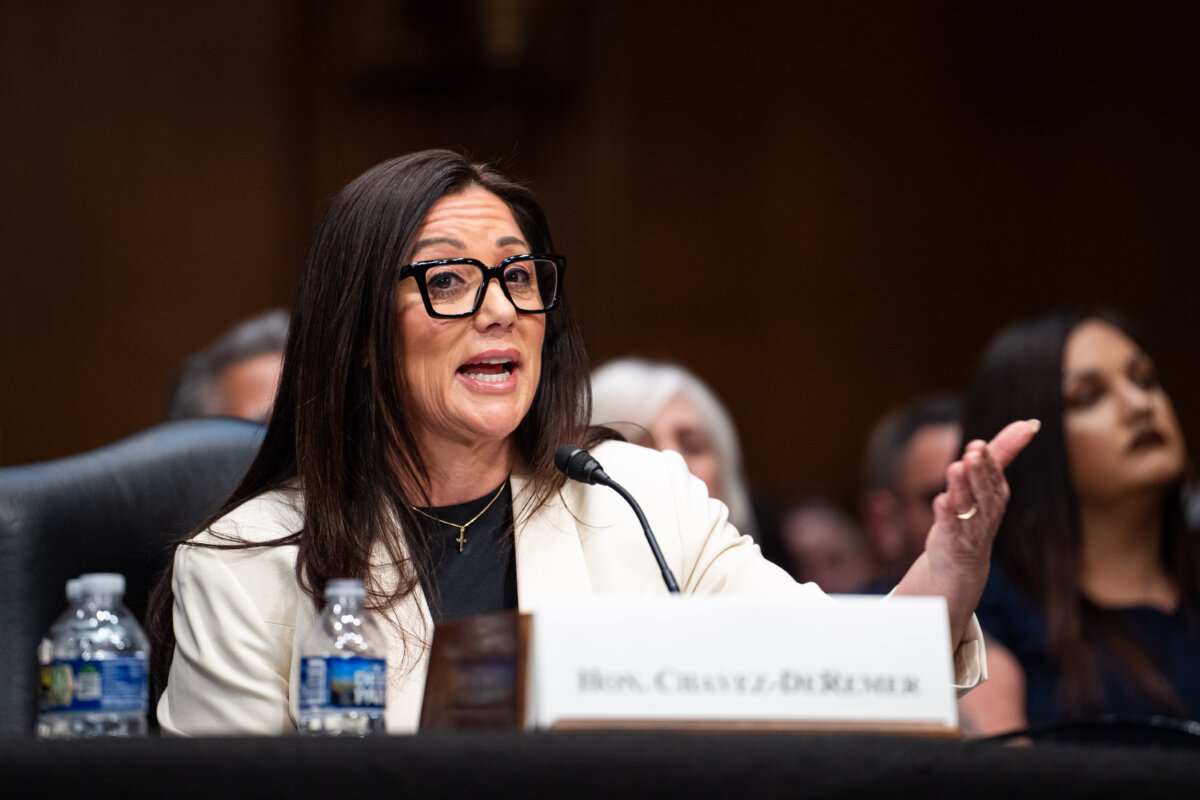
Regarding the October CPI report, Labor Secretary Lori Chavez-DeRemer said the BLS was unable to collect complete data.
“So they will have to assess for accuracy, make sure they have enough data collection,” Chavez-DeRemer told Fox Business in an interview on Nov. 14.
Incoming Data Dump
Economic observers will now comb through the incoming data to identify new trends emerging in the broader economy.
Various indicators signaled that the U.S. labor market is continuing to slow, while consumer price inflation may have cooled.
Both developments should be sufficient to support the Federal Reserve’s decision to cut interest rates at the December Federal Open Market Committee policy meeting, according to the CME FedWatch Tool.
While Fed Chair Jerome Powell suggested that a quarter-point rate cut was “not a foregone conclusion” in December, investors widely anticipate the central bank to follow through on another reduction to the benchmark federal funds rate.
But a deeper dive into monetary policymakers’ thinking could be revealed in the meeting minutes scheduled for release on Nov. 19.
The other challenge could be the adverse effects of the record-breaking shutdown.
“Although data flow should now resume, uncertainty around timing, accuracy, and completeness of key inflation and labor market indicators—alongside the direct economic impact of the [shutdown]—may tactically weigh on sentiment,” HSBC investment strategists said in a Nov. 14 note.
An Oct. 29 analysis from the nonpartisan Congressional Budget Office estimated that a six-week shutdown would shave 1.5 percentage points off fourth-quarter GDP growth before rebounding early next year.
 Friends Read Free
Copy
Facebook
Tweet
Friends Read Free
Copy
Facebook
Tweet