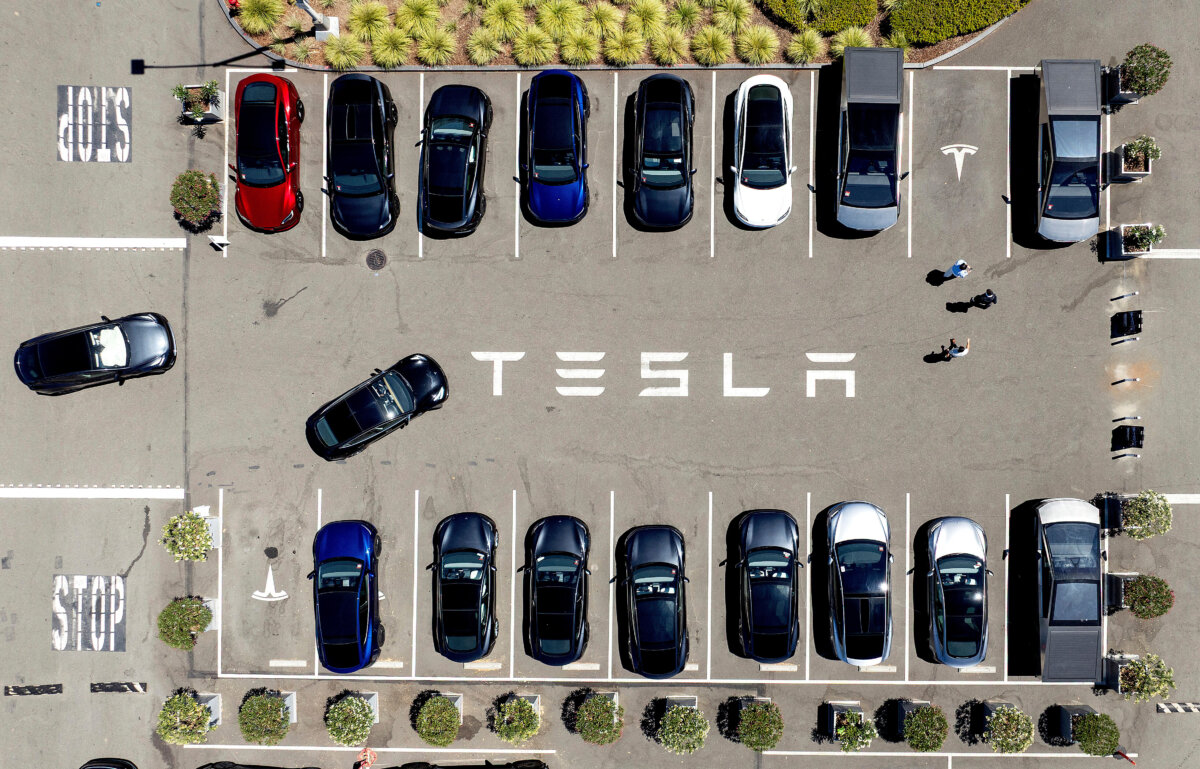

A week after a substantial federal tax incentive for purchasing electric vehicles (EVs) expired, Tesla unveiled two more affordable vehicles at less than half the cost of its popular Model X and Model S.
Buyers rushing to capitalize on the $7,500 tax credit before it expired on Sept. 30 pushed EV sales to record highs in September at Tesla, General Motors, and Ford. It remains to be seen how sales of EVs will play out in the final quarter of the year versus traditional gas or hybrid-electric vehicles.
Tesla on Oct. 7 unveiled two new versions of its Model Y SUV and Model 3 sedan that are about $5,000 cheaper than premium editions.
According to information posted on the Austin-based EV company’s official website, the new standard Model Y rear-wheel drive SUV starts at just under $40,000, with the premium rear-wheel drive starting at $44,990. The premium all-wheel drive model starts at $48,990, with the performance all-wheel drive model starting at $57,490.
The new standard Model 3 rear-wheel drive sedan starts at just under $37,000—the cheapest model in Tesla’s lineup—with the premium rear-wheel drive version starting at $42,490. The premium all-wheel drive version of the Model 3 starts at $47,490, while the performance all-wheel drive model starts at $54,990.
Conversely, Tesla’s Model S, first put into production in 2012, starts at just under $95,000, and its Model X, put into production in 2015, sells for nearly $100,000. The AWD Cybertruck starts at about $80,000.
The standard rear-wheel drive versions of the Model Y and Model 3 both have a range of 321 miles and top speeds of 125 miles per hour, Tesla’s website shows.
Acceleration is better in the Model 3, which can go from 0 to 60 mph in 5.8 seconds versus the Model Y’s 6.8 seconds.
Range increases to 363 miles on the premium rear-wheel drive Model 3, with acceleration jumping to 4.9 seconds. Range for the comparable Model Y is 357 miles, with acceleration increasing to 5.4 seconds.
The lower-priced EVs were long expected after Tesla’s Chief Financial Officer Vaibhav Taneja and Vice President of Vehicle Engineering Lars Moravy confirmed in April’s conference call with investors that less-expensive models of both vehicles would be hitting showroom floors later in the year.
“[We’ve] been targeting the low cost of ownership,” Moravy said. “Monthly payment is the biggest differentiator for our vehicles. And that’s why we’re focused on bringing these new models with the big, new lowest price to the market within the constraints of selling.”
In order to reduce costs, Tesla stripped a host of features from previous iterations of both models.
The base-trim level Model Y loses the LED lighting strip across the front and rear in favor of individual lights, and standard rims are now 18 inches in diameter. The center console has been replaced by a storage bin with cupholders, and the front storage trunk is smaller.
Changes in the Model S are more subtle, such as lack of rear entertainment screen and cloth trim instead of full leather seating.
Tesla reported record sales of 497,099 electric vehicles in the third quarter, including sales of 481,166 Model 3 and Model Y vehicles.
 Friends Read Free
Copy
Facebook
Tweet
Friends Read Free
Copy
Facebook
Tweet