
Commentary
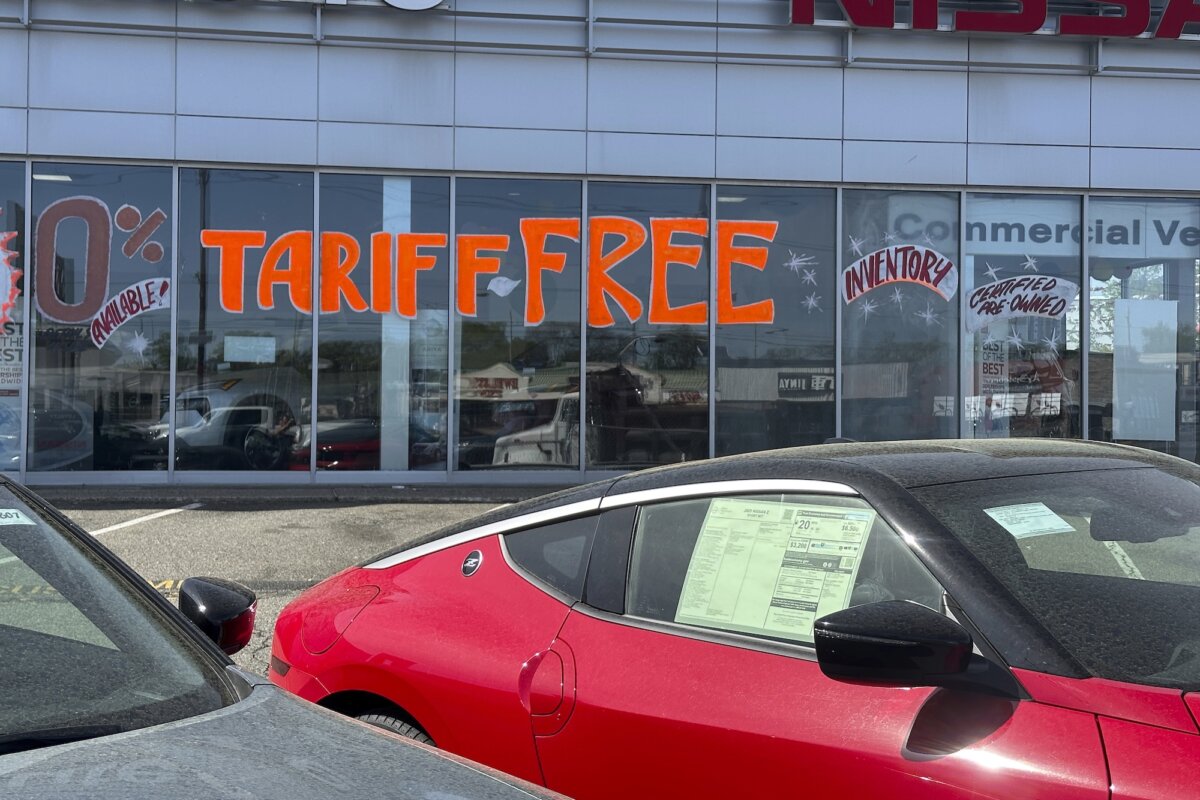
Last week’s news was dominated by the Trump tariffs, including letters sent to countries disclosing their August 1st tariff schedules. Japan and South Korea have been hit with 25% tariffs, so both of these major trading partners want to negotiate a more favorable trade deal before August 1st. Since Japan and South Korea have auto plants in the U.S., they can onshore more manufacturing, so it will be interesting to see if they can cut a more favorable deal with the Trump Administration during the next two weeks.
The big news this week will be Tuesday morning’s release of retail sales and the June Consumer Price Index (CPI), followed by today’s Producer Price Index (PPI). If inflation continues to remain low, maybe the Fed will cut rates in two weeks, and if we also see a pick-up in June retail sales after May’s slow pace, this could be a catalyst for a rise in business and consumer sentiment this summer.
Here are the most important developments recently and what they mean:
– The stock market is largely ignoring the latest tariff news, such as 30% tariffs on the European Union (EU) and Mexico, and a whopping 50% on Brazil on August 1st. Apparently, Wall Street has finally figured out that this is how President Trump negotiates, namely by making the other side increasingly uncomfortable.
– When a country has balanced trade with the U.S., like Australia and Britain, reciprocal tariffs above 10% baseline tariffs are no longer necessary. However, when a country has erected multiple trade barriers like the EU has, reciprocal tariffs will be imposed, especially if those countries do not agree to buy more U.S. goods and services.
– German Chancellor Friedrich Merz said President Trump’s threat of 30% tariffs would hit exporters “to the core” if a negotiated solution cannot be found in the coming weeks. Merz said he was coordinating closely with other EU leaders to ensure tariffs of such magnitude don’t go ahead and said, “That requires two things: unity in the European Union and good lines of communication with the American president.”
– Clearly, Merz is becoming frustrated with the Brussels negotiating team that is representing 27 nations, so Germany may have to cut a deal like Britain did, where the first 100,000 vehicles imported annually are only exposed to a 10% U.S. baseline tariff. Obviously, since the German auto industry is so large, a high annual tariff limit of 250,000 or so may be required. There is no doubt that President Trump wants Germany to onshore more of its manufacturing in America and has even offered VISAs for displaced workers, so it will be interesting to see what deal Germany ultimately gets from the Trump Administration.
– Tariff revenues rose to $27 billion in June, up 301% compared to a year ago, and are expected to surge to $60 billion per month when tariffs are finalized on August 1st. Even better, there was a federal government surplus in June, which is the first time since 2017 during President Trump’s first term.
– Interestingly, Treasury Secretary Scott Bessent is missing a G-20 finance meeting this week in South Africa. Secretary of State Marco Rubio has implemented a boycott of South Africa by top U.S. officials out of scorn over his hosts’ theme for its G20 presidency of “Solidarity, Equality and Sustainability.” Additionally, the U.S. continues to provide asylum to South African farmers and their families who continue to have their land seized without any compensation. South African President Cyril Ramaphosa signed a land seizure bill back in January.
– The Labor Department announced on Tuesday that the Consumer Price Index (CPI) rose 0.3% in June, which was in line with economists’ consensus expectation. The core CPI, excluding food and energy, rose 0.2% and was lower than economists’ consensus expectation. Food prices rose 0.3% and energy prices surged 1% in June. Shelter costs (owners’ equivalent rent) rose 0.2% in June and remain a big inflation catalyst and have risen 3.8% in the past 12 months. Higher gasoline and shelter costs accounted for the majority of the CPI inflation. Interestingly, new vehicle prices declined 0.3% in June, while used vehicle prices declined 0.7%, so there appears to be no tariff impact on vehicle prices yet.
– Nvidia shares surged on Tuesday because the Trump Administration relaxed the export restrictions on its H20 chip, which was designed for China. By lifting these export restrictions, Nvidia will be able to continue its AI dominance and help to squelch Chinese competition. Founder and CEO Jensen Huang has proven to be a skilled diplomat. I do not know what he told President Trump at his recent White House meeting, but clearly, Huang is maintaining a great relationship with both China and the Trump Administration.
Overall, the CPI report is not a market mover, so the Producer Price Index (PPI) on Wednesday should provide more insight, especially any tariff impact on wholesale goods prices. Surging tariff revenue is expected to help the Treasury Department better manage the federal government budget deficit. Finally, onshoring in America is real, so economic growth remains strong, and even 5% annual GDP growth is possible in the upcoming quarters.
*Views expressed in this article are opinions of the author and do not necessarily reflect the views of The Epoch Times.
 Friends Read Free
Copy
Facebook
Tweet
Friends Read Free
Copy
Facebook
Tweet