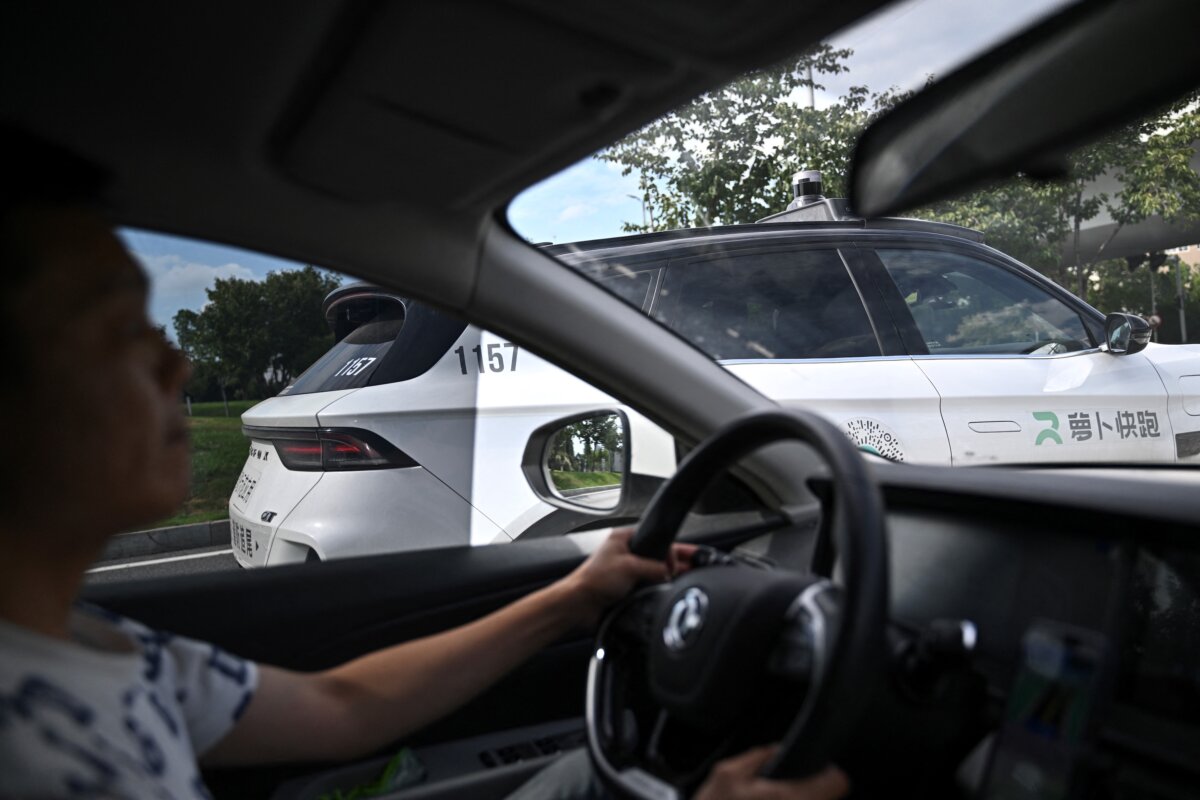

Dozens of Baidu Apollo Go robotaxis suddenly stopped on roads in Wuhan, China, on Tuesday evening, leaving passengers stranded.
Wuhan police received multiple emergency calls starting at 8:57 p.m. local time. Callers reported vehicles were stuck in the middle of roadways and unable to move.
Officers and transport officials as well as Baidu staff responded according to emergency plans. Police said a preliminary investigation pointed to a system fault.
All passengers exited the vehicles safely and no one was injured. The exact number of affected vehicles was not specified in the official police statement.
Police said a preliminary estimate indicated more than 100 robotaxis may have been involved. The cause remains under investigation.
The Wuhan Municipal Public Security Bureau Traffic Management Bureau posted a related bulletin on Weibo early on April 1.
Apollo Go, also known as Radish Run, is Baidu’s driverless ride-hailing service.
The vehicles use sensors and software to operate without a human driver. The company is China’s largest robotaxi operator and runs in more than a dozen cities, with Wuhan as one of its main hubs.
The service has completed more than 20 million rides worldwide. It’s expanding internationally, including to Abu Dhabi and Dubai.
Robotaxis are fully autonomous cars that offer paid rides like ordinary taxis but without a safety driver. This technology is still developing and is being tested in several countries.
The Wuhan incident is a rare large-scale malfunction in China’s growing robotaxi industry.
Videos on social media showed stalled cars on main roads and highways with hazard lights on. Some passengers said they waited out the traffic-jam inside their vehicles for up to two hours.
The event has raised questions about the reliability of autonomous systems.
A similar issue occurred in December 2025 when a power outage in San Francisco caused multiple Waymo robotaxis to stall. The company later issued a software update to better handle such situations.
China has seen the largest number of commercial robotaxi deployments compared to other countries, with services operating and charging fares in multiple cities since 2022. Autonomous vehicles often stop safely when they detect uncertainty, a feature designed to prevent accidents.
 Friends Read Free
Copy
Facebook
Tweet
Friends Read Free
Copy
Facebook
Tweet