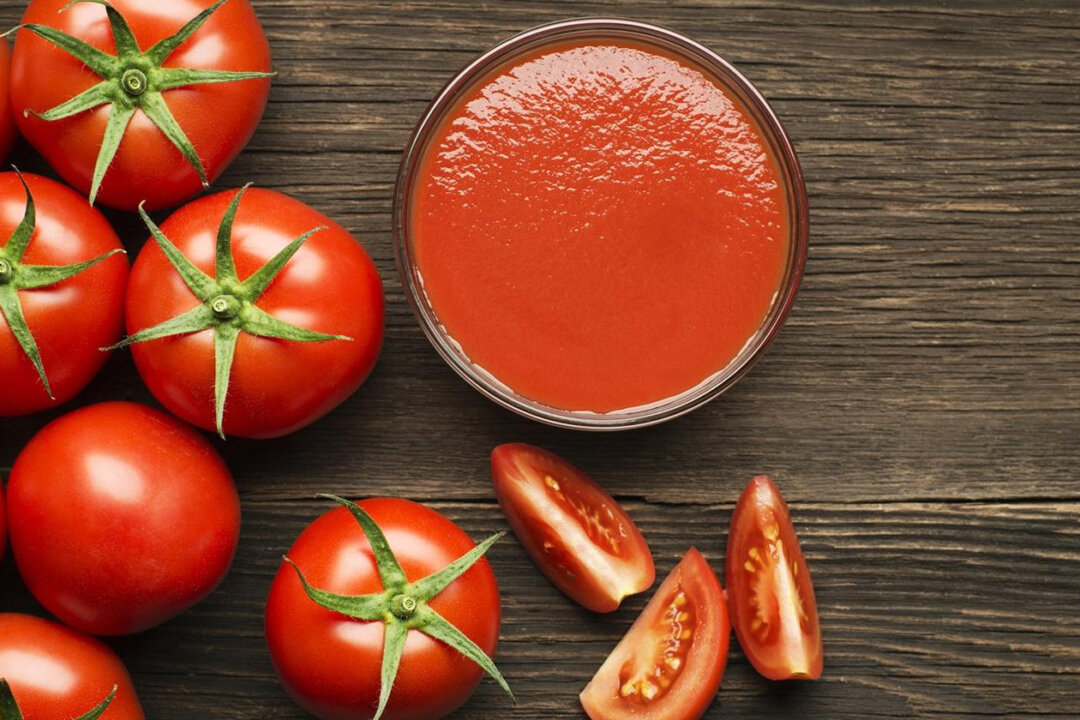

Tomatoes belong to the Solanaceae (nightshade) family and are widely cultivated all over the world. Colorful and ripe with a sweet, tangy flavor, tomatoes are a versatile culinary fruit that can be eaten raw or cooked into delicious dishes.
Tomatoes not only taste good but are also high in nutritional value. Rich in vitamins, minerals, fiber, protein, essential amino acids, monounsaturated fatty acids, carotenoids, phytosterols, and more—tomatoes are an excellent source of nutrients and bioactive compounds.
Let’s explore the benefits of tomatoes and the best ways to eat them.
1. Tomatoes Protect the Heart
According to traditional Chinese medicine (TCM) theory, the five colors and five flavors of food correspond to the five internal organs of the human body. Chapter 10 of the TCM classic “Yellow Emperor’s Canon of Internal Medicine” states: “The color and taste are linked to the five internal organs. White and spicy should be for the lungs, red and bitter for the heart, green and sour for the liver, yellow and sweet for the spleen, and black and salty for the kidneys.”
“Red and bitter for the heart” means that red and bitter foods nourish the heart.
If we cut a tomato sideways, we can see that it has four fluid-filled chambers similar to the ventricles of the heart. “Form complements similar form,” according to Chinese folklore, and tomatoes are accordingly analogous to the heart in both color and shape.
What nutrients in tomatoes are good for the heart? Tomatoes contain lycopene, a red carotenoid with powerful antioxidant properties found to reduce the risk of cardiovascular disease. Studies in recent years have found that the antioxidant capacity of lycopene is twice that of beta carotene and 10 times that of vitamin E.
The redder the tomato, the higher its lycopene content. Tomatoes ripened at room temperature will contain more lycopene than those stored in the refrigerator. Ordinary nutrients are easily destroyed by heat during cooking, but fat-soluble lycopene is different. After cooking with fat, the absorption rate of lycopene may increase by two to three times. However, once it comes into contact with air, it’s easily oxidized, so immediate consumption of open products or cooked tomato dishes is recommended for optimum nutrient absorption.
A research report published in the Journal of Functional Foods in April 2018 found that cooked tomatoes help probiotics avoid erosion by gastric acid, thereby greatly promoting the health of the intestinal tract. In plainer language, tomatoes help beneficial bacteria get through the stomach to the colon where they can work their metabolic magic in the microbiome. Cooking tomatoes also releases more of their antioxidants, including lycopene.
2. Nourish the Eyes and Protect the Skin
In addition to lycopene, tomatoes also contain a variety of antioxidants, such as beta carotene, vitamin C, lutein, and phenols, which can aid in the prevention of age-related macular degeneration and other eye diseases. Tomatoes can also effectively relieve menopausal symptoms such as anxiety, hot flashes, and irritability.
Tomatoes are good for skin health, and eating them can help to prevent sunburn, which in turn may reduce the appearance of sunspots on the skin in later years.
Human clinical data also suggest that regular consumption of tomato paste can lessen UV-induced skin erythema.
3. Tomatoes Protect Joints and Clear Heat
Tomato eaten raw has the effect of promoting body fluid and quenching thirst. Body fluid is very important because it moisturizes the skin, moistens the mucous membranes, and delivers nutrients to various internal organs. Stored within the joint bursa, its function is to lubricate the joints and maintain their flexibility.
In TCM, it’s held that a bad temper (irritation and heat in the heart) causes the body to lose water quickly, resulting in dry mouth, restlessness, poor sleep, and fatigue. Eating raw tomatoes while in this state can help reduce the internal fire. Put a tomato in your mouth and crush it without swallowing it immediately. Keep the tomato juice there for three to five minutes, then swallow. Doing this several times can improve many discomforts caused by anger.
During the summer, replacing hot tea with tomato water can aid in the prevention of high-temperature heatstroke.
4. Tomatoes Strengthen the Stomach, Improve Appetite
Representatives of ancient traditional Chinese medicine include the Four Great Masters of the Jin and Yuan Dynasties, one of whom is Li Dongyuan, founder of the “spleen-stomach theory” of TCM. In his book “Treatise on the Spleen and Stomach,” he stated that “injury to the spleen and stomach can trigger all sorts of diseases.”
The spleen lies in the center of the abdomen, irrigating the liver, heart, lungs, and kidneys—organs considered in TCM to be the “four viscera in the south, east, north, and west.”
Tomatoes are good for the spleen and stomach because of their stimulating effect on the appetite.
People with a weak spleen and stomach are prone to insufficient qi (vital energy) and blood, which will affect the liver. TCM holds that “the liver finds its pathway up to the eyes.” When the liver is weak, the eyes will tire easily and affect eyesight.
Modern medical research has found that the liver and eyes are connected through a few different biochemical pathways, including the regulation of iron, hepatokines, and glutathione.
Tomato Stewed With Pork Ribs
If your eyes tire easily and this affects your eyesight, and you suspect that your liver is weak, TCM recommends a delicious medicinal meal of tomato stewed with pork ribs.
Preparation:
Cut 8.8 ounces (about 250 grams) of pork ribs into smaller pieces and place in a pan.
Add 17 fluid ounces (500 ml) of water, stew on low heat until it turns about 80 percent soft, then add 5.3 ounces (about 150 grams) of sliced tomatoes.
Add some ginger slices and salt and stew until fully soft. If so desired, add pepper to taste, and eat once or twice while hot.
Some Cautions in Eating Tomatoes
- Avoid eating raw tomatoes on an empty stomach as they can cause hyperacidity, bloating, and abdominal pain. It’s better to eat raw tomatoes with or after meals.
- People with a “cold constitution” (those who often have cold hands and feet and are prone to diarrhea) aren’t suited to eating raw tomatoes.
- Women who suffer from menstrual pain should avoid eating tomatoes during their menstrual cycle.
- Avoid unripe, green tomatoes because they contain a high level of solanine, which is mildly toxic and can cause stomach discomfort.