
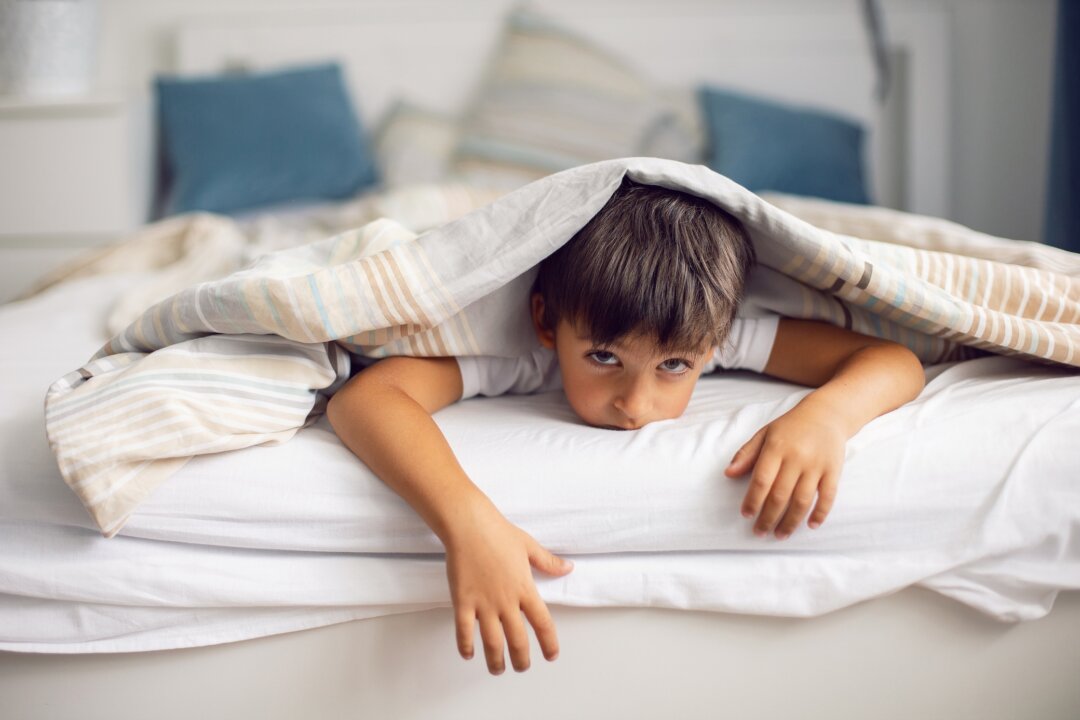

As every parent who has brought home a newborn knows, those sweet bundles of joy have no regard for the normal sleep-wake patterns of adults.
Happily, as circadian rhythms develop, most little ones will eventually settle into a predictable sleeping pattern. But as many as 50 percent of children will experience sleep problems at some point, leading tired and frustrated parents in search of ways to help their children (and themselves) fall asleep—and stay asleep.
Melatonin supplements have been used for decades by adults hoping for a better night’s sleep and, according to the National Institutes of Health, their use more than quintupled between 1999 and 2018. As so many more adults have turned to over-the-counter melatonin supplements in recent years, it’s not too surprising that many of them are also giving them to their children. The American Academy of Sleep Medicine (AASM) reports that melatonin supplements are now the second most popular supplement given to children, beaten only by multivitamins.
The widespread use of melatonin as a sleep-aid for kids has raised some serious concerns among pediatricians. There has been a staggering 530 percent increase in reports of pediatric melatonin ingestion to National Poison Control Centers between 2012 and 2021, and this increase has unfortunately coincided with an increase in hospitalizations over the same time period, largely due to overdoses caused by unintentional consumption of melatonin by young children.
Melatonin is a hormone that is naturally produced by the brain’s pineal gland in response to decreasing light. It helps make you sleepy, and is generally considered safe for adults when consumed in doses of five milligrams or less.
But when it comes to children, there are a lot of unknowns. Unsettled questions exist about appropriate dosages for children, as well as the long-term safety of melatonin supplements. There is a lack of long-term research in this area.
Because melatonin is a hormone which influences not only sleep-wake cycles, but is also thought to play a role in other important physiological functions like fertility, digestion, heart function, depression, and immune responses, questions remain about how long-term melatonin supplementation might impact other areas of health. And in growing children in particular, could long-term supplementation with this hormone impact other hormonal developments?
While melatonin is generally considered safe for short-term use and is not considered to be an addictive substance, a Swedish study, published in the European Journal of Pediatric Neurology in May 2022, found that many children and adolescents who were prescribed melatonin were still taking it three years later, often at increased doses.
According to the Centers for Disease Control (CDC), the sharpest increase in melatonin use among children happened in 2019-2020, with the onset of the COVID-19 pandemic. This could be due to a combination of increased sleep disturbances as well as increased accessibility to melatonin supplements because many kids spent more time at home. It may have also been taken as an antioxidant to support immune function in direct response to COVID.
Whatever the reasons are behind the large increase in melatonin use among children and teens, doctors are now urging a more cautious approach. Research supporting the use of melatonin as a sleep-aid for children is limited, and while it could be helpful for certain kids who are more prone to sleep disorders—like those with autism, for example—experts recommend trying behavioral and lifestyle modifications first. The American Academy of Sleep Medicine (AASM) emphasizes that “Many sleep problems can be better managed with a change in schedules, habits, or behaviors rather than taking melatonin.” Before considering a sleep-aid for your child, have a hard look at the following areas.
Exercise
Most of us can relate to a time we fell into bed exhausted after a day that contained plenty of physical activity. Well, it’s no different for kids who are filled with lots of energy. Tired kids sleep better, and physical exercise is the best way to tire kids out.
One study published in the journal Archives of Disease in Childhood in 2009 showed that kids who were physically active during the day fell asleep faster than their more sedentary peers, and the more vigorous the activity, the faster they fell asleep.
On the flip side, for every hour a child was sedentary during the day, it took them three minutes longer to fall asleep. Most parents are already well aware of this. But still, the amount of physical activity many children are getting, especially during their teen years, is in decline and is often well below the one-hour-per-day minimum recommended by health experts.
Dr. Emily Wisniewski, a pediatrician at Mercy Medical Center in Baltimore, said it is critically important that exercise is a part of our daily—or at least several times per week.
“If we exercise, we tire ourselves out so when we go to bed, we are sleepy enough to help us to fall asleep. When we sit around all day, we may not have that same ‘urge’ to go to sleep. This can mess up our ability to create a good sleep time routine which is crucial in kids.”
Exercise, noted Wisniewski, also comes with the benefits of maintaining a healthy weight, strong heart, and preventing chronic diseases like diabetes and high blood pressure.
Diet
We may not immediately think of diet when considering sleep quality, aside from the obvious consequences of kids who are too hyped up on sugar to get to sleep after devouring Halloween candy or a late dessert. But the consequences of diet go far beyond the visible effects of a sugar rush. Multiple studies have demonstrated a strong connection between a poor diet and poor sleep. A study published in January 2016 in the Journal of Clinical Sleep Medicine found that diets that were high in saturated fat and sugar, but low in fiber, were directly linked to poorer sleep patterns that included less restorative sleep and more disruptions. The high-sugar and high-fat diet participants also took significantly longer to actually fall asleep.
Avoiding foods that are high in sugar, caffeine, and saturated fats before bedtime, and making sure kids have a nutritious, balanced diet throughout the day, can help prepare them for a good night’s sleep. Instead of a bowl of sugary cereal or dessert for an evening snack, a slice of whole-grain toast or piece of fruit is a better option.
Limit Screen Time—Especially Before Bed
By this point, most parents have heard that screen time for kids should be monitored and limited, but this message often gets lost in the reality of our tech-saturated lives. Instead of the two-hour per day screen-time maximum that the American Academy of Pediatrics (AAP) recommends for children, the average American kid often spends double or triple that amount—and teenagers are spending as much as nine hours per day on screens.
Not only that, but a majority of children and teens sleep with an electronic device in their bedrooms, despite mounting evidence that this is a contributing factor for obesity, poor academic performance, and behavioral problems, not to mention poorer sleep.
“Screen time can definitely affect children’s sleep. The more time they are on the screen, the less time they are exercising,” said Dr. Alex Spinoso of Genesis Lifestyle Medicine, and a father of triplets.
“Screen time is also directly associated with disruptions in melatonin, leading to sleep disorders in children. Ways to deal with this include limiting your child’s screen time and avoiding screen time at least one hour after waking up and one hour before bedtime,” Spinoso said.
Wind Down Routine
Kids thrive on predictable routines, and having a consistent bedtime routine—along with leaving enough time to carry it out in the evening—plays an important role in helping kids get ready to sleep well.
A simple routine could look something like: 1. Have a nutritious snack. 2. Brush teeth and go to the bathroom. 3. Get pajamas on. 4. Cuddle and read a story or two.
Or, as Dr. Wisniewski suggests, “Screens off, take a nice bath, PJs on, and then a little reading before bed. A night time routine is crucial!”
Kids love knowing what comes next, and sticking to a comforting, predictable routine that ends with bedtime—ideally at the same time each night—is a good step in the direction of sound sleep.
Final Thought
According to the CDC, the majority of American kids aren’t getting enough sleep, and the numbers get worse with age.
These sleep-deprived kids are at a distinct disadvantage in terms of their physical and mental health, and academic performance, when compared with their well-rested peers.
There may be various reasons for this, but before considering turning to sleep aids for help, have a look at these other areas of life that might use some tweaking. Making positive changes in these areas can have benefits that go far beyond just a good night’s sleep.