
Commentary
Canada is not supposed to have a food problem.
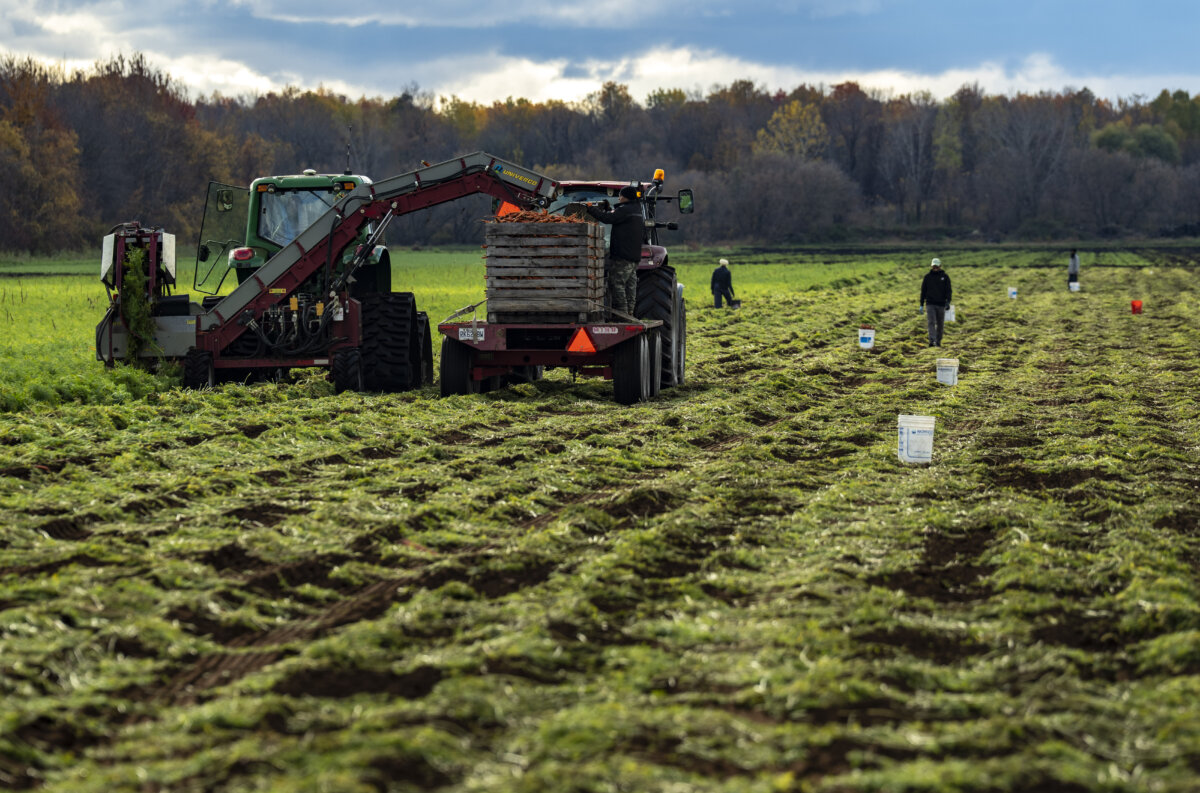
It is a country defined by its capacity to produce—vast agricultural land, reliable water, and generations of farmers who have sustained both. For most Canadians, food has been stable, available, and dependable.
That has not been an assumption. It has been a lived reality. That reality is now under strain.
According to Statistics Canada, grocery prices have risen more than 30 percent since 2021. The Canada Food Price Report 2026 projects that a family of four will spend over $17,000 on food this year. Even by official figures, the pressure is significant. For many households, the experience suggests it is greater still.
What is visible is the cost. What is less visible is the pressure building behind it.
In March 2026, the National Citizens Inquiry convened hearings in Kelowna, British Columbia. Witnesses from across the country placed their experiences on the public record. What emerged is not a single issue, but a pattern that is difficult to ignore once heard directly.
Constance Seutter, president of the Canadian Cervid Alliance, described the consequences of regulatory action on her farm in stark terms: “In total, 587 of our animals were killed.” She spoke of decades of work undone, of compensation that fell far below actual value, and of an industry that has steadily diminished. “We used to represent well over 600 farms across Canada … now we’re probably down to just around 300.”
From a legal perspective, the limits of recourse are equally striking. Civil litigation lawyer Lee Turner testified that authorities require only “a suspicion” of disease to act, and that courts have shown “a high level of deference” to those decisions. Even when additional evidence could have clarified the actual risk, he explained that “it doesn’t matter that you could … prove that their original suspicion was wrong.” The result, as he described it, is that “the only realistic solution … is to advocate for a change to the legislation.”
For those outside the courtroom, the concern is not only the decision itself, but the process surrounding it. Connie Shields, who assisted in reviewing regulatory actions in one case, observed that “administrative enforcement moved forward months before the legal review process was completed.” By the time rulings were issued, the outcome had already occurred.
Veterinarian Ted Dupmeier added a further layer of concern, warning that approaches intended to control disease, when applied without sufficient distinction, can carry unintended consequences. Over time, such practices risk weakening the systems they are meant to protect.
John Graff, a Saskatchewan farmer and livestock nutrition consultant, pointed to the broader structure behind these individual cases. Food production, he emphasized, is shaped by multiple layers of policy, regulation, and economic pressure. When those pressures align, the effects are not always immediate—but they are cumulative. Systems do not collapse overnight; they tighten until there is little room left to adapt.
Economic conditions reinforce that strain.
Sylvain Charlebois, researcher of food distribution and policy at Dalhousie University, has identified rising input costs, supply chain pressures, and global instability as key drivers of food price increases. Alberta farmer Jim Ness, reflecting on Canada’s grain system, described how long-standing policy frameworks continue to shape the conditions farmers face today. These are not short-term challenges. They form the environment in which production now takes place.
For farmers, the impact is immediate and personal.
Dawn Buschert spoke to the weight of navigating increasing costs alongside regulatory demands. Teresa Walker described the uncertainty faced by those attempting to operate within systems that can change rapidly and with little warning. Angel Godsoe pointed to the human toll—stress, instability, and the erosion of what had once been a predictable way of life.
Not all voices made it to the record.
Several witnesses noted that others had intended to testify but ultimately declined, citing concern over potential consequences, including risks to compensation and regulatory standing. That absence, while difficult to quantify, is itself part of the picture.
What emerged from the testimony is not a single failure, but a convergence—legal, economic, and administrative pressures aligning in ways that increasingly constrain those responsible for producing food.
None of this is visible at the checkout. What is visible is the price. The connection between the two is less obvious, but it is direct.
Canada continues to produce food. It continues to export. By conventional measures, it remains strong. But strength is not only measured in output. It is measured in resilience—in whether the system, and the people within it, can withstand pressure without fracturing.
The testimony from Kelowna does not attempt to dictate conclusions. It does something more important. It places evidence on the public record.
If those who produce food are increasingly constrained in how they operate, uncertain in how decisions affecting them are made, and limited in their ability to challenge those decisions, the question is no longer abstract.
It is immediate.
What does that mean for the future of a system Canadians have long relied on without question?
The National Citizens Inquiry will continue its examination with additional hearings scheduled for June.
For those who wish to assess the record directly, the testimony is publicly available here and here. It is worth hearing in full.
Dominique Fournier is executive assistant and communications lead for the National Citizens Inquiry, where she works closely with witness testimony on issues affecting Canadian families, agriculture, and public policy. She holds a Master’s degree in political science from the University of Calgary.
Views expressed in this article are the opinions of the author and do not necessarily reflect the views of The Epoch Times.
 Friends Read Free
Copy
Facebook
Tweet
Friends Read Free
Copy
Facebook
Tweet