
Commentary
It was Oct. 28, 2021, during the digital hell of the worst days of COVID-19 pandemic lockdowns, that Facebook CEO Mark Zuckerberg announced that the company would change its name to Meta. It seemed an odd decision for the company with a global brand name and an implausible success story that even made it to the big screen.
At the time, the idea of the metaverse—a play on “universe” with a techy name meaning “above,” so a universe in the digital cloud—was all the rage. He was so convinced that the future of Facebook would be in the metaverse that he decided to snag the name Meta before someone else could.
Facebook was then, and Meta is now, hip, transversive, upwardly migratory, progressive—the future.
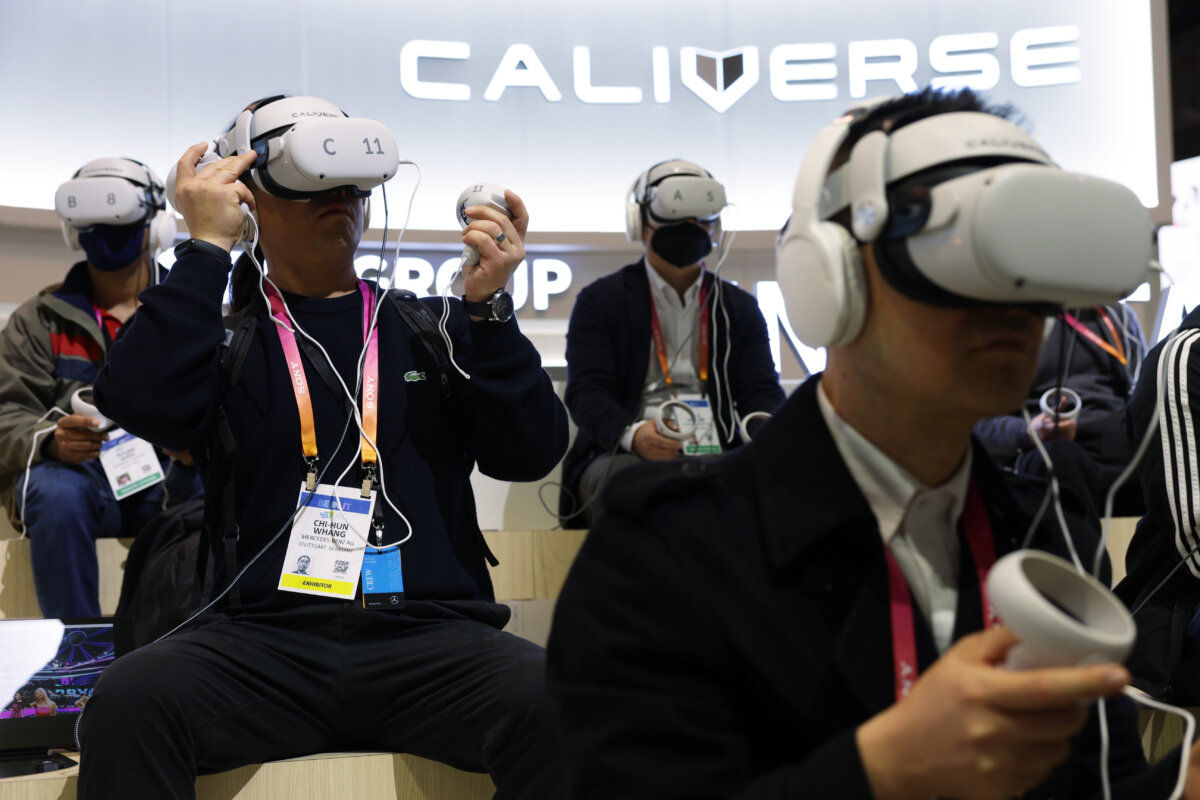
This decision was not just a misstep but an embarrassing disaster that cost the company $80 billion, resulting in nothing really. The core problem: No one showed up in this supposedly gloriously new but wholly discombobulated world of vacuity. There was nothing there. It was exceedingly boring. Plus, the goggles are wearisome.
After five years, the company finally called it and announced that it would stop all support for virtual reality apps running on its platform. It’s essentially a death blow to the cloud-based world, not that it needs one or that anyone will notice. At the same time, it cut 20 percent of its workforce to free up resources for data centers.
The metaverse was a product of its time, a lure to the hopelessly progressive mindset of the newly rich who imagine that their every whim is surely the next billion-dollar idea.
The year 2021 is important. Germophobia had swept the land. The then-director of the National Institute of Allergy and Infectious Diseases, Anthony Fauci, had said it was unlikely that anyone would shake hands again. People would douse their mail with alcohol and their bodies with sanitizer. The kids were holding classes outside and wearing masks, trying to hear what their muffled teachers were saying and eventually giving up.
Online learning was riding high, except that it wasn’t learning. It was opening a screen and pretending to do something for a few hours. Weddings and funerals, if they happened at all, were on Zoom, while everyone spent their stimulus payments upgrading laptops, gaming consoles, smartphones, and tablets. We were all wired and ready to go.
The ultra-rich might have believed that some kind of germ-free utopia was dawning in which we would all stay protected in our homes while interacting with the world only through moving pictures and digital sounds. For many of them, these were the salad days. But for most of us, this felt like the apocalypse. We wanted it to end, which is the only reason people went along with the masks and the jabs: They wanted their freedom.
What the consumer marketplace absolutely did not want was to strap on a headset and hang out with Zuckerberg in a digital cartoon land in which everyone could fly around and meet random people for wrongly named socializing.
What I find especially strange about this whole experiment is the fact that it had already failed once before, and I’m not even sure that Zuckerberg knew that. Early in the digital age, there was a platform called Second Life. Started in 2003 by Linden Lab, a San Francisco-based company founded by Philip Rosedale, it was (and still is) a web-based digital environment in which users could don new clothes and a new personae and fly around to different islands and buildings, meeting people and variously doing stuff.
It never had more than 100,000 users and is still around today, keeping a steady 10,000 people engaged at some level.
Have you ever heard of it? Probably not. However, at the time, it received vast attention. Keep in mind: This was 18 years before Facebook tried the same thing yet again, same pitch and same ethos, but this time deploying the shiny new object of the moment, which was virtual reality. That’s a funny phrase. It means not reality in the same way that artificial intelligence means not intelligence.
I never bothered with the ridiculous metaverse based on the promotions alone. Who wants to be part of an experience that looks like a 1990s-era cartoon world made for 5-year-olds? I was a solid no from the beginning, and I knew for sure that it would fail. It’s odd to know something so obvious when one of the world’s richest and most successful entrepreneurs did not know, but here we are.
My own experience with Second Life lasted no more than 10 minutes. I was supposed to take a tutorial on how to operate the person I was pretending to be, but I could not be bothered—so I decided to improvise. I ended up as a guy with a T-shirt, jeans, and sneakers and started flying. It was OK until I somehow steered into a large body of water and found myself having to walk across the muddy lake floor.
I walked and walked and somehow got to shore and stepped out on land. Except that my shoes got stuck in the mud, so now I had bare feet, jeans, and a T-shirt. Oddly my shirt and pants were not wet, but that’s how it goes in the land of meta: Shoes get stuck in mud but nothing else gets wet.
I took off flying again and landed. I saw a dance party but I got kicked in the leg for being ill-dressed. I flew away and landed in a bar with conversations that caused me to flee. At that point, only 10 minutes in, it was clear that my experience was a disaster—in fact, the whole experience felt completely idiotic—so I clicked out, never to return.
I didn’t need that experience to tell me that the metaverse was never going to work. Even by summer 2020, frustration and anger at the imposed digital life had become palpable. This is why hoards of people showed up all summer at the Black Lives Matter marches and protests: It was something better to do than sitting cross-legged on a bed in one’s pajamas and binging Netflix. I knew for sure that there was going to be some kind of ferocious blowback to this forced isolation.
In any case, and for some strange reason, the smarty-pants at Facebook had not figured this out and instead decided that young people wanted more, not less, of digital life. So they sold goggles, made applications, and renamed their company to stay ahead of the curve. They recruited developers nationwide and spent fully $80 billion, all of which was wasted.
It wasn’t just Facebook. Apple, too, tried to popularize a virtual reality headset and sold the expensive sets with a liberal return policy. The company knew within weeks that the product would not and could not work, as the lines to return were far longer than the lines to buy. The reasons are rather practical: The headsets made one’s neck hurt and the eyes could not handle the strain long enough to complete a single game.
Sometimes I wonder whether generations of the future will look back at our times and think about how such an enormously wealthy society could have squandered so much of its resources on complete rubbish rather than building beautiful things and doing good works. Living in the midst of this, I cannot say that I have an explanation. It infuriates me, too, and I just don’t get it, except to say that something has gone very wrong in our priorities.
These times can be depressing but there are moments for schadenfreude, the delightful German word to describe the joy one feels in observing the failure of the ridiculous. That’s exactly how I feel about this news that Meta has pulled the plug on the metaverse. Whoever made that decision, I want to shake his hand.
Views expressed in this article are the opinions of the author and do not necessarily reflect the views of The Epoch Times.
 Friends Read Free
Copy
Facebook
Tweet
Friends Read Free
Copy
Facebook
Tweet