
Commentary
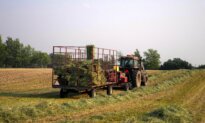
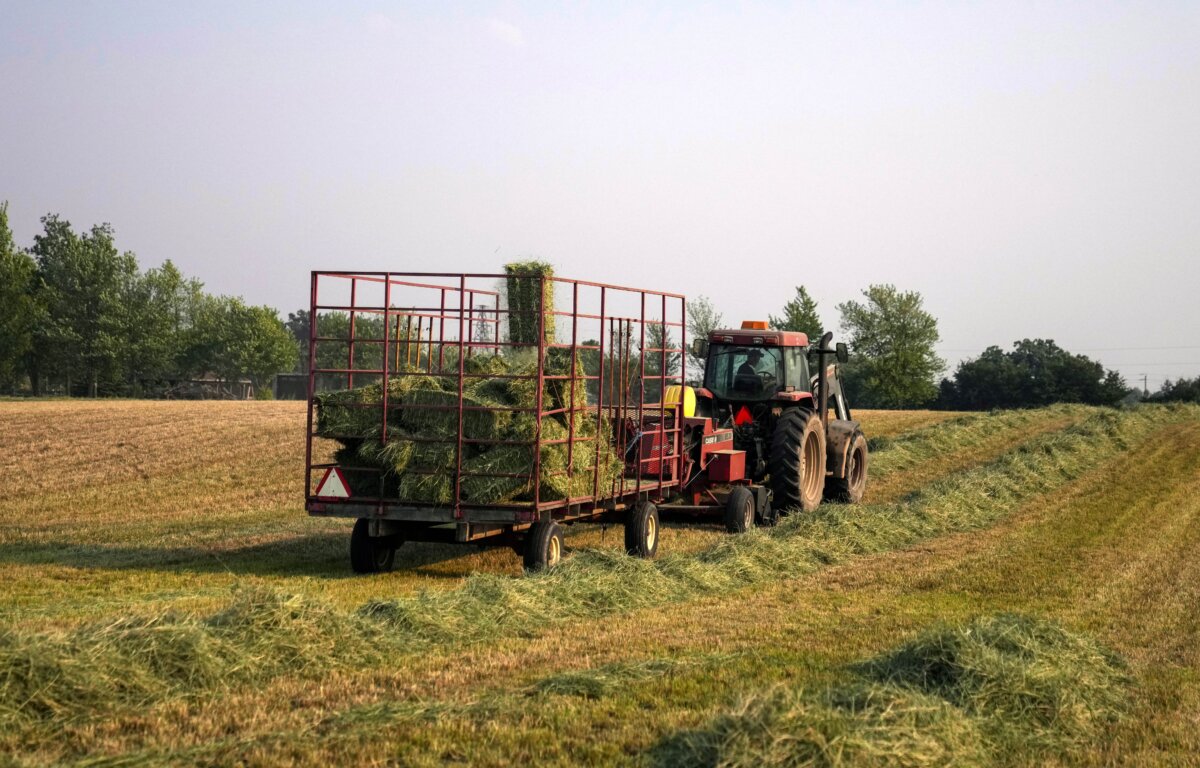
Family farms have long formed part of the backbone of Canada’s economic and cultural life. They helped build communities, sustain local economies, and preserve the practical knowledge required to feed a nation.
Statistics Canada reports that Canada’s farm population has declined by more than 60 percent between 1971 and 2021. This points to a significant shift in just a few decades, affecting not only the number of farms, but the families and communities connected to them. At the same time, food affordability has become an increasing concern, with grocery prices rising sharply in recent years and projections indicating continued increases in the cost of feeding a family.
Government policy and regulatory frameworks now play an increasingly central role in shaping how food is produced in Canada. Federal and provincial approaches to agriculture intersect with environmental targets, emissions reduction strategies, and disease-response protocols. Within these frameworks, livestock production is often discussed in relation to greenhouse gas emissions, particularly methane.
In that context, Canadians are being presented with a range of claims about the environmental impact of livestock and the necessity of reducing herd sizes. Some analyses have suggested that even large-scale reductions in livestock methane emissions would result in only very small changes in global temperature.
The National Citizens Inquiry does not seek to resolve these debates. Its role is to place testimony and evidence on the public record so Canadians can hear directly from those affected and examine the evidence for themselves.
At the National Citizens Inquiry hearings held in Kelowna this March, witnesses from across the agricultural sector provided first-hand accounts of how policy, regulation, and disease response frameworks are experienced on the ground.
Constance Seutter, president of the Canadian Cervid Alliance, testified that 587 elk from her family operation were destroyed following a chronic wasting disease response. “All the income that we were hoping for that fall was gone along with 21 years of work,” she stated. She also described the impact on her family when her grandchildren learned the animals would be gone: “They all started to cry and said, ‘Well, we won’t have a farm anymore.’”
Seutter further testified to the contraction of her industry. “We used to represent well over 600 farms across Canada,” she said. “Now we’re probably down to just around 300.”⁴
Teresa Walker, drawing on her experience during the United Kingdom’s 2001 foot-and-mouth outbreak, described the long-term effects mass culling policies can have on farming families and communities. Her testimony spoke to the economic and psychological consequences that can follow when entire herds are destroyed.
Civil litigation lawyer Lee Turner testified to the legal framework surrounding disease response measures. He explained that authorities may act on “a suspicion” of disease and that courts often show “a high level of deference” to those decisions. Even when new information arises, he noted, “the only realistic solution … is to advocate for a change to the legislation.”
Veterinarian Ted Dupmeier described the challenges associated with disease-response systems and the implications these systems can have for producers over time.⁴
John Graff, a Saskatchewan farmer and livestock nutrition consultant, testified about broader structural pressures within Canadian agriculture, including fertilizer dependency, energy costs, and supply chain vulnerabilities.
Dawn Buschert, an Alberta greenhouse producer, spoke about rising costs and the increasing difficulty of maintaining viable local food production under current economic and regulatory conditions.
The National Citizens Inquiry does not draw conclusions from this testimony. Its purpose is to ensure that these accounts are heard, recorded, and made publicly accessible. The Inquiry exists on the principle that governments cannot be relied upon to investigate themselves, and that independent, citizen-led examination of public policy is essential in a democratic society.
At the heart of these accounts is a shared reality: individuals and families describing what they have experienced, in their own words, within systems that affect their ability to operate, adapt, and continue.
Stewardship requires more than management; it requires responsibility, restraint, and care for what has been entrusted to us. Many farming families continue their work not because it is easy or lucrative, but because they believe the land, animals, and knowledge they have inherited are worth preserving and passing on.
The question of how sustainability policy interacts with that responsibility is one Canadians may wish to examine carefully.
The National Citizens Inquiry will continue its hearings on food, agriculture, hunting, and fisheries in Ontario this June.
Canadians who wish to review the testimony, examine the public record, or apply to participate as a witness can visit the National Citizens Inquiry website. Video testimony from these hearings is publicly available. Reports from previous National Citizens Inquiry hearings also remain available for those seeking to understand the broader context of this work.
The testimony is available for all to consider.
Dominique Fournier is executive assistant and communications lead for the National Citizens Inquiry, where she works closely with witness testimony on issues affecting Canadian families, agriculture, and public policy. She holds a Master’s degree in political science from the University of Calgary.
Views expressed in this article are the opinions of the author and do not necessarily reflect the views of The Epoch Times.
 Friends Read Free
Copy
Facebook
Tweet
Friends Read Free
Copy
Facebook
Tweet