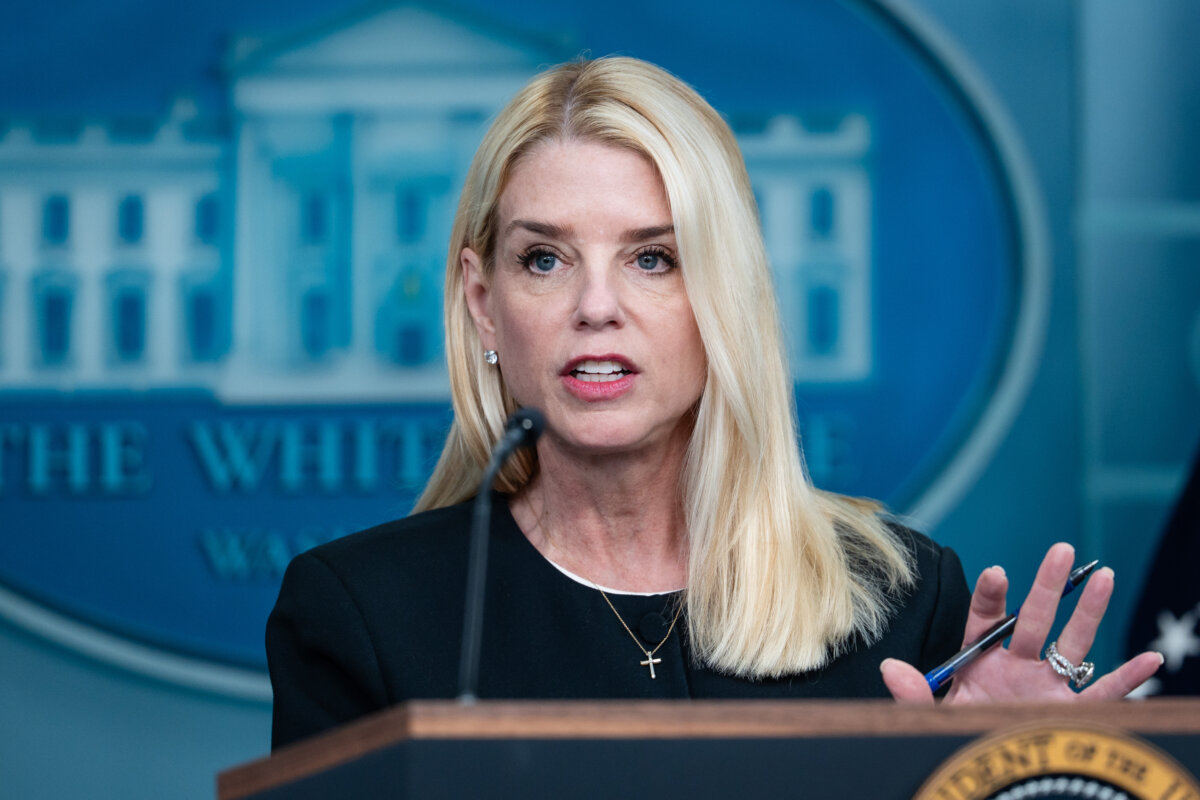

The enforcement of President Donald Trump’s executive order limiting birthright citizenship is waiting on a Supreme Court decision in October over the merits of the order, Attorney General Pam Bondi said on June 27.
The development comes on the same day as the Supreme Court limited the power of federal judges to issue nationwide injunctions.
Numerous states have challenged the constitutionality of the executive order, which Trump signed on Jan. 20, the first day of his second term.
“The court grants the government’s applications for a partial stay of the injunctions entered below, but only to the extent that the injunctions are broader than necessary to provide complete relief to each plaintiff with standing to sue,” Supreme Court Justice Amy Coney Barrett wrote in the majority opinion.
Trump said that with the ruling, the issue of birthright citizenship “now comes to the fore. That was meant for the babies of slaves. It wasn’t meant for people trying to scam the system and come into the country on a vacation.”
Trump said that with this decision, his administration can “promptly file to proceed with numerous policies that have been wrongly” blocked by nationwide injunctions.
Vice President JD Vance and Senate Judiciary Committee Chairman Chuck Grassley (R-Iowa) backed the court.
“Today’s decision is a significant step towards addressing the bipartisan problem of universal injunctions,” Grassley said in a statement.
“I’m heartened to hear a supermajority of the Supreme Court echo what I’ve said repeatedly: Judges’ constitutional authority is limited to deciding cases and controversies.
“Universal injunctions are an unconstitutional affront to our nation’s system of checks and balances, and ought to be stopped for good.”
Not everyone applauded the decision.
“This ruling undermines the fundamental promise of the Constitution—that every child born on U.S. soil is equal under the law,” George Escobar, CASA’s chief of programs and services, said in a statement.
“Today’s decision sends a message to U.S.-born children of immigrants that their place in this country is conditional. But we are not backing down. CASA will keep fighting until the rights of all our children are fully recognized and protected.”
Monica, a pregnant plaintiff in the lawsuit, said in a statement: “This decision is devastating for U.S. families who are not protected by the limited injunction the Supreme Court left in place.
“Hundreds of thousands of other U.S.-born children are in danger of not receiving U.S. citizenship.
“I know that every pregnant mother cannot file a lawsuit to make sure their children have U.S. citizenship—that is why I filed this lawsuit to not only protect my child’s rights, but the constitutional rights of all U.S.-born children of immigrants.”
 Friends Read Free
Copy
Facebook
Tweet
Friends Read Free
Copy
Facebook
Tweet