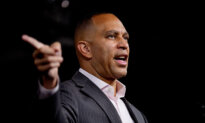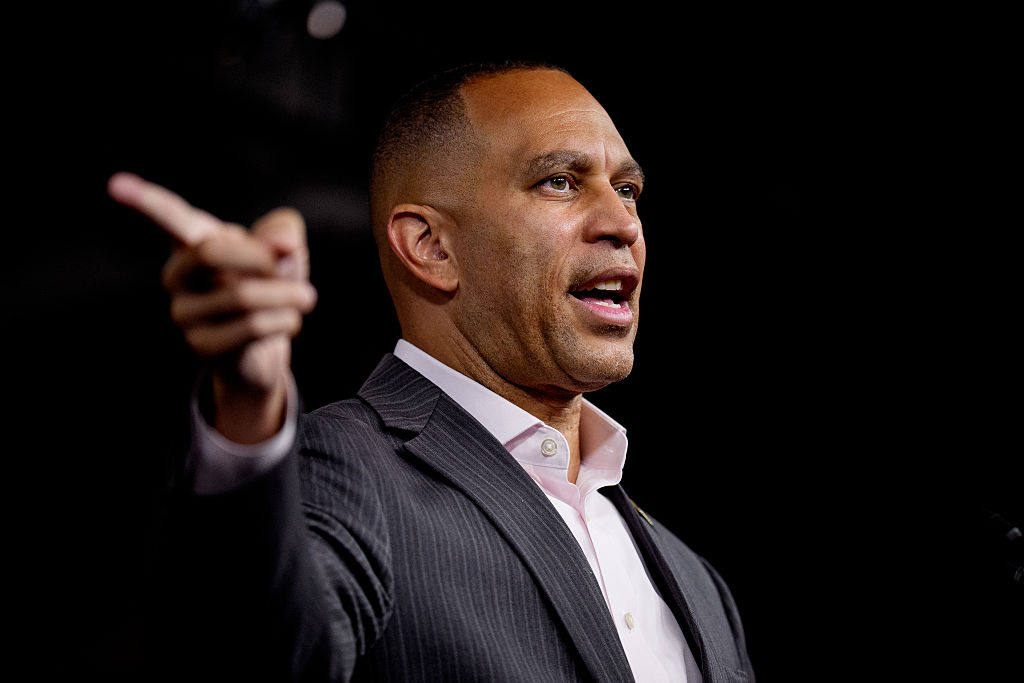

As Democrats returned to Washington this week after an August recess, House Democratic Leader Hakeem Jeffries said Democrats used the time to organize across the country and will seek a bipartisan spending bill as Congress returns with a Sept. 30 deadline.
“House Democrats had a very active August District Work Period. We held more than 1,000 different events all across the country, interacting with everyday Americans who we are privileged to represent,” Jeffries said at a Sept. 2 press conference.
He said members focused on the economy and health care, saying that “America is too expensive.”
Jeffries presented his party’s fall agenda as centering on lowering costs, protecting health coverage, and negotiating government funding.
“We are willing to find bipartisan common ground in order to pass a spending bill, avoid a reckless Republican government shutdown, and meet the needs of the American people,” he said.
Any bill must be the result of negotiation and serve “health, safety, national security, and economic well-being,” according to Jeffries.
Republicans rebutted Democrats’ warnings, saying they want to keep the government open and that Democrats are “threatening chaos.”
“Jeffries admitted his radical party is plotting another government shutdown because they’d rather play politics than govern,” National Republican Congressional Committee spokesperson Mike Marinella said in a statement.
Democrats also used the recess to campaign against the Republican spending bill passed and signed this summer, which they say increases costs and cuts health programs. Jeffries said that the law “rips healthcare away from millions of families.” At his press conference, he said that Republicans “were unable to defend their signature so-called legislative accomplishment” at town halls.
The One Big Beautiful Bill Act, passed by Congress and signed into law by President Donald Trump in July, made the president’s 2017 tax cuts permanent. It also provided tax breaks on tips, overtime pay, and Social Security income while directing new funding to defense and border security.
Republican leaders have said that the legislative package will streamline government and spur economic growth, warning that without it, most families would soon face a tax increase. They have said that the law restructured safety net programs to promote work, reduce dependency, and ensure benefits for Americans.
The law includes new Medicaid eligibility requirements and reimbursement changes that the Congressional Budget Office has projected could increase the number of uninsured Americans by 7.7 million.
Republicans dispute that estimate, pointing to provisions such as a new Rural Hospital Stabilization Fund aimed at offsetting impacts on health care access. Democrats have said that the law could lead to hospital closures, higher premiums, and reduced access to care.
Other House Democratic leaders echoed the message as members returned to Washington. House Democratic Caucus Vice Chair Ted Lieu (D-Calif.) said prices for energy, food, and other expenses have risen and criticized tariffs and health care cuts. Democratic Caucus Leadership Rep. Steven Horsford (D-Nev.) urged action to keep Affordable Care Act premium tax credits in place, calling health care “a fundamental right” and saying “Republicans need to join House Democrats now in protecting the health and well-being of our constituents.”
The Democratic National Committee issued its own summary of the August work period, saying it will keep pressing its case on costs and health care as negotiations begin on a short-term measure or full-year spending.
Jeffries said Democrats remain open to talks but will oppose a partisan bill.
“We will not support a partisan spending bill put forward by Republicans that hurts everyday Americans,” he told reporters, noting that there has been no “four corners” negotiation to date between leaders in both chambers from both parties.
He said Democrats are “ready, willing, and able to sit down anytime, any place to find a bipartisan path forward.”
 Friends Read Free
Copy
Facebook
Tweet
Friends Read Free
Copy
Facebook
Tweet