
House Democratic leaders on Tuesday pressed for bipartisan negotiations on a government funding bill, saying that Republican proposals could drive up healthcare costs and leave millions without coverage.
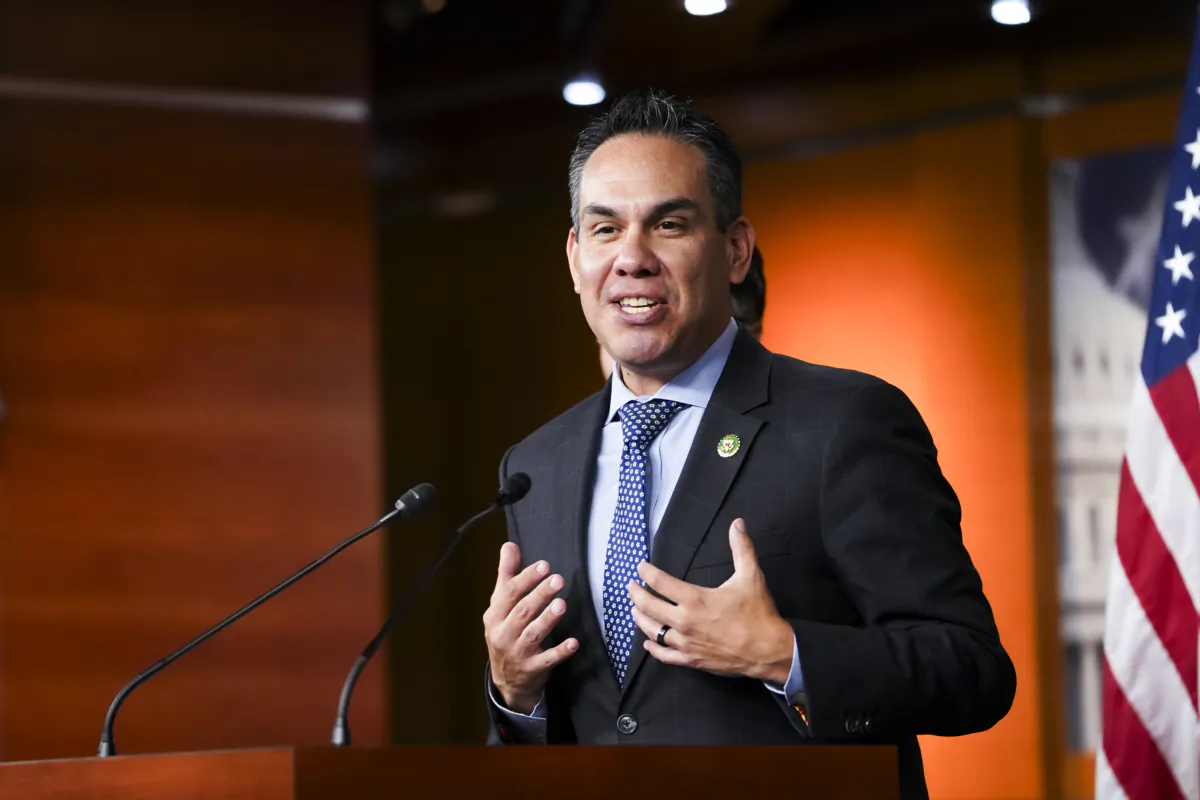
At a press conference, House Democratic Caucus Chair Pete Aguilar and Vice Chair Ted Lieu, both from California, said their members remain united and are making affordable healthcare the top priority.
They said that as many as 15 million Americans could lose health care, and that the 24 million Americans who are enrolled in Affordable Care Act (ACA) plans could see their health insurance go up by 75 percent.
Independent analyses support parts of that claim, as the left-leaning Center on Budget and Policy Priorities projects that about 15 million could lose coverage due to Medicaid and ACA cuts, while KFF estimates that many marketplace enrollees could face premium increases of more than 75 percent if enhanced subsidies expire. There are currently about 24 million ACA enrollees.
The law included new Medicaid eligibility requirements, including work rules for able-bodied adults. Republicans say these provisions are designed to promote work, reduce dependency, and preserve benefits for vulnerable Americans.
“In my district alone, nearly 400,000 people depend on Medicaid or receive a premium subsidy,” Aguilar said. “Democrats are doing everything in our power to ensure the worst parts of the big ugly law don’t become a reality.” He was referring to the One Big Beautiful Bill Act, passed by Congress and signed into law by President Donald Trump in July.
Lieu cited data from the Kaiser Family Foundation showing that older couples could see premiums rise by more than $18,000 a year if enhanced ACA subsidies, which expire at the end of 2025, are not renewed.
“When you don’t cover people, they still get sick, they still go to the emergency room, and then those costs get passed to people who have health insurance coverage,” he said.
The One Big Beautiful Bill Act made Trump’s 2017 tax cuts permanent. It also provided tax breaks on tips, overtime pay, and Social Security income while directing new funding to defense and border security.
Republican leaders have said that the legislative package will streamline government and spur economic growth, warning that without it, most families would soon face a tax increase. They have said that the law restructured safety net programs to reduce dependency and ensure benefits for Americans who need them the most.
The law includes new Medicaid eligibility requirements and reimbursement changes that the Congressional Budget Office has projected could increase the number of uninsured Americans by 7.7 million. Republicans dispute that estimate, pointing to provisions such as a new Rural Hospital Stabilization Fund aimed at offsetting impacts on health care access.
Democrats this week accused Republicans of moving forward without engaging in bipartisan talks, noting that the GOP controls the White House and both chambers of Congress.
“If they don’t want to address the impending healthcare crisis, they can explain that,” Aguilar said. “But they control the levers of government. It’s on them to put forward a plan that funds the government.”
The lawmakers also tied the debate to the broader affordability struggles facing Americans.
Alongside funding concerns, Democratic leaders used the press conference to denounce political violence following the Sept. 10 assassination of conservative commentator Charlie Kirk.
Aguilar and Lieu cited recent attacks targeting elected officials in Minnesota and Pennsylvania, as well as earlier threats against figures including former Speaker Nancy Pelosi, House Majority Leader Steve Scalise, and Trump.
“Political violence is never acceptable,” Lieu said.
Republicans are advancing a stopgap spending plan. House Speaker Mike Johnson (R-La.) told reporters on Monday that negotiations are complicated by demands for additional security money for federal officials following Kirk’s assassination.
“We don’t have that yet because we’re trying to resolve this,” Johnson said. “We have to protect our judges and those who serve in those two branches, but also, of course, in Congress. And so we’re looking at an amount that would be appropriate for a continuing resolution.”
He added that he expected the issue to be resolved within 24 to 48 hours. Senate Majority Leader John Thune (R-S.D.) said he expected more funds for security to be added, but wanted to keep changes to a minimum.
Later on Tuesday, House Republicans released a bill to fund the government through Nov. 21. The deadline to fund the government is Oct. 1, as the end of the fiscal year is Sept. 30.
Three House Republicans—Reps. Thomas Massie of Kentucky, Victoria Spartz of Indiana, and Marjorie Taylor Greene of Georgia—have announced their opposition to the measure.
Trump publicly urged Republicans to support the measure on Tuesday.
“Congressional Republicans, including Leader John Thune and Speaker Mike Johnson, are working on a short-term ‘CLEAN’ extension of Government Funding to stop [Senate Minority Leader Chuck Schumer (D-N.Y.)] from shutting down the Government, ” the president posted on Truth Social.
On Tuesday, House Minority Leader Hakeem Jeffries (D-N.Y.) and Senate Minority Leader Chuck Schumer (D-N.Y.) issued a joint statement:
“The House Republican-only spending bill fails to meet the needs of the American people and does nothing to stop the looming healthcare crisis. At a time when families are already being squeezed by higher costs, Republicans refuse to stop Americans from facing double-digit hikes in their health insurance premiums.
“By refusing to work with Democrats, Republicans are steering our country straight toward a shutdown.”
At his own press conference on Tuesday, House Minority Leader Hakeem Jeffries (D-N.Y.) called the GOP proposal “a dirty spending bill.” He said, “That’s not a clean, continuing resolution. … And one that is unacceptable.”
Earlier this month, Schumer wrote, “The only way to avoid a shutdown is to work in a bipartisan way, with a bill that can get both Republican and Democratic votes in the Senate.”
The National Republican Congressional Committee at the time accused Democrats of “plotting another government shutdown,” saying Republicans are “focused on keeping the government open.”
Jackson Richman and Reuters contributed to this report.
 Friends Read Free
Copy
Facebook
Tweet
Friends Read Free
Copy
Facebook
Tweet