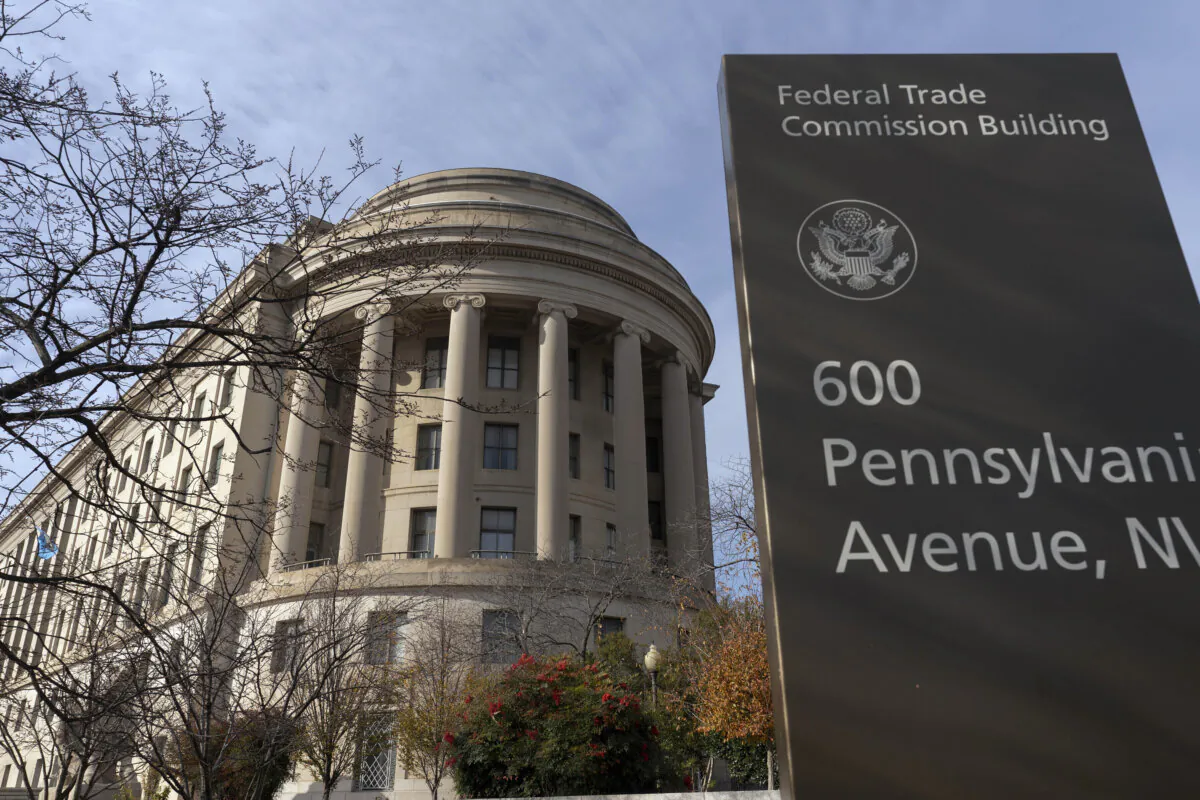

Employers in the healthcare and staffing sectors were put on notice on Sept. 10 by the Federal Trade Commission that their employment agreements—particularly noncompete clauses—may include “unreasonable” restrictions against their employees.
Andrew Ferguson, FTC chairman, sent letters to an unspecified number of healthcare companies and staffing agencies requesting that they review their employment agreements to ensure that they are in compliance with federal law.
These agreements, the FTC said in a statement, may contain overly restrictive noncompete clauses that limit the employment options of physicians, nurses, and other medical professionals when they leave an organization—and that, in turn, limits patients’ options when it comes to medical care, especially in rural areas where providers are already overburdened, Ferguson’s letter stated.
Kelse Moen, deputy director of the Bureau of Competition and co-chair of the agency’s Joint Labor Task Force, said that enforcement against unreasonable noncompete agreements remains a top priority for the Federal Trade Commission.
“We strongly encourage all employers—not just those receiving letters today—to review their contracts closely to ensure that any restrictions on employee mobility are in full compliance with the law.”
The FTC’s Joint Labor Task Force was launched in late February in conjunction with its bureaus of Competition, Consumer Protection, and Economics, and Office of Policy Planning. Noncompete agreements are just one of the task force’s mandates against deceptive or unfair labor practices. Additional focus areas include wage-fixing agreements, contract termination penalties, deceptive advertising, and unfair labor practices against gig economy workers, among others.
Section 5 of the FTC Act allows the Federal Trade Commission to investigate unfair labor practices, including overbroad or unjust noncompete agreements, the FTC said in its statement.
Ferguson’s letters come on the heels of a vote on Sept. 5 to withdraw from its appeal of a nationwide noncompete ban enacted in April of 2024 under the Biden-Harris administration. The FTC instead will be “patrolling our markets for specific anticompetitive conduct that hurts American consumers and workers,” Ferguson said.
It’s the second noncompete enforcement action taken in the past two weeks. On Sept. 4, the FTC ordered Gateway Services, the nation’s largest pet cremation company, to stop enforcing noncompete agreements among its nearly 1,800 employees. Gateway’s noncompete agreements barred former employees from seeking similar employment in the pet cremation industry for 12 months.
Daniel Guarnera, director of the Bureau of Competition, said the commission acted against Gateway Services to ensure workers are able to reap the benefits of competition among employers.
“Antitrust laws protect workers from noncompete agreements that harm competition, including preventing workers from switching to better-paying jobs or starting their own businesses,” Guarnera said. “We will protect workers by enforcing the laws against anticompetitive noncompetes.”
The Federal Trade Commission also on Sept. 4 launched a public inquiry to gather information on noncompete agreements. The public has 60 days to submit comments regarding their experiences with hiring difficulties or other issues that can be attributed to restrictive noncompete agreements.
“We are asking the public to shine a light on unfair and anticompetitive agreements,” Moen said.
“Unreasonable noncompete agreements have proliferated for too long. With the assistance of the employees and workers most burdened by them, the Trump-Vance FTC intends to uproot the worst offenders and restore fairness to the American labor market. We look forward to closely reviewing every response.”
 Friends Read Free
Copy
Facebook
Tweet
Friends Read Free
Copy
Facebook
Tweet