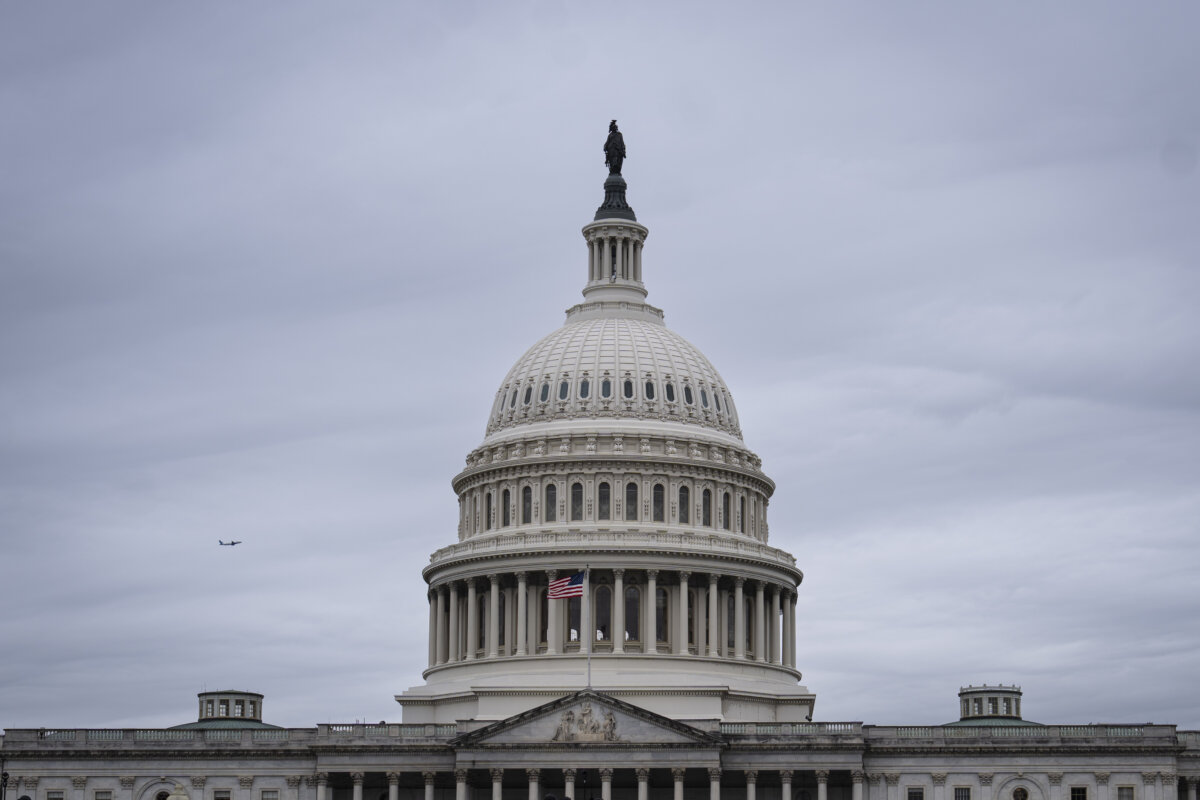

The House of Representatives advanced a $72 billion bill on June 9 to fund Immigration and Customs Enforcement (ICE) and Border Patrol.
The tally was 212–211. The final vote on the legislation is expected to be held later on June 9. If it passes, it would go to President Donald Trump to sign into law.
The measure funds ICE and Border Patrol through Jan. 20, 2029, which will be the end of Trump’s term. It passed in the Senate in the wee hours of June 5 through a process called reconciliation, which bypasses the 60-vote filibuster threshold. All Republicans except Sen. Lisa Murkowski (R-Alaska) voted for it, while all Democrats voted against it. Sen. Michael Bennet (D-Colo.) was absent.
The legislation had faced delays due to disagreements among Senate Republicans over a proposed $1.8 billion compensation fund intended for individuals claiming harm from actions taken by the federal government.
Those concerns eased after Acting Attorney General Todd Blanche announced on June 2 that the administration would discontinue the program. The decision helped unify Republican support and cleared a major obstacle to the bill’s passage.
Senate Republicans later released revised legislative language on June 3 that formally removed both the compensation fund and $1 billion allocated for Trump’s ballroom project and White House security improvements.
The compensation proposal had drawn criticism from lawmakers in both parties, with several Republican senators indicating they would oppose the bill if the fund remained included.
Although the administration abandoned the proposal, some Republicans continued to raise concerns about the Justice Department’s planned Anti-Weaponization Fund. A number of lawmakers backed efforts to permanently eliminate the program, despite assurances from Blanche that it would not move forward.
During the vote-a-rama, GOP senators batted down several amendments seeking to ban the fund.
An amendment by Senate Minority Leader Chuck Schumer (D-N.Y.) to block the anti-weaponization fund failed, 49–50.
During the Senate’s extended voting session, senators considered an amendment introduced by Sen. Thom Tillis (R-N.C.) that would have prohibited federal funds from being used for any weaponization fund or similar initiative.
Tillis argued that Congress should permanently close the door on such programs rather than relying on administrative decisions. He said the amendment would prevent a future administration from reviving the fund.
The proposal faced opposition from some Republicans. In an interview with The Epoch Times, Sen. Tommy Tuberville (R-Ala.) criticized the amendment, suggesting it conflicted with the president’s priorities.
Meanwhile, Sen. Elissa Slotkin (D-Mich.) told The Epoch Times she supported the amendment’s overall objective.
Ultimately, the Senate rejected the Tillis amendment before giving final approval to the broader funding package.
An amendment by Sen. Bill Cassidy (R-La.) to compensate police officers who defended the U.S. Capitol during the Jan. 6, 2021, breach was blocked 52–47, falling short of the 60 votes needed for passage.
Another amendment by Sen. Chris Van Hollen (D-Md.) to prohibit the anti-weaponization fund from occurring also did not get the minimum 60 votes for adoption and was voted down, 53–46.
Additionally, an amendment by Sen. Chris Coons (D-Del.) to forbid taxpayer dollars from being allocated to those who were convicted of assaulting police officers on Jan. 6, 2021, was rejected 54–45, failing to get the necessary 60 votes for adoption.
Finally, another amendment that was rejected was blocking the building of the White House ballroom.
 Friends Read Free
Copy
Facebook
Tweet
Friends Read Free
Copy
Facebook
Tweet