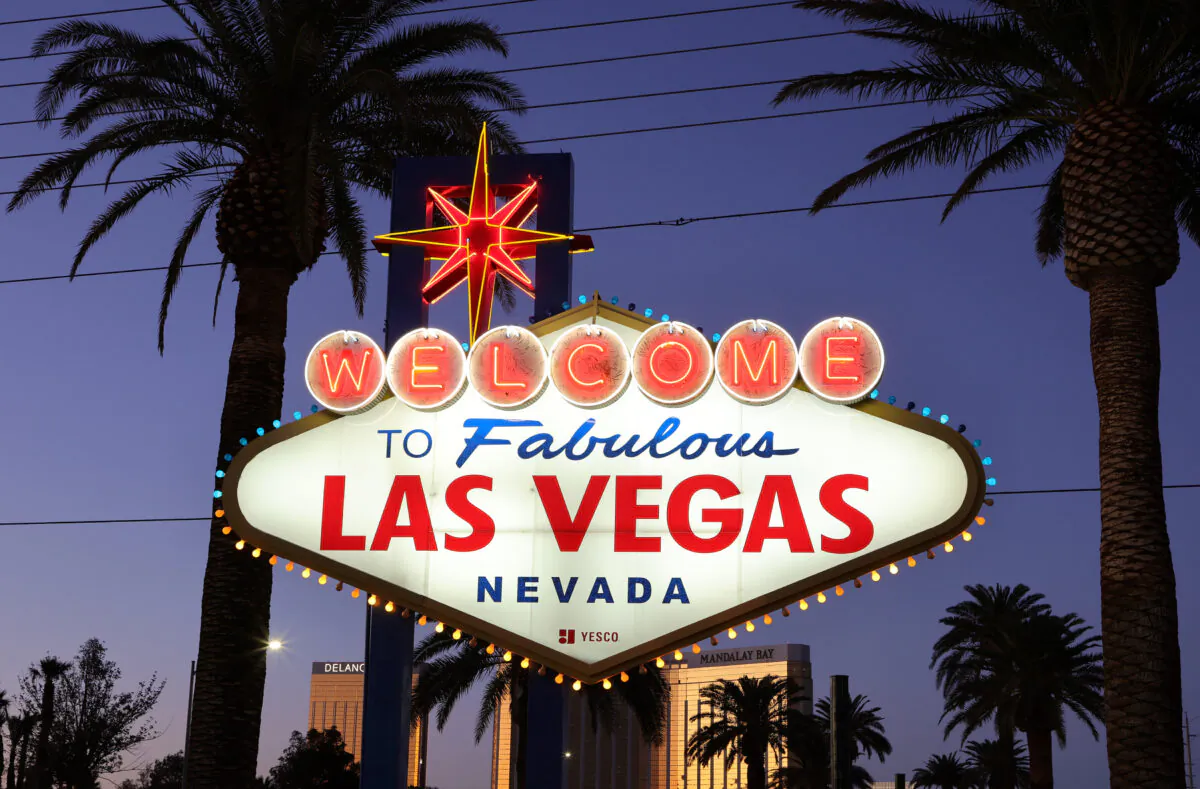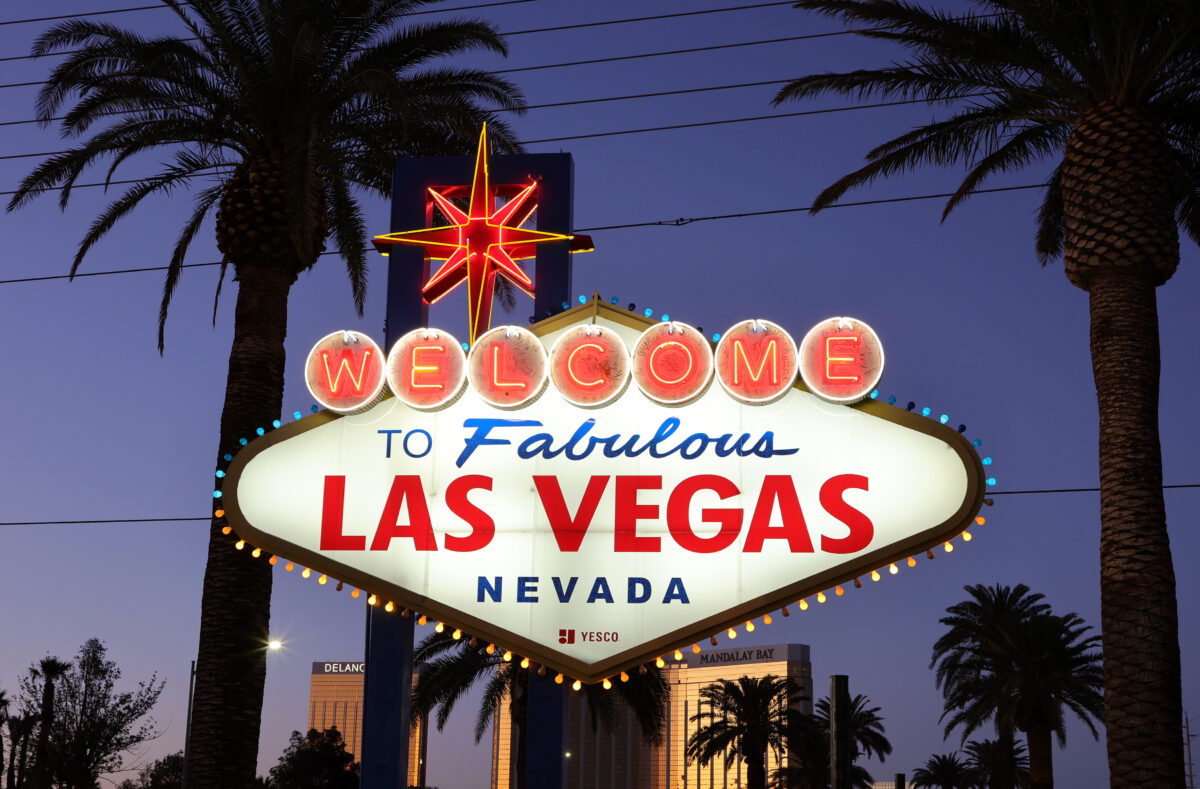
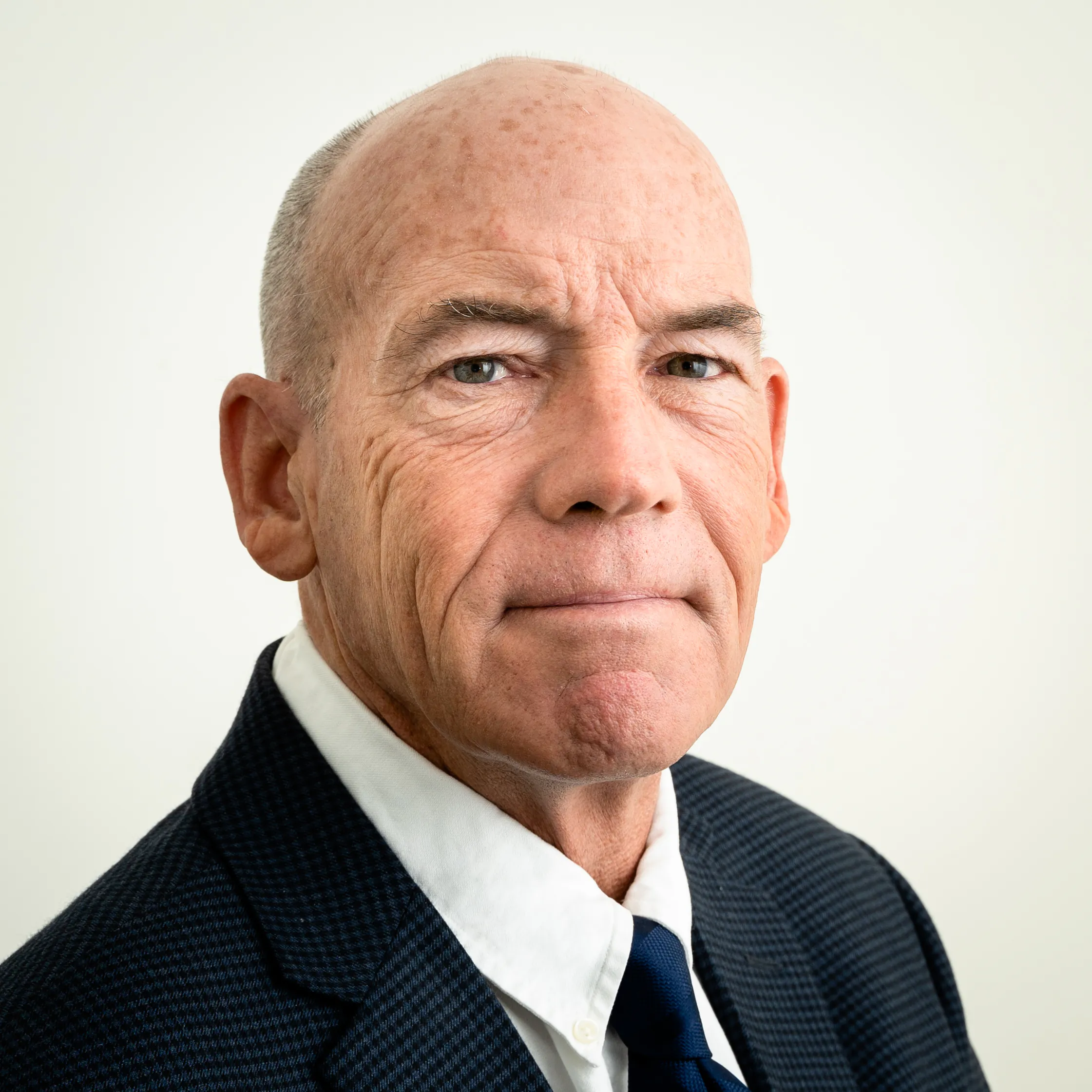
House Republicans chose Las Vegas as the place to stage their first public field hearing touting the benefits of the One Big, Beautiful Bill Act, the fiscal year 2026 federal budget signed into law by President Donald Trump on July 4.
Rep. Aaron Bean (R-Fla.) said that the bill “was born here” after a conversation between Trump and a server galvanized the presidential candidate to support an old idea: no taxes on the first $25,000 earned in tips.
“Waitresses, bartenders, Door Dash employees, bellhops, service workers, and other tipped employees will get a $1,300 tax cut compared to what they pay today,” House Ways and Means Committee Chair Rep. Jason Smith (R-Mo.) said, noting that the provision will put “$230 million back into the pockets of tipped workers in just the Las Vegas metro area.”
Six witnesses testified before the July 25 GOP-led panel, including Nevada state Senate Majority Leader Nicole Cannizzaro, a Democrat, who said the federal funding cuts will force some state legislatures to either cut services or raise taxes.
Patrick Wrona, a server at RPM Italian in Las Vegas who said “overzealous COVID restrictions” contributed to the demise of a Chicago-area restaurant that he owned, said no-tax-on-tips is “a game changer” for him and his wife, who are among 250,000 tipped workers in Las Vegas and 4 million across the nation.
“It’s not just good for tipped workers, it’s good for the entire hospitality and travel industry when service professionals have more take-home pay based on tips from their customers,” he said. “We all spend it locally, often at the very restaurants and venues we help bring to life. That tip money isn’t trivial. It’s a lifeline to our families and our community as a whole.”
Eric Byington, a foreman at sign maker YESCO, said eliminating taxes on Social Security for those aged 65 and older would have benefited his mother, who died last year at 93.
“These last four years, for the first time in my life, I had to send my mother money, so no tax on Social Security would have helped her each month,” he said. “That was hard. My mom had to swallow her pride and ask for money because the economy and the food prices were so bad.”
Retired hospice volunteer manager Nancy Overman praised the $6,000 income tax deduction for seniors.
“Seniors like me are not wealthy, and we are not looking for handouts, but we have paid into this system for decades, and when living on a fixed income, every penny saved makes a difference,” she said. “This deduction gives seniors like me some breathing room. For me, personally, this deduction means I will be better able to manage the basics like groceries, utilities, and the occasional unexpected expense without draining what little savings I have left.”
Austin Robinson, director of manufacturing at Click Bond, said that with the fiscal 2026 budget making permanent the 2017 “pro-growth” tax code revisions, his Carson City family-owned factory that makes adhesive-bonded fasteners has the “tools it needs to succeed and grow.”
“[The budget] is full of policies that support manufacturers,” he said, “[such as] fully expensing the purchase of equipment, machinery; immediate [research and development] expensing [that] helps us innovate; an estate tax exemption that protects our family-owned businesses.”
Henderson small business owner Yadusha Jones, Nevada’s Moms for Liberty chair, said simplified tax filing and a child tax credit increase from $2,000 to $2,200 is “helping my family thrive.”
“The big, beautiful bill’s pro-family tax policies, particularly those supporting child care affordability, will alleviate financial pressures in enabling us to make tailored choices for our children’s education,” she said. “The financial flexibility provided in the big, beautiful bill will allow us to create educational environments that nurture each child’s unique strengths.”
Democrats Respond
Democrats, including Reps. Steven Horsford (D-Nev.) and Dina Titus (D-Nev.), called the budget a disaster that the American people will see unfold in the coming months.
They said that view will be particularly acute in Las Vegas, where the tourism economy has been struggling, with visitor volume in the first five months of 2025 down by 6.5 percent from 2024, according to a Las Vegas Convention and Visitors Authority report in June, and the area’s 5.8 percent unemployment rate up from 5.2 percent in April. The national average stands at 4.1 percent.
“The reality in Nevada tells a very different story than the one Republicans are attempting to sell,” Horsford said. “Las Vegas is actually ground zero for the damage that Trump’s economy is doing to workers and to families and to small businesses, from rising housing costs to falling hotel occupancy, from energy projects on pause to an impending health care cliff.”
Titus said it seems as if the bill targets Southern Nevada.
“Not only does it hurt our community by going after affordable health care and Medicaid, food stamps, renewable energy, you even tried to sell off our public lands, and it certainly targets gaming and tourism,” she said.
Cannizzaro said that Trump’s budget puts the crosshairs on state lawmakers to address “three critically important issues to Nevadans: health care access and affordability, energy, and food security.”
She said that in 2012, when Gov. Brian Sandoval led Nevada to become the first state with a Republican governor to expand Medicaid under the Affordable Care Act, “our uninsured rate was second-highest in the nation, an astronomical 22 percent. Today, Nevada’s uninsured rate is at an all-time low of 8 percent.”
But under the newly adopted federal budget, up to 100,000 of the 800,000 Nevadans who rely on Medicaid will lose coverage, Cannizzaro said, noting that the 100,000 covered through the Silver State Health Exchange would experience a 573 percent increase in their premium payments, “which will lead to more Nevadans forgoing coverage.”
Under Trump’s bill, she said, Nevada hospitals will lose an average of $160 million in Medicaid revenue per year for the next five years.
Horsford also had a gloomy take on the health care provisions in the budget.
“This will all mean impacts to our rural hospitals, places like Battle Mountain and Winnemucca will be forced to close their doors. And as coverage disappears, health care costs will rise and care will suffer,” the congressman said.
Cannizzaro said the budget also scales back much of the state’s energy industry, with Nevada being “a national leader in the renewable space” and “holding vast potential for solar and geothermal power.”
She said the restrictions imposed on the Supplemental Nutrition Assistance Program, which assists more than 500,000 Nevadans, “including one in five children,” will mean that “thousands of eligible Nevadans could lose access to food assistance, while at the same time, costs go up for Nevada taxpayers.”
Cannizzaro acknowledged that “there are pieces of this bill that do help working families” but said that “coming to Vegas to tout it based almost solely on no-tax-for-tips is not a convincing ploy.”
“This temporary benefit will only help Nevada’s tipped workers if we continue to have tourists to tip them,” she said.
Battleground State
Purple Nevada is among the perennial presidential election battleground states. Democrats have majorities in the state Legislature, while three of Nevada’s four U.S. House seats and both its U.S. Senate seats are occupied by Democrats.
The governor and many other statewide elected officials are Republicans.

While the deadline to declare candidacies for Nevada’s June 9, 2026, gubernatorial and House primaries is eight months away, some races are starting to form, and the November 2026 ballot could feature constitutional amendments codifying access to abortion and requiring ID to vote.
There isn’t a U.S. Senate election on Nevada’s 2026 docket, but Republican Gov. Joe Lombardo has announced that he’s running for reelection to a second term. His only primary challenger thus far is salon owner and 2024 Las Vegas mayor candidate Irina Hansen.
Two-term Nevada Attorney General Aaron Ford and Washoe County Commissioner Alexis Hill are declared Democratic gubernatorial candidates, with former Gov. Steve Sisolak allegedly pondering a run.
With his 2018 win, Sisolak is the only Democrat to win a Nevada gubernatorial election since 1998.
Republicans are entering the 2026 midterm cycle confident again that they can take at least one, if not all three, Democrat-held House seats in the Las Vegas area.
The three—Nevada’s First, Third, and Fourth congressional districts—are in southern Nevada. Northern Nevada’s sprawling Second Congressional District is a Republican stronghold where eight-term incumbent Rep. Mark Amodei (R-Nev.) is not expected to be challenged by Democrats in 2026.
The three Las Vegas-area districts have been dominated by Democrats primarily with support from hospitality industry labor unions, including the 60,000 voting members of Culinary Workers Union Local 226 and Bartenders Union Local 165.
Voter registration trends sustain GOP ambitions. As of July 1, the Nevada secretary of state reports that there were nearly 2.36 million voters registered in Nevada, with 868,511 signed on as nonpartisan, 666,998 as Democrats, and 658,339 as Republicans—only 8,700 fewer than Democrats.
By comparison, as of July 1, 2024, there were 816,123 Nevadans registered as nonaffiliated, 711,296 as Democrats, and 663,415 as Republicans.
The total registration tally was 6,000 fewer on July 1, 2025, than it was on July 1, 2024—a typical slackening in sign-ups following a presidential election. The numbers reflect two trends: Nevada’s Democratic Party lost more than 44,000 registrations while Republicans only lost about 5,000, and more than 50,000 signed on as independent or nonaffiliated voters.
Since 2017, Nevada has added more than 700,000 voters—a more than 40 percent increase in less than a decade. On July 1, 2017, there were 1.63 million registered voters in the state, with 636,361 registered Democrats, 531,982 Republicans, and 348,812 signed on as nonpartisan.
In the eight years since, while Democrats have added only about 30,000 voters to their rolls, Republicans have added about 130,000—narrowing their Nevada registration gap from about 120,000 to less than 9,000—while nearly 520,000 more voters have registered nonpartisan, making them now the state’s largest voting constituency by more than 200,000 registrants.
2026 Midterms
The National Republican Congressional Committee has placed all three Las Vegas House districts on its target list of flippable seats in 2026.
Seven-term incumbent Titus saw her Las Vegas-area First Congressional District revised in post-2020 Census redistricting to include more than 110,000 registered Republicans, reducing Democrats’ two-to-one edge to single percentages. Nevertheless, she has warded off GOP challengers as a result of her close association with the culinary workers and bartenders unions.
Titus, 75, who has not formally declared her intent to seek reelection, defeated 30-year U.S. Army veteran Mark Robertson in the past two elections—by 6 percentage points in 2022 and 7.5 points in 2024.
Robertson has not signaled whether he’ll take on Titus a third time. The only Republican to formally declare for the GOP primary in the First Congressional District is former state Assemblyman Jim Marchant, a 2024 U.S. Senate and 2022 secretary of state hopeful.
Six Republicans have already formally declared campaigns for the party nod to take on four-term incumbent Rep. Susie Lee (D-Nev.) in the Third Congressional District, which spans western Las Vegas suburbs, including Spring Valley, Summerlin South, and Sandy Valley.
The district is often referred to as Nevada’s “most swingy” district, with Republicans winning six of the past 11 elections, but none since 2014.
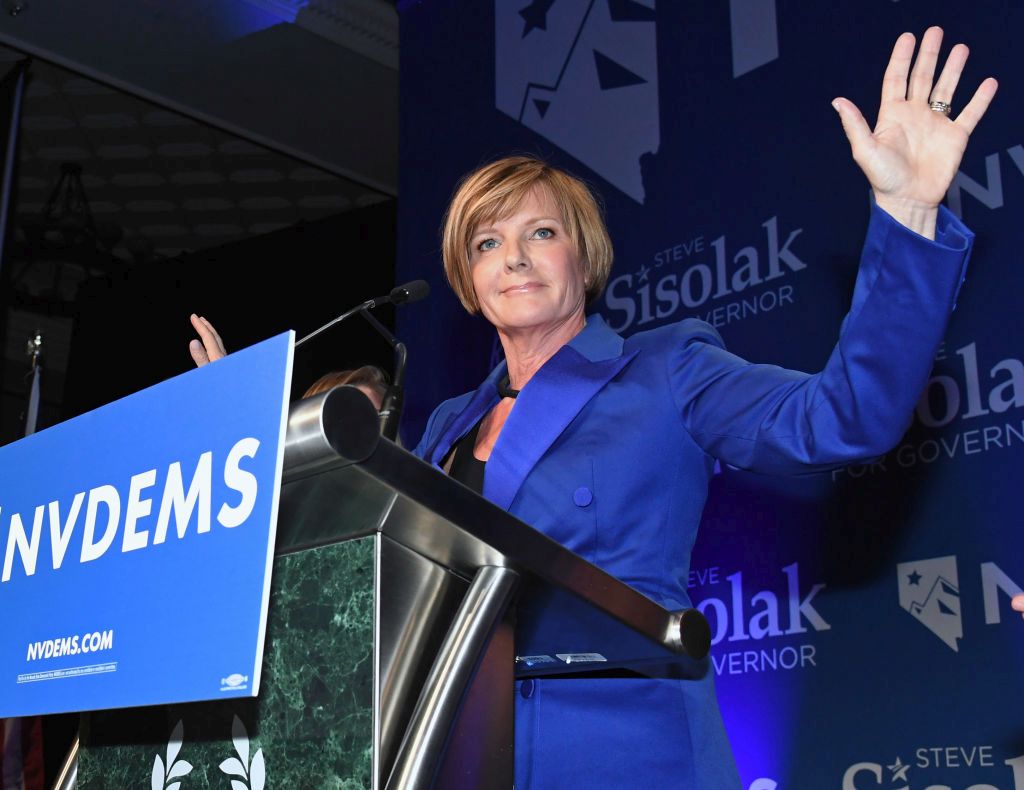
Lee defeated conservative think-tank founder Drew Johnson in 2024 by 2.8 percentage points, fewer than 10,300 votes, in one of the nation’s closest House races.
Dr. James Lally will challenge Lee in the Third District’s Democratic primary if she chooses to run. Las Vegas 2024 mayoral candidate Tera Anderson, attorney Christopher Brandlin, accountant Steven London, neurosurgeon Aury Nagy, and composer and 2024 Third District candidate Martin O’Donnell are among Republicans who will vie for the seat.
In northern Las Vegas’s Fourth Congressional District, which includes downtown Las Vegas and the Strip, Horsford, the first African American elected to Congress from Nevada, is expected to seek a fifth term and again face stiff opposition.
When Nevada’s Democratic-led Legislature redistricted after the 2020 Census, enhancing Hosford’s North Las Vegas grip on the seven-county district was among its aims.
Horsford, who defeated former North Las Vegas Mayor John Lee by 8.1 percent or more than 26,000 votes in 2024, has not formally declared his fifth House run.
At least three Republicans will battle for the party’s Fourth District berth to face the Democratic candidate in November 2026: financial adviser and 2024 Fourth District candidate David Flippo, IT director Aaron Hill, and telecommunications business owner Cody Whipple.
 Friends Read Free
Copy
Facebook
Tweet
Friends Read Free
Copy
Facebook
Tweet