
The U.S. war with Iran could cost as much as $47 billion from the end of February to the end of April, according to a recent prediction from the Penn Wharton Budget Model.
The Ivy League college estimated that the conflict cost between $27 billion and $28 billion in the first 32 days, adding that the “projected two-month direct costs” would range between $38 billion and $47 billion if fighting continues through the end of the month.
Another $5 billion could be incurred due to indirect costs or possible interest costs if the war is being financed by deficit spending, it said.
Penn’s analysis broke down the conflict into four phases. During the first six days of the campaign that ran from Feb. 28 to March 5, the U.S. government spent around $2.1 billion per day, it said.
Over two subsequent phases that were calculated in the report, the cost decreased significantly, with an estimated $601 million spent per day between March 6 and March 23, and $500 million spent each day for the rest of the month.
The ongoing fourth phase of the Iran war, the modeling indicated, could be cheaper each day. The researchers estimated the government would spend around $350 million to $650 million per day between April 1 and April 30.
The report said it was based upon “official government data” or what the researchers described as an “authoritative independent analysis.” It also did not provide any predictions on the conflict should it stretch past April 30.
Penn’s researchers wrote that the first phase cost more because the conflict was “dominated by the use of expensive standoff munitions.” They noted that the Pentagon had told the Senate in mid-March that the “first six days cost at least $11.3 billion in unbudgeted outlays” and primarily in “munitions replacement.” Standoff munitions can include longer-range missiles or weapons that are outside an enemy’s ability to shoot at U.S. service members.
In the second phase, it added, the U.S. military shifted to cheaper munitions such as Joint Direct Attack Munition (JDAM) kits that convert unguided bombs into precision-guided munitions. Iran also lost much of its capacity to defend itself from U.S. forces, leading to cheaper American defense expenditures.
The third phase “applies a further step-down to approximately $500 million per day” as the operation morphed into a “lower-intensity tempo” as negotiations started between Washington and Tehran, according to Penn’s modeling.
The fourth phase was calculated as such because the “base case continues at $500 million per day for all 30 days of April, adding $15 billion,” the analysis said. “A low scenario of $350 million/day applies if operations wind down significantly or a ceasefire takes hold early in the month; a high scenario of $650 million/day reflects possible re-escalation.”
The report was released before President Donald Trump warned that the United States would begin to strike Iran’s bridges and power plants should negotiations between the two countries fail to produce a deal that may lead to the reopening of the Strait of Hormuz, a critical waterway for global trade.
In an April 5 post, the president warned that Iran has a deadline of April 7 at 8 p.m. ET to agree or its civilian infrastructure would be targeted.
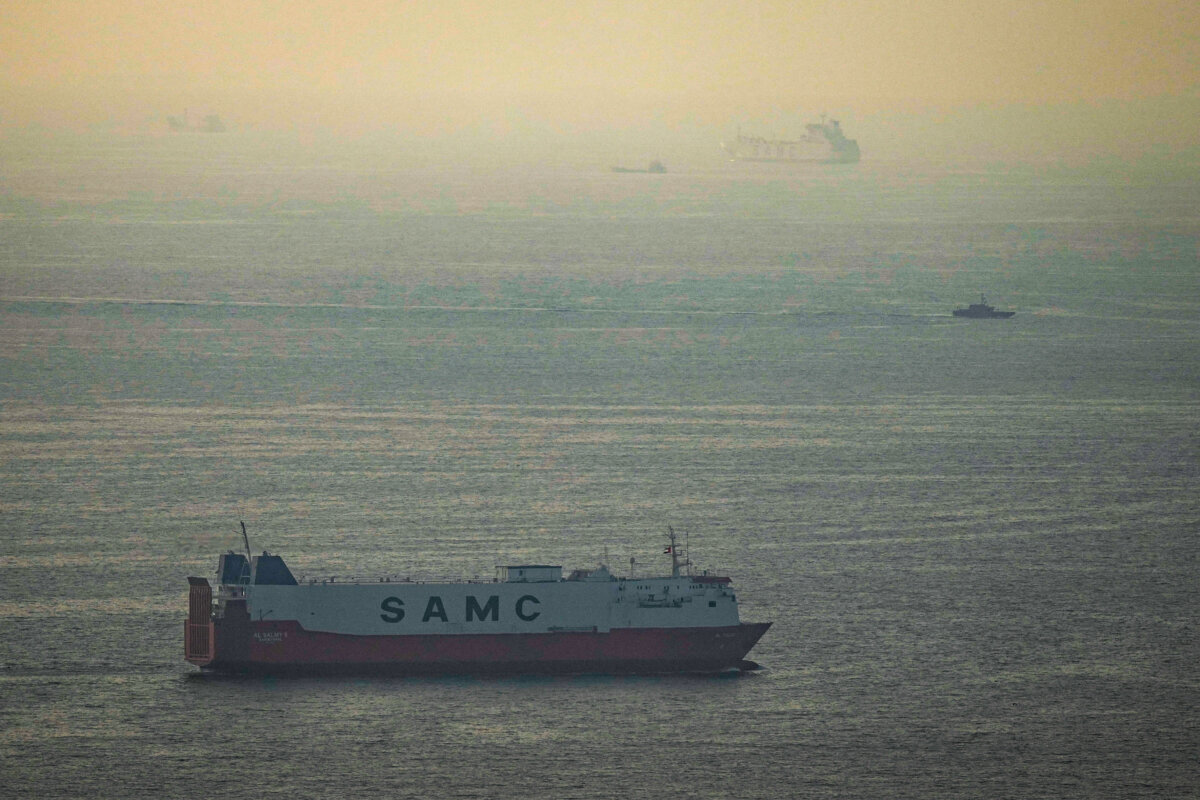
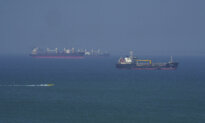
Since the start of the conflict, Iran has attacked commercial vessels in the strait and other parts of the Middle East, leading to the waterway being effectively shut down. In the meantime, oil and gas prices have surged, and major stock markets have fluctuated.
“We have a plan, because of the power of our military, where every bridge in Iran will be decimated by 12 o’clock tomorrow night,” Trump, a graduate of the University of Pennsylvania’s Wharton School in 1968, said during a Monday news conference at the White House.
Iran on Monday rejected a 45-day cease-fire proposal and said it wants a permanent end to the war. Iran’s state-run IRNA news agency said Tehran conveyed its response through Pakistan, a key mediator.
“We only accept an end of the war with guarantees that we won’t be attacked again,” Mojtaba Ferdousi Pour, head of the Iranian diplomatic mission in Cairo, told The Associated Press on Monday.
The Associated Press contributed to this report.
 Friends Read Free
Copy
Facebook
Tweet
Friends Read Free
Copy
Facebook
Tweet