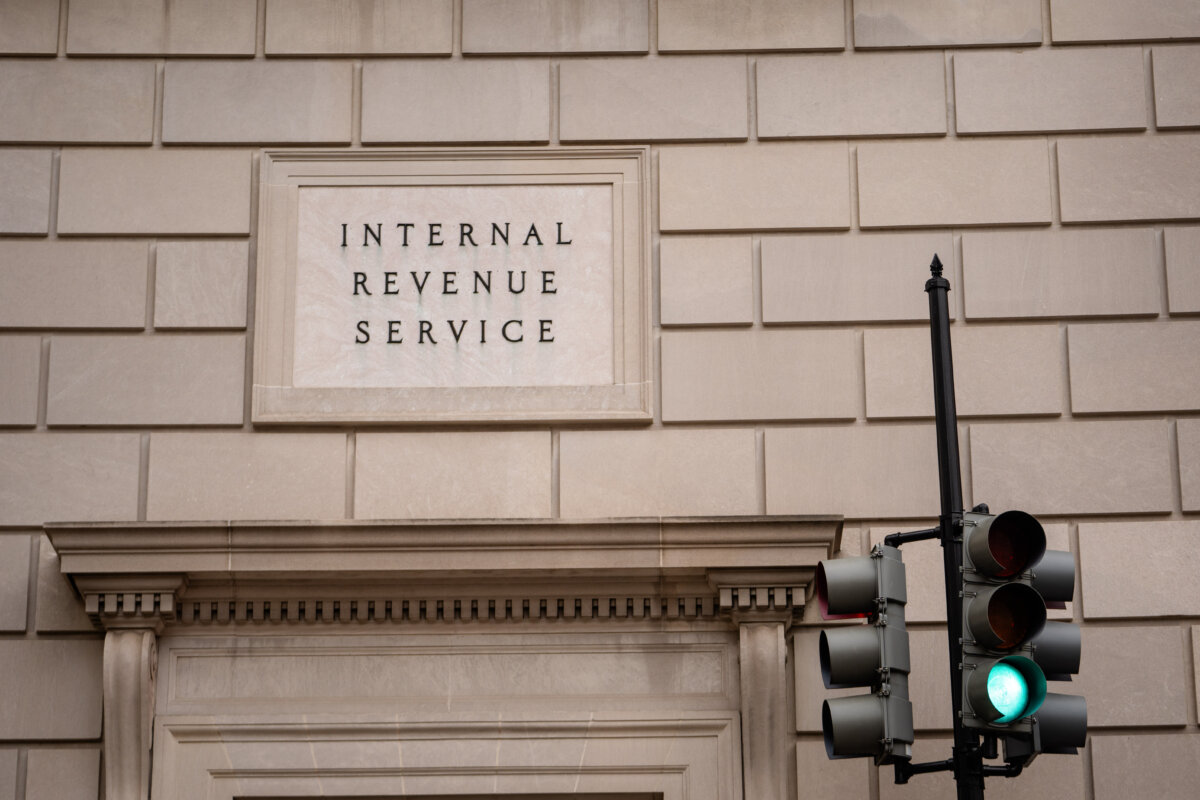

The IRS published a new schedule for taxpayers to claim a wide range of tax benefits under the One Big Beautiful Bill Act (OBBB) for tax year 2025, the agency said in a March 2 statement.
The OBBB, signed into law by President Donald Trump last July, introduced tax deductions for various taxpayers—seniors, workers receiving tips or overtime pay, and individuals who pay interest on car loans. The IRS published Schedule 1-A, which can be used to claim these deductions when taxpayers file their annual returns on Form 1040.
The agency also released a Form 1040 filing instruction document to help taxpayers calculate such deductions and file for them correctly.
Overtime Pay
Taxpayers who earn overtime pay can claim an annual deduction of up to $12,500, which phases out once modified adjusted gross income exceeds $150,000.
According to the instruction document, only overtime pay paid in accordance with Section 7 of the Fair Labor Standards Act of 1938 can qualify for deduction.
The Act requires employers to pay overtime for any work performed in excess of 40 hours per workweek. The overtime pay must be one-and-a-half times their regular rate of pay.
The IRS clarified in the document that extra payments received for certain weekends or holidays generally won’t be considered as qualified overtime pay. Any qualified tips received by the worker cannot be added to overtime pay for deductions.
Interest on Car Loans
The OBBB allows for interest paid on car loans to be deducted from taxes, with the annual deduction capped at $10,000. The deduction phases out when modified adjusted gross income crosses $100,000.
To claim the deduction, the taxpayer must include the vehicle identification number on their returns, according to the instruction document. The loan must have originated after Dec. 31, 2024.
The deduction is available only for cars, minivans, vans, SUVs, pickup trucks, and motorcycles with a gross vehicle weight rating of less than 14,000 pounds. The vehicle must have undergone final assembly in the United States.
In addition, the vehicle should be purchased for personal use. As such, it cannot be used for any trade or business, or for the production of income.
Senior Deduction
For seniors aged 65 and above, the OBBB provides an annual deduction of $6,000, in addition to the standard deduction already available to them. The deduction starts phasing out for modified adjusted gross income over $75,000.
“To qualify for the enhanced deduction, the taxpayer (and/or the taxpayer’s spouse, if filing a joint return) must have been born before Jan. 2, 1961. The taxpayer must have a valid Social Security number; if married filing jointly, each spouse who is claiming the enhanced deduction for seniors must have a valid SSN,” the IRS said in the recent statement.
Tips
The OBBB allows workers to deduct qualified tips on their tax returns, with a maximum annual deduction of $25,000. The deduction phases out for taxpayers with modified adjusted gross income over $150,000.
Taxpayers must have a valid Social Security Number to claim the deduction for qualified tips, the instruction document said.
“Base your determination of the amount of your qualified tips on documentation such as receipts, point-of-sale system reports, daily tip logs, third-party settlement organization records, or other documents that show that the amount you reported as qualified tips is the correct amount,” the IRS said.
“Make sure to keep a record of the documents you use when determining the amount of your qualified tips.”
Filing Season, Tackling Fraud
The 2026 tax filing season to file 2025 year taxes started on Jan. 26, with the deadline set for April 15, the IRS said in late January. The agency is expecting to receive 164 million individual tax returns this time.
The White House has said it expects Americans to receive “significantly larger tax refunds” this filing season due to provisions in the OBBB.
Meanwhile, the IRS announced the launch of a new web page on Feb. 26 to tackle tax fraud.
The web page allows taxpayers to report suspected tax scams, fraud, evasion, and other related illegal activities confidentially. The new page consolidates various fraud reporting options into a single, centralized location, making it easier for taxpayers to report such activities.
“Improvements to the IRS fraud reporting system make reporting suspected wrongdoing easier and simpler and will address historic challenges that had prevented the IRS from making maximum use of the referrals it receives,” IRS Chief Executive Officer Frank J. Bisignano said.
“By reporting suspected tax fraud or scams, taxpayers play an important role in uncovering fraud and supporting the integrity of the nation’s tax system.”
 Friends Read Free
Copy
Facebook
Tweet
Friends Read Free
Copy
Facebook
Tweet