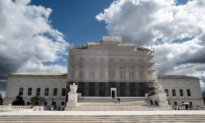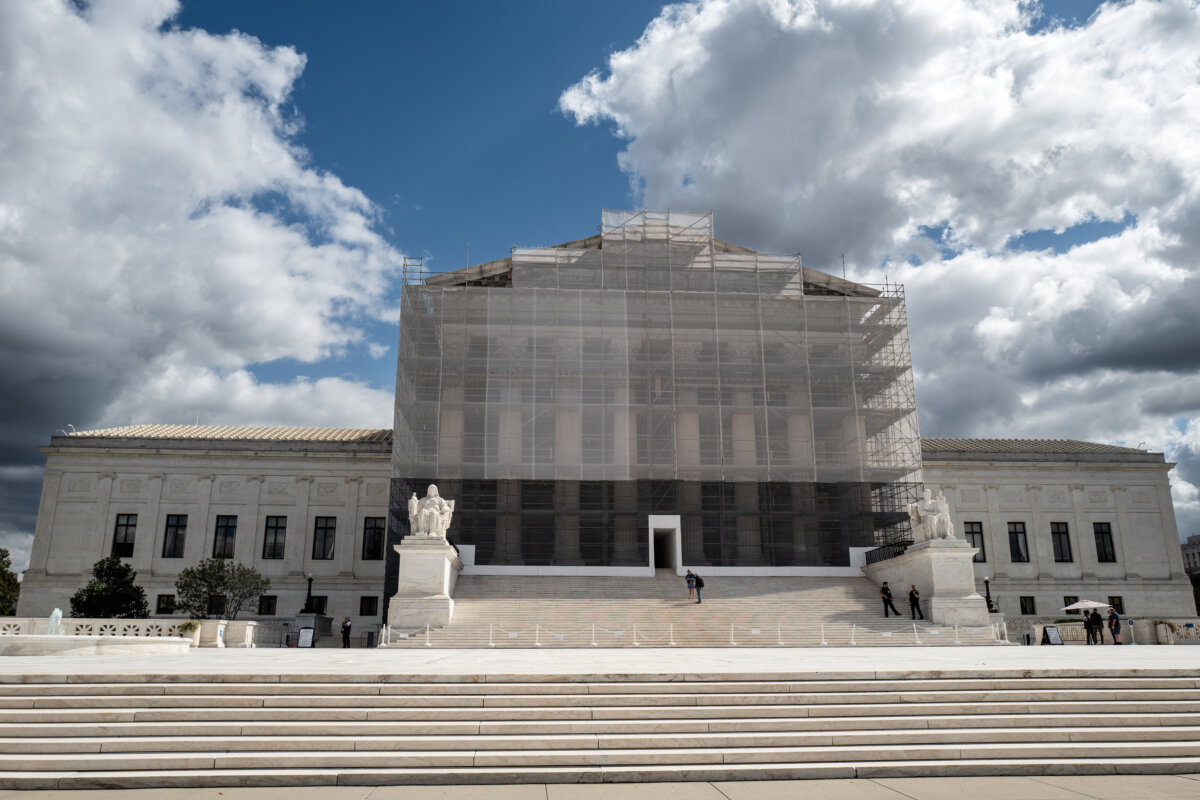

The Supreme Court on Oct. 14 declined to take up a challenge to an Obama-era rule that lets spouses of some visa holders work in the United States.
Justices did not explain their decision to decline the petition for review, which is typical practice.
The rule was adopted by the Department of Homeland Security (DHS) in 2015. It enabled, for the first time, spouses of people who hold H-1B visas to work without any restrictions. One of the goals was “attracting and retaining highly skilled foreign workers.”
H-1B visas are for specialized foreign workers. They are often used by large technology companies. President Donald Trump recently announced a $100,000 fee for new H-1B visas, drawing a legal challenge.
Save Jobs USA, a group of workers employed by Southern California Edison until they were replaced by H-1B nonimmigrants in 2015, sued over the DHS policy, arguing that only Congress can make classes of nonimmigrants exempt from the general prohibition against working.
Several courts rejected the lawsuit, primarily based on a 2022 ruling in a similar case. In that decision, which came in a case over a separate rule, the U.S. Court of Appeals for the District of Columbia Circuit stated that DHS has the power to exempt classes from the general working prohibition.
Judges on the court later said the precedent established by the ruling meant that it applied to the case brought by Save Jobs.
In its petition for review to the Supreme Court, Save Jobs USA stated that the rulings erroneously interpreted DHS power outlined in the law.
It also said the nation’s top court should resolve what it said was a split in decisions from the U.S. Court of Appeals for the Fifth Circuit. In a 2015 decision, the Fifth Circuit concluded that the federal law cited by the DHS did not empower the government to grant work authorization to immigrants who could be deported if not for the Deferred Action for Childhood Arrivals program.
Lawyers for the Trump administration wrote in a brief to the court that DHS legally adopted the 2015 rule and that the Fifth Circuit decision was not relevant because it applied to immigrants who lacked legal status.
John Miano, a lawyer representing Save Jobs USA, told The Epoch Times in an email that the denial of the petition has left the legal landscape in chaos after President Joe Biden granted work authorization to thousands of people who entered the country during his term.
“We have the D.C. Circuit saying that the president has such power and the Fifth Circuit saying he does not,” he said. “What is the law then?”
The court has on multiple occasions turned down opportunities to address the matter, according to Miano.
 Friends Read Free
Copy
Facebook
Tweet
Friends Read Free
Copy
Facebook
Tweet