
Many of America’s biggest law firms have a reputation for leaning left, leaving many conservatives at a disadvantage when seeking legal help.
To fill this gap, one Texas-based attorney joined with like-minded legal partners more than a decade ago to build a firm that today goes by the name of Lex Politica, one of several upstart legal boutiques that are building a reputation for serving conservative clients. This week, the firm scored a major victory representing Freedom Path, a nonprofit that claimed the IRS’s criteria for deciding which organizations could obtain nonprofit status were “constitutionally vague” and allowed the agency to discriminate against conservative groups.
On Sept. 30, the U.S. District Court in Washington ruled that the tests the IRS used gave the agency too much discretion. Chris Gober, Lex Politica’s founder, believes this could be a landmark decision in curtailing the authority of the administrative state.
“The court’s decision makes clear that the IRS can no longer weaponize unconstitutional rules to intimidate and punish conservatives,” Gober told The Epoch Times. “This ruling is a victory not just for Freedom Path, but for every American who believes government bureaucrats shouldn’t be able to bully citizens into silence.”
But Gober says there is more work to do to level a playing field that to date has favored the left.
“People always talk about access to justice,” Gober said. “I don’t think that a lot of the big firms think about access to justice for conservative organizations.”
A study by Law360, an analytics company for attorneys, found that lawyers at America’s top 400 law firms donated more than 15 times more to Democratic candidate Vice President Kamala Harris’s presidential campaign than they did to Republican candidate President Donald Trump’s campaign in the 2024 election.
A 2022 study by Notre Dame Law School professor Derek Muller found that the 100 largest U.S. law firms, collectively known as “Big Law,” worked pro bono in support of liberal causes in 95 percent of the highest-profile U.S. Supreme Court cases concerning abortion, gender identity, religious freedom, and Second Amendment rights between 2018 and 2021.
The Federalist Society, an organization of conservative and libertarian legal experts, states that “law schools and the legal profession are currently strongly dominated by a form of orthodox liberal ideology which advocates a centralized and uniform society.”
For Gober and Lex Politica, conservative causes include defending clients against the administrative state. Perhaps the most prominent among their cases is the Freedom Path case, which Gober filed against the IRS in 2014.
The Freedom Path Case
The case concerns the IRS’s 11-factor “facts and circumstances” test, which the agency employs to decide whether an organization is to be classified as a nonprofit engaging in “issue advocacy” or as a political action committee (PAC) that would be subject to taxation and donor disclosure requirements.
“These agents really have this incredible latitude of how they’re able to apply this test,” Gober said. “Our argument is that it has to be an objective test, it’s got to be a clear test, there shouldn’t be any guesswork around it.”
In the case of Freedom Path, which applied for nonprofit status in 2011, the IRS extended the approval process for years, demanded a list of donors, and disclosed the organization’s confidential tax information to a public website before ultimately denying the application, Gober said. Representing Freedom Path, he sued the IRS for “illegal targeting.”
Freedom Path is not alone. More than 40 other organizations have sued the IRS over the past decade, alleging agency officials used the ambiguity of the “facts and circumstances” test to discriminate against conservative organizations, denying them 501(c)4 status while granting it to liberal organizations. A 2013 investigation by the Treasury inspector general determined that the IRS had shown bias during the 2012 election against conservative applicants, delaying their applications and subjecting them to unusual information requests, while most left-leaning applicants had an easier time gaining approval.
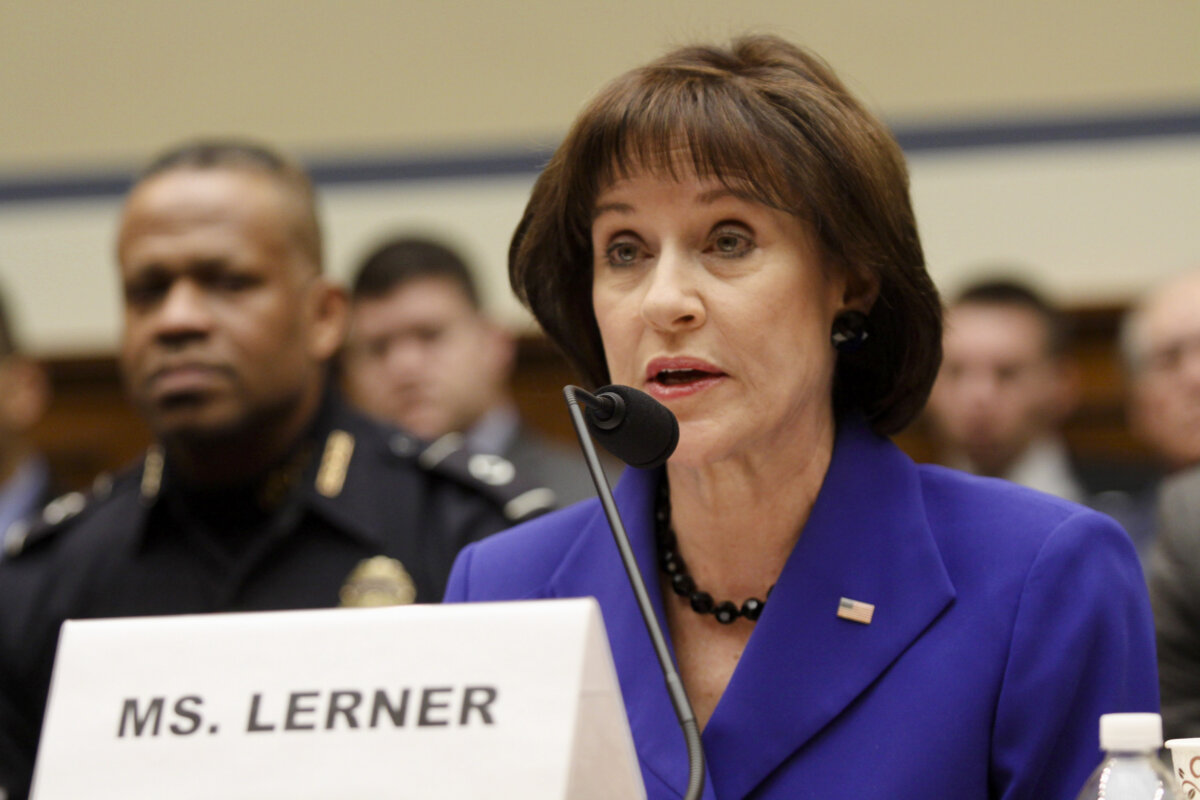
Lois Lerner, who was in charge of the IRS unit that determines tax-exempt status, apologized for the practice and acknowledged that applicants with words like “Tea Party” or “patriot” in their names were singled out by IRS staff members for additional reviews.
An internal IRS report written in 2013 conceded that the criteria it used to distinguish between social welfare and political campaigning “have created considerable confusion for both the public and the IRS in making appropriate section 501(c)(4) determinations.” Finally, in 2017, the Treasury Department settled with the plaintiffs, with then-Attorney General Jeff Sessions calling the IRS’s activities an “abuse of power.”
All of this could have put the Freedom Path case to rest. But it didn’t.
In 2017, a Texas district court ruled that the IRS’s “facts and circumstances” test “provides a person of ordinary intelligence with fair notice of prohibited activities and otherwise does not allow for discriminatory enforcement,” according to an analysis by Wagenmaker & Oberly, a legal firm focused on nonprofits. Then, in 2019, the Fifth U.S. Circuit Court of Appeals ruled that Freedom Path lacked standing in the case because it had no taxable income and therefore was not harmed by the IRS’s denial of its application for nonprofit status.
On Sept. 30, the D.C. District Court ruled in favor of Freedom Path, overturning prior decisions and finding that the criteria the IRS was using were unconstitutionally vague. The case remains subject to appeal.
Post-Apology, IRS Stays the Course
In line with the Washington maxim that “personnel is policy,” however, critics say that many of the agency officials who were involved in or defended the agency’s discriminatory actions are still there.
“They apologized, but none of the rules changed,” Gober said. “The exact same lawyers that argued the case for the Obama administration in 2014 are the ones who were arguing the case on July 2.”
Tom Jones, head of the American Accountability Foundation, which tracks political bias within federal agencies, concurs, stating that changes wrought by the Trump administration to federal agencies have been “amazing,” but the IRS remains an exception.
“We were looking at the IRS because it’s an incredibly impactful agency,” Jones told The Epoch Times. “I thought we had cleaned things up when the Lois Lerner stuff happened.”
Instead, he said, many of the staff involved in that scandal are still at the agency, and many were promoted.
“For lack of a better explanation, it’s like nobody’s looking,” Jones said.
For Gober, however, the issue goes beyond the nonprofit decision. The bigger question is how much authority agency officials can give themselves beyond what Congress explicitly authorized. And then there’s the question of how much legislative authority Congress is entitled to delegate to unelected bureaucrats without violating the U.S. Constitution, which gives lawmaking authority solely to Congress.
“I think the Freedom Path case has the ability to be a really groundbreaking case,” said Gober, who has a number of recent Supreme Court decisions on his side.
Rolling Back the Administrative State
Two landmark rulings were West Virginia v. EPA in 2022 and Loper Bright Enterprises v. Raimondo in 2024, which limited the rule-making authority of agencies to what Congress specifically authorized. These decisions overturned the “Chevron doctrine,” which the Supreme Court established in Chevron v. Natural Resources Defense Council in 1984, and which granted broad authority to agencies to interpret the limits of their own authority.
“Ending Chevron doctrine, that was step No. 1,” Gober said.
“No. 2 is continued challenges in the courts systems to push back a lot of the administrative state that has been created.”
And third, he said, is to “put the pressure back on Congress to act, and not defer to the agencies to do their job for them.”
“[Congress] can’t outsource this anymore, and if you do outsource it, we can challenge that,” Gober said.
Despite the tailwinds of recent court rulings, one area where conservatives say they are still at a disadvantage is money. Progressives benefit from a rich and extensive network of nonprofit organizations that use charitable donations to fund left-leaning law firms, they say.
“The Democratic side has been much more effective at weaponizing lawfare and thinking about ways to be strategic and utilize their donors,” Gober said.
“Where they absolutely throttle us is the Arabella Advisors network. No organization on the right can really compete with that.”
Arabella Advisors manages a number of tax-exempt, nonprofit organizations that donate money to progressive organizations, political action committees, and the campaigns of Democratic Party candidates. On its website, Arabella advocates “smart grant making aimed at effecting change through legislation, litigation, organizing, and calls for enforcement.”
One example of this funding involves the grants paid by The New Venture Fund, one of the 501(c)3 investment funds managed by Arabella Advisors, to Sher Edling, a law firm that leads climate-related lawsuits, and to Giffords Law Center, a legal group that advocates for gun control, according to the New Venture Fund’s annual IRS filing.
Changes May Not Last
The election of Trump to a second term has shifted much of the federal bureaucracy decidedly to the right, at least at the senior level, and put pressure on many left-leaning law firms.
In February and March, Trump issued executive orders against a number of “big law” firms that he accused of acting with bias in favor of the Democratic Party, revoking their security clearances, terminating their government contracts, and investigating them for racial discrimination. In response, some of the firms changed their tactics to placate the president, while others sued the administration, alleging violations of their freedom of speech rights.
According to Gober, in the long term, a left-leaning tendency will likely remain the norm among America’s largest law firms, and perhaps in the federal government as well, leaving plenty of space for firms like his.
“What we have to expect is, things are going to go back largely to the way they were in a post-Trump administration, and there’s still going to be a need for law firms like us to basically step in and fill those gaps,” Gober said. “I don’t think that anything is changing about those [law] firms, other than just doing what they need to do to try to get off [Trump’s] list.”
The Epoch Times contacted Arabella Advisors, the New Venture Fund, and Sher Edling for comment, but did not receive a reply.
The Epoch Times reached out to the IRS to comment regarding the Freedom Path case, but did not receive a reply.
 Friends Read Free
Copy
Facebook
Tweet
Friends Read Free
Copy
Facebook
Tweet