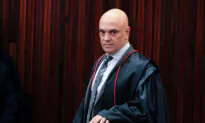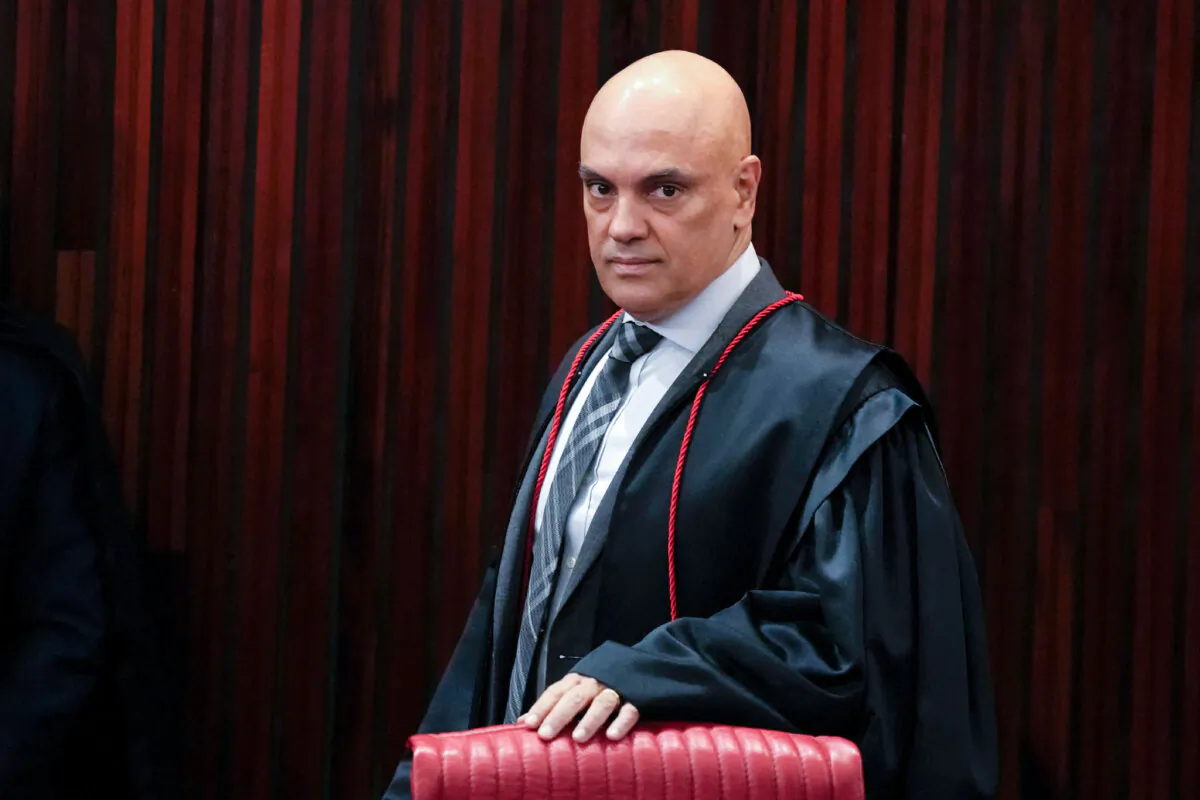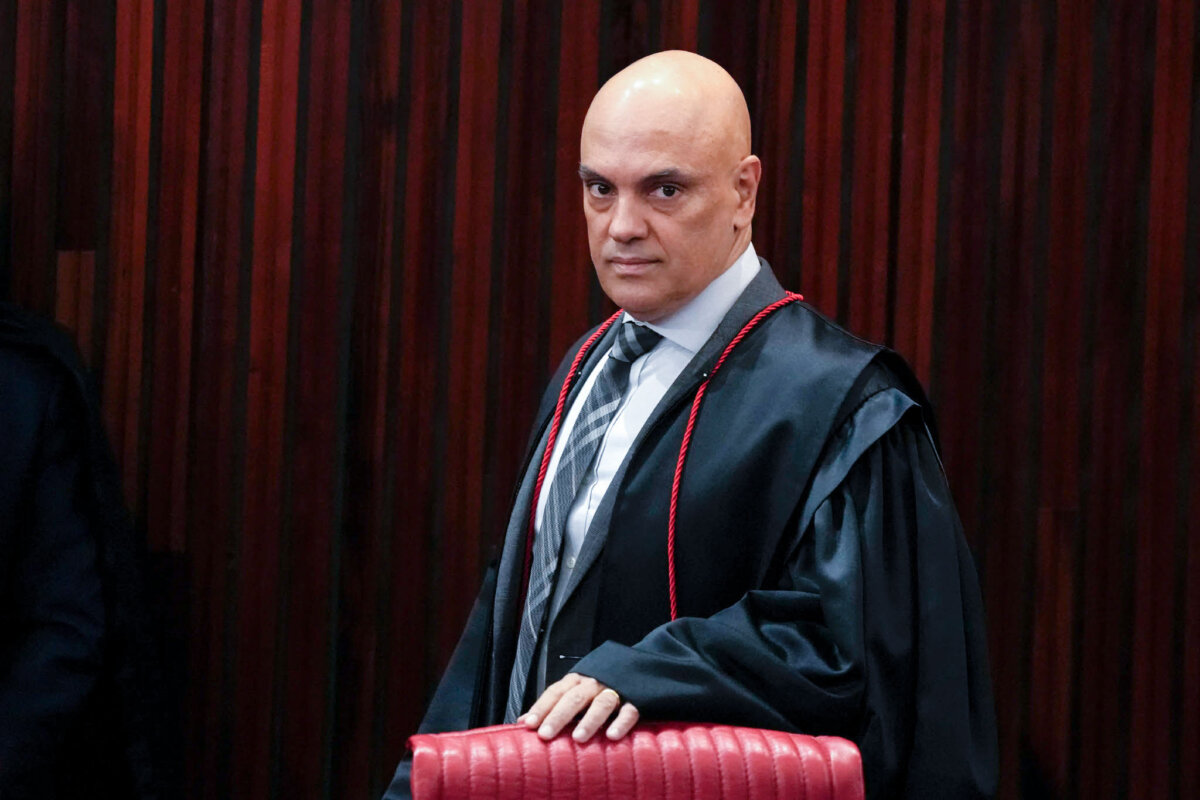

WASHINGTON—The United States removed Brazilian Supreme Court Justice Alexandre de Moraes from its sanctions list on Friday after initially adding him over his role in leading the trial against former Brazilian President Jair Bolsonaro.
De Moraes’ wife and the Lex Institute, which she leads, were also taken off the list, according to documents from the Treasury Office of Foreign Assets Control. Brazil’s government celebrated the move, which came after a weekend phone conversation between President Donald Trump and President Luiz Inácio Lula da Silva.
The Trump administration had sanctioned the judge in July, accusing him of using his position to authorize arbitrary pretrial detentions and suppress freedom of expression in Brazil.
The lift of sanctions represents a thawing of sorts in the frosty relationship between the two governments and follows a number of meetings and calls that both have described in positive terms. Trump had seen Lula’s predecessor Bolsonaro as an ally, with the Brazilian leader even dubbed the “Trump of the Tropics” when he came into office.
“This is a victory of Brazil’s judiciary,” de Moraes said Friday evening at an event in Sao Paulo. “Brazil’s judiciary did not bow to threats, cohersion and it will never do so. It carried on with unbias, seriousness and courage. It is a victory for national sovereignty. President Lula from the start said this country will not give in to any invasion to Brazil’s democracy.”
Bolsonaro was accused of masterminding a plot to stay in power despite his 2022 election defeat to current President Luiz Inácio Lula da Silva—similar charges to what Trump faced after his supporters breached the U.S. Capitol in 2021.
Bolsonaro was convicted and sentenced to more than 27 years in prison. The 70-year-old leader started serving his sentence last month while still requesting to be put on house arrest due to his poor health. The massive upheaval his allies expected upon his arrest did not materialize, though he remains a politically powerful figure ahead of next year’s elections.
Eduardo Bolsonaro, a lawmaker and son of the former president, who announced in March that he would start living in the United States in order to lobby the Trump administration to help his father avoid jail, said he would continue to fight for Jair Bolsonaro.
“The lack of internal cohesion and the insufficient support for initiatives pursued abroad contributed to the worsening of the current situation,” Eduardo Bolsonaro wrote on his social media channels, after Trump’s reversal. “We sincerely hope that President Donald Trump’s decision will be successful in defending the strategic interests of the American people, as is his duty.”
In initially sanctioning de Moraes, the Treasury Department had cited the Global Magnitsky Human Rights Accountability Act, which targets perpetrators of human rights abuse and corrupt officials. De Moraes said the use of the act against him was “illegal and regrettable.”
Also in July, the Trump’s administration imposed a 40 percent tariff on Brazilian products on top of a 10 percent tariff imposed earlier, justifying the tariffs by saying that Brazil’s policies and criminal prosecution of Bolsonaro constituted an economic emergency.
The two leaders started mending fences at the United Nations’ General Assembly in September, which was followed by their first private meeting in Malaysia in October and subsequent phone conversations.
The Brazilian president has said he wasn’t only trying to reverse the increase on tariffs but also to end the sanctions on de Moraes and some members of his government who were also hit by the measure.
Separately, Lula has urged Latin American states to help avoid a conflict in Venezuela as the Trump administration orders military action against vessels allegedly linked to drug cartels.
Last month, Trump signed an order to remove the additional import tariffs on some agribusiness products. The United States ran a $6.8 billion trade surplus last year with Brazil, according to the U.S. Census Bureau.
 Friends Read Free
Copy
Facebook
Tweet
Friends Read Free
Copy
Facebook
Tweet