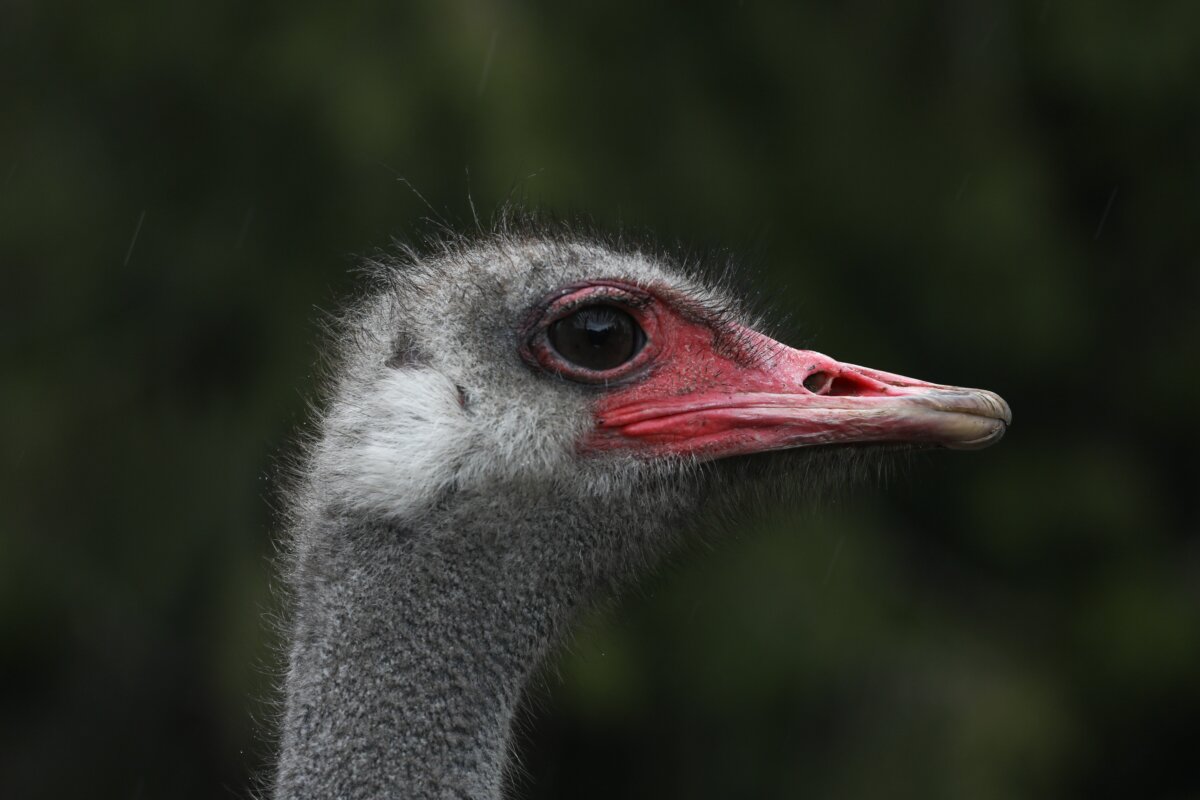

U.S. billionaire John Catsimatidis is urging the Supreme Court of Canada to allow U.S. Food and Drug Administration (FDA) testing on a flock of ostriches subject to a cull order by Canadian officials since last December.
The cull order from the Canadian Food Inspection Agency (CFIA) is currently stayed following a Supreme Court decision issued Sept. 24, which prevents the CFIA from enforcing its “stamping-out policy” on the flock of 399 birds at Universal Ostrich Farms while the court goes through the process to consider the farm’s request to appeal the order.
“Let the FDA test the birds. I mean, I don’t know what the problem is,” Catsimatidis said during an Oct. 2 virtual press conference where he was joined by farm spokesperson Katie Pasitney.
Between Dec. 15 of last year and Jan. 15 of this year, 69 of the farm’s ostriches got sick and died. The CFIA issued a cull order after two PCR tests showed the presence of avian influenza in two of the dead birds.
Since then, the farm has repeatedly appealed the order in court, arguing that the ostriches have developed herd immunity, remain in good health, and are valuable for scientific research. These challenges have so far been unsuccessful. Catsimatidis said he hopes the Supreme Court of Canada comes up with a “common sense” solution to the matter, which Pasitney said she is hopeful about.
“If we get approval [from the Supreme Court] we have a full trial. We get to actually have a full hearing of all the evidence from Dec. 31 to today, [whereas] we’ve been limited in the past just to discussing the Dec. 31 cull order date,” Pasitney said in her Oct. 2 remarks, adding that the farm has submitted reconsideration materials to the CFIA that don’t need to be heard in court to be considered, including expert evidence and 262 days of health data, showing they have a recovered flock.
Rejection
Catsimatidis, whose $4.5 billion fortune includes ownership of an oil refinery, a New York grocery store chain, and a radio station, said he first brought the ostrich farm matter to the attention of officials in the Trump administration after Pasitney appeared on a current events radio show he hosts in New York in May of this year.
In mid-July, Catsimatidis wrote a letter to Prime Minister Mark Carney calling on him to stop the cull order and make a joint statement to highlight “cross-border compassion” and the important ties between the United States and Canada. Catsimatidis and a friend have also contributed about $35,000 so far to help cover the farm’s legal defence costs.
Pasitney said the FDA has previously offered to test the birds for free, but the CFIA refused, after also denying the farm’s earlier requests for independent testing. Pasitney said the CFIA can kill every animal on one’s farm “based off of suspicion” in her Oct. 2 remarks.
Under Canada’s Health of Animals Act, failure to comply with CFIA orders can lead to fines as high as $250,000 and incarceration for up to two years.
The CFIA is required to respond to the Supreme Court’s stay by Oct. 3. Following that, the farm will have two days to submit its reply before the court decides whether to hear the appeal.
‘We Want Discussion’
In his Oct. 2 remarks to media, Catsimatidis reiterated calls for the ostriches to be sent south of the border under the care of Dr. Mehmet Oz, administrator of the U.S. Centers for Medicare and Medicaid Services, something Oz has previously offered.
“Why don’t they [CFIA] sit down and discuss with Dr. Oz? Why don’t they sit down and discuss with Secretary Kennedy?” Catsimatidis said on Oct. 2. “It doesn’t pass the smell test, what’s going on. All we want is peace. We don’t want conflict, we want discussion.”
Steven Pelech, a neurology professor in UBC’s Department of Medicine and president of Kinexus Bioinformatics, said previously that the CFIA has not carried out sufficient testing on the ostriches. He said that proceeding with the cull would wipe out important research opportunities, including work that could contribute to potential COVID-19 and cancer treatments.
“We can use these ostriches to produce antibodies against other targets, like cancer proteins,” Pelech said in an Aug. 29 interview with The Epoch Times.
The CFIA has offered to pay up to $3,000 per bird slaughtered, while Pelech says one ostrich egg alone can produce $40,000 to $50,000 of antibodies.
CFIA’s Updates
The CFIA has had custody and control of the ostrich flock at the Edgewood, B.C. farm since Sept. 22 and said the delay in carrying out the cull order carries “potential animal and human health risks.”
The agency said that after PCR tests detected H5N1 in the ostrich flock last December, the National Centre for Foreign Animal Disease in Winnipeg confirmed presence of the virus. Additional testing revealed that the virus is a new reassortment of highly pathogenic avian influenza (HPAI) that has not been identified in Canada before and is connected to a human infection in the United States, according to the agency.
“Under the stamping out policy, all of the birds on infected and exposed premises are depopulated. There is no post detection testing of exposed birds to exclude individual birds from depopulation,” the CFIA wrote in a Sept. 26 statement, adding that it has only counted between 300 to 330 ostriches on the farm rather than the widely-reported number of 399. In her Oct. 2 remarks, Pasitney said there is a lack of “trust” between the farm and the CFIA and a “lack of communication” is leading to the numerical disparity.
In an Oct. 1 update, the agency said its veterinarians are currently caring for one ostrich with an ongoing leg problem, while another ostrich with a “preexisting foot injury” was noted to be in otherwise fine health and thus is not undergoing any treatment.
“The other birds are continuing to be fed and watered with no signs of agitation or stress related to CFIA inspectors as care givers. As requested by the farm, the CFIA will continue to use feed from the farm’s regular supplier,” the agency wrote.
The agency also said that online campaigns have been launched with the intent of flooding CFIA phone lines with phony inspection requests and said that this is a criminal offence under the Health of Animals Act.
These actions could result in “enforcement measures or prosecution,” the CFIA said, adding that the fraudulent calls are “irresponsible” and may obstruct the CFIA in carrying out its role in providing food, plant, and animal services.
Support
In the Oct. 2 press conference, Pasitney said she wants more Canadian leaders to stand up for the survival of her ostriches and make it more of a focus for the national agenda. Pasitney said killing the ostriches would be “one of the biggest mistakes in Canadian history.”
The situation being faced by the farm is an example of “another disastrous Liberal mishandling of an issue,” according to comments made Oct. 2 in Toronto by Conservative Leader Pierre Poilievre, who has thus far declined to go into further detail on his position regarding what he believes should happen with the ostriches.
Calls to stop the CFIA cull order have also come from the farm’s local MP Scott Anderson, a Conservative, several B.C. Conservative MLAs, Ontario Premier Doug Ford, Alberta Premier Danielle Smith, and key members of the Trump administration, including U.S. Secretary of Health and Human Services Robert F. Kennedy Jr. B.C.’s NDP Premier David Eby has also said he is “frustrated” that the CFIA isn’t showing flexibility on the matter.
Carney has not yet commented on the matter.
 Friends Read Free
Copy
Facebook
Tweet
Friends Read Free
Copy
Facebook
Tweet