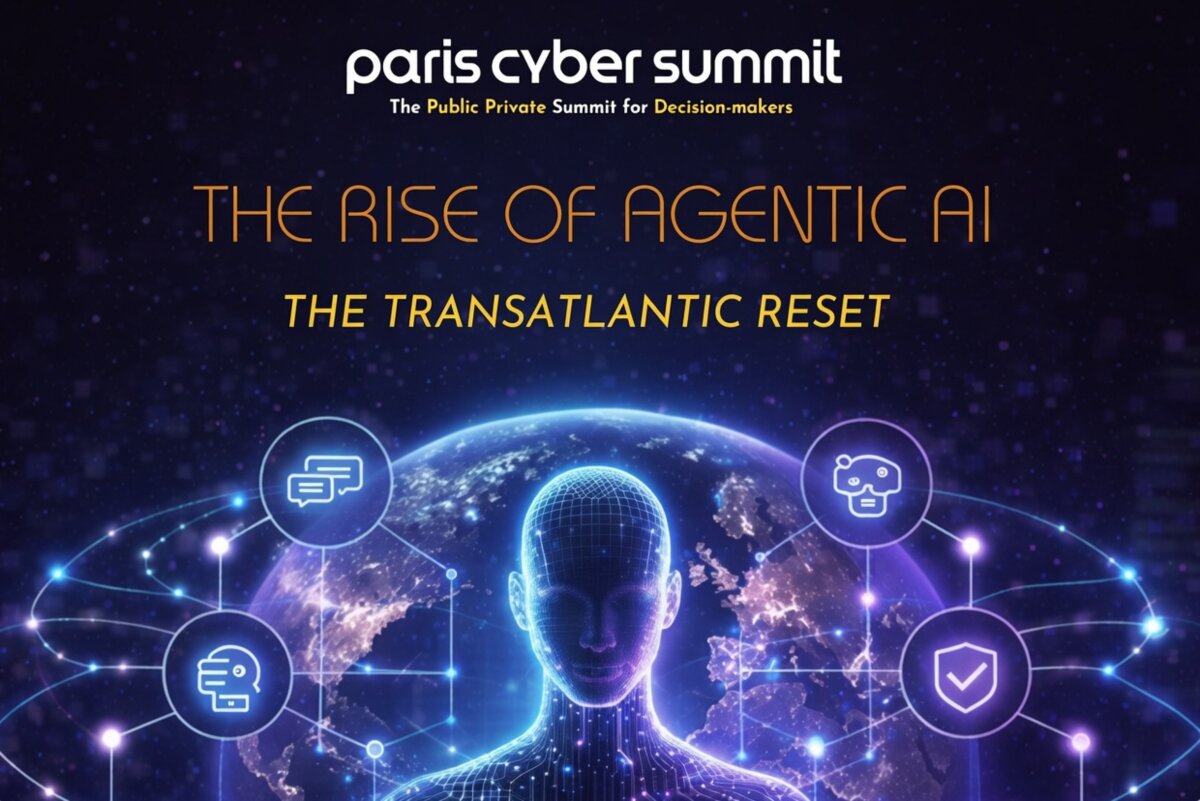

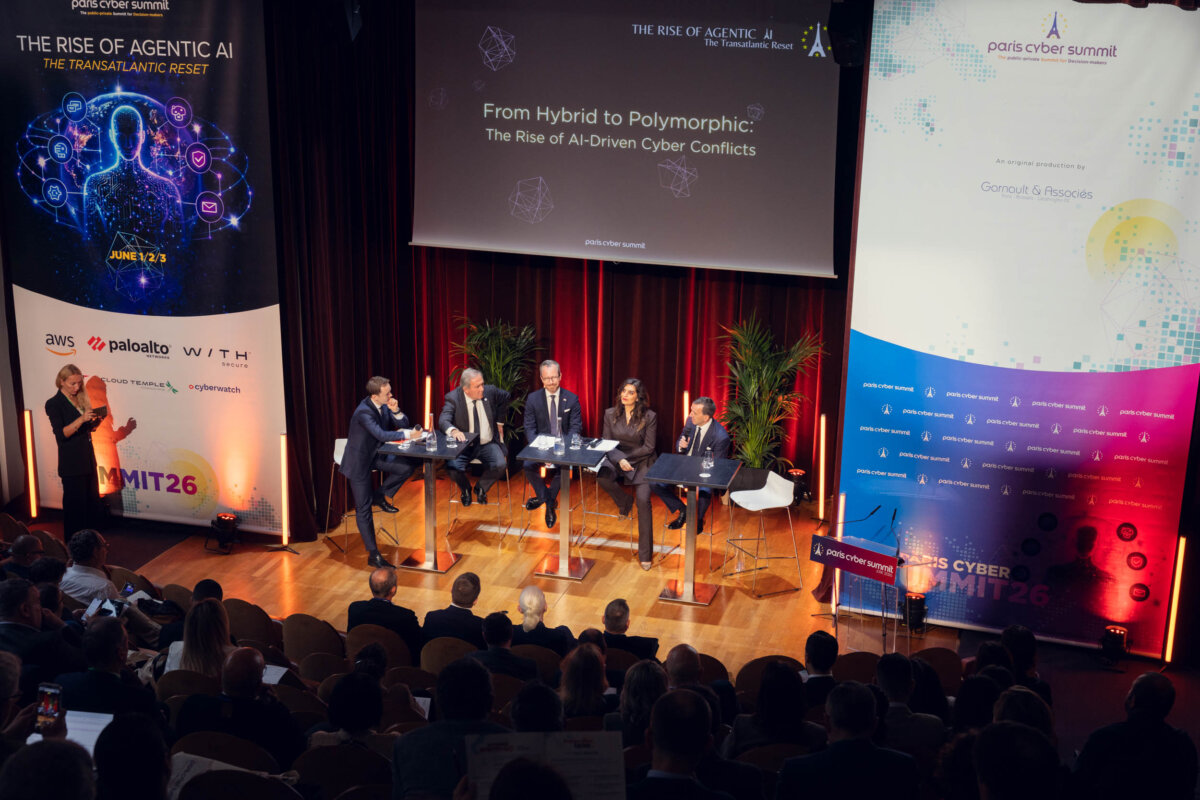
PARIS—The eighth Paris Cyber Summit convened on June 2 and 3 at the Maison de la Chimie under the theme “The Transatlantic Reset,” focusing on how the United States and Europe can rebuild a shared digital agenda after years of regulatory friction and geopolitical shock.
The exchanges addressed a key question: how allies should assess the threats posed by China and Russia.
Sébastien Garnault, the summit’s founder, opened the gathering with a call for candid conversations among partners. He said he wanted the two days to settle “how we assess the threats, and how we are answering to the threats as allies.”
The invitation-only forum drew senior officials, regulators, and industry leaders from both sides of the Atlantic, among them figures from the U.S. Department of War, the FBI, NATO, the European Commission, France, Ukraine, Google, and CrowdStrike.
China and the ‘Long Game’
The American case rested on two years of warnings about Chinese intrusions into U.S. critical infrastructure. The U.S. Cybersecurity and Infrastructure Security Agency has described campaigns designed to allow Beijing to disrupt vital functions at a moment of its choosing.
The operations known as Salt Typhoon and Volt Typhoon, both attributed to China, have reached telecommunications networks, energy utilities, and water systems in what officials call prepositioning rather than espionage, with the access often discovered years after it was established.
Todd Hemmen, deputy assistant director for cyber capabilities at the FBI’s Cyber Division, told the summit that American and European partners often read that threat differently.
“Where you might characterize China’s activity as surveillance, or as minimal,” he said, “we see it firmly as prepositioning for some future activity.”
He pointed to Salt Typhoon, identified in 2023 and 2024 but present in U.S. systems since around 2021, and to Volt Typhoon, which followed a similar pattern.
“They’re playing the long game,” he said, “and at some point that game leads to some kind of operational activity.”

Phil Stupak, a senior adviser at U.S.-based cybersecurity association ISC2 and a former White House official, told The Epoch Times that the West needed a “clear-eyed focus on what the People’s Republic of China is trying to accomplish,” which he said Beijing pursues “by stealing information, not only from the U.S., but also from European industries.”
China, he warned, “has the potential to wipe out civilizations.”
Europe, he added, had “probably not seen enough focus on China,” a gap he attributed to the war in Ukraine.
The miscalculation, Stupak argued, would be to treat China as a mere economic competitor.
“China sees itself as the Middle Kingdom,” a power that has already cast the West as a shared adversary, he said.
Alison King, vice president of government affairs at U.S.-based cybersecurity firm ForeScout, told The Epoch Times the two powers cannot be equated.
“We have to abandon, aggressively abandon, this false equivalence that China and the United States are both high-risk vendors,” she said.
“That is absolutely absurd. … We are not an authoritarian, technocratic regime that aggressively steals everyone’s intellectual property and commits human rights violations. … It is nowhere near the same.”
Since his state visit to China in April 2023, French President Emmanuel Macron has regularly renewed and amplified his long-standing calls for greater European strategic autonomy, urging Europe to reduce its dependence on the United States and develop its own independent foreign and security policy.
Other European leaders have echoed this view. Former EU High Representative for Foreign Affairs and Security Policy Josep Borrell has similarly called for the EU to build its own capabilities and pursue more autonomous policies toward China and in defense.
On the prepositioning found inside civilian systems, King said the implications were grave.
“Critical infrastructure serving civilians should not be a battle space, but unfortunately, that is where we are,” she told The Epoch Times, noting that “the ransomware we experience today predominantly comes from one place.”
Allies, she added, “cannot be naive about what is actively happening.”
For Adam S. Lee, chief security officer at Dominion Energy and a former FBI official, the clearest guide is precedent.
“The best predictor of future behavior is past behavior, for individuals and for nation-states alike,” he told The Epoch Times, pointing to the continuity of Beijing’s published five-year plans.
A Different View From Europe
Garnault said that in every report France produces, espionage, sabotage, and prepositioning trace back to China, even as Russia remains for Europeans “the imminent threat.”
Europe’s focus reflects a war on the continent’s doorstep. EU agencies report that Russian state-linked groups have intensified cyber operations against Ukraine and the countries supporting it, ranking such activity among the bloc’s foremost security concerns.
Despina Spanou, deputy director-general of the European Commission’s DG CONNECT, which shapes the EU’s digital policy, told The Epoch Times that “we are all vulnerable to Russian state-sponsored actors,” with aggression on Europe’s borders keeping peace in Ukraine at the top of the political agenda.
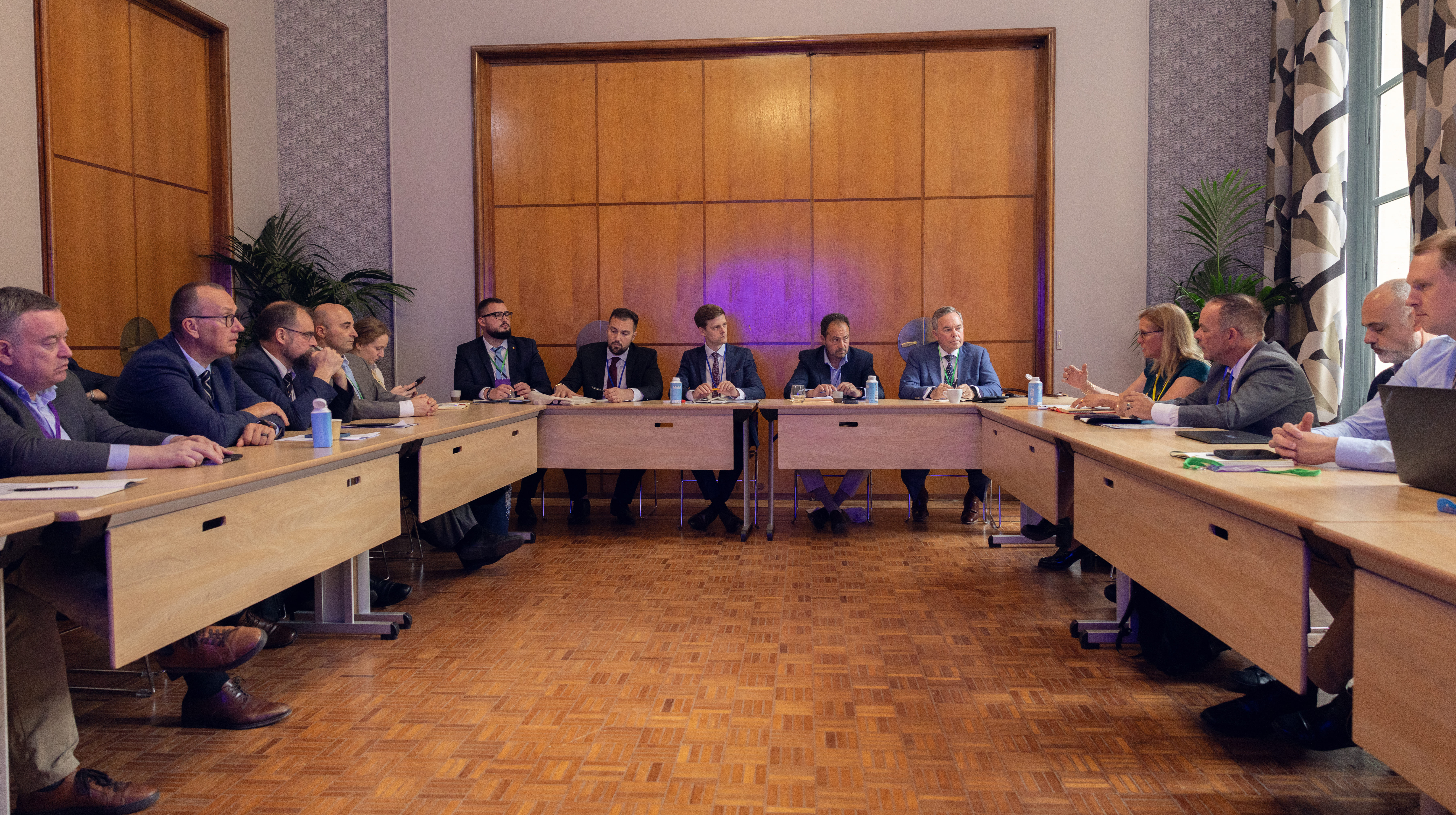
Ieva Krekovska, director of the cybersecurity policy department at the Latvian Ministry of Defence, told the summit that she believed Russia has effectively been at war with Europe “for a couple of years already.” Latvia, she also said, faces “hybrid campaigns and activities on a daily basis.”
Ieva Ilves, a cybersecurity adviser to the Ukrainian Ministry of Digital Transformation and a former first lady of Estonia, told The Epoch Times that Russia had shifted from striking banks and energy companies to reaching systems through individuals, using AI-sharpened social engineering, because “a person is easier to reach and less well protected.”
She said at the summit that Russia is learning from the war, too, and that the tactics it is honing in Ukraine “can be deployed at any time against the Baltics, against other European countries, or even globally.”
Out of the Defensive Crouch
The summit coincided with a shift in American doctrine. In March 2026, the White House released a National Cyber Strategy that placed offensive operations in the foreground as a routine instrument of statecraft, paired with a drive to enlist the private sector against adversary networks.
Paul J. Lyons, principal deputy assistant secretary of war for cyber policy, told the summit that “America is out of the defensive crouch in cyberspace.” He described cyber as now fully integrated into military planning, pointing to recent operations in Venezuela and Iran.
Lyons framed the contest with Beijing as a matter of “capability plus intent,” arguing that artificial intelligence could help Washington close the gap “without spending our way out of it.”
His remarks came as U.S. President Donald Trump signed an executive order on June 2 to secure the deployment of frontier AI models.
The Alliance Behind the Noise
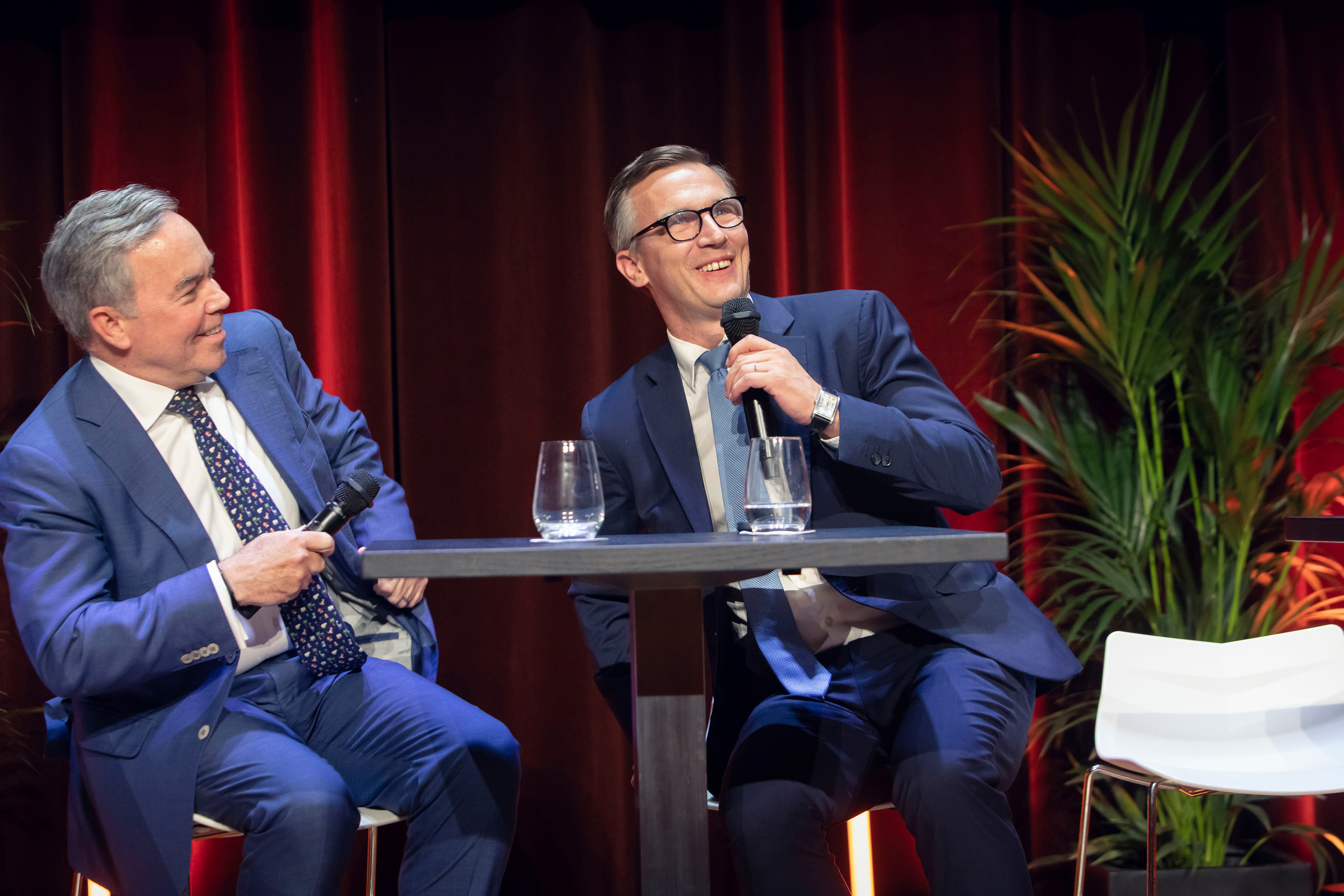
If the threat picture divided the room, the response drew it back together. At the summit, Garnault emphasized the need for candid conversations among allies.
He said in an interview with The Epoch Times that the Western alliance “is not new but centenary,” and therefore “we have the right to disagree, but we do not have the right to create a separation.”
Spanou returned to that bond in describing the summit itself.
“Europe and the United States have always been allies; it is part of our shared history and our common values,” she told The Epoch Times, adding that meeting “in a place as symbolic as Paris” was a chance to keep strengthening it, since “like-minded partners need to stand closer together than ever, given what is happening in the world.”
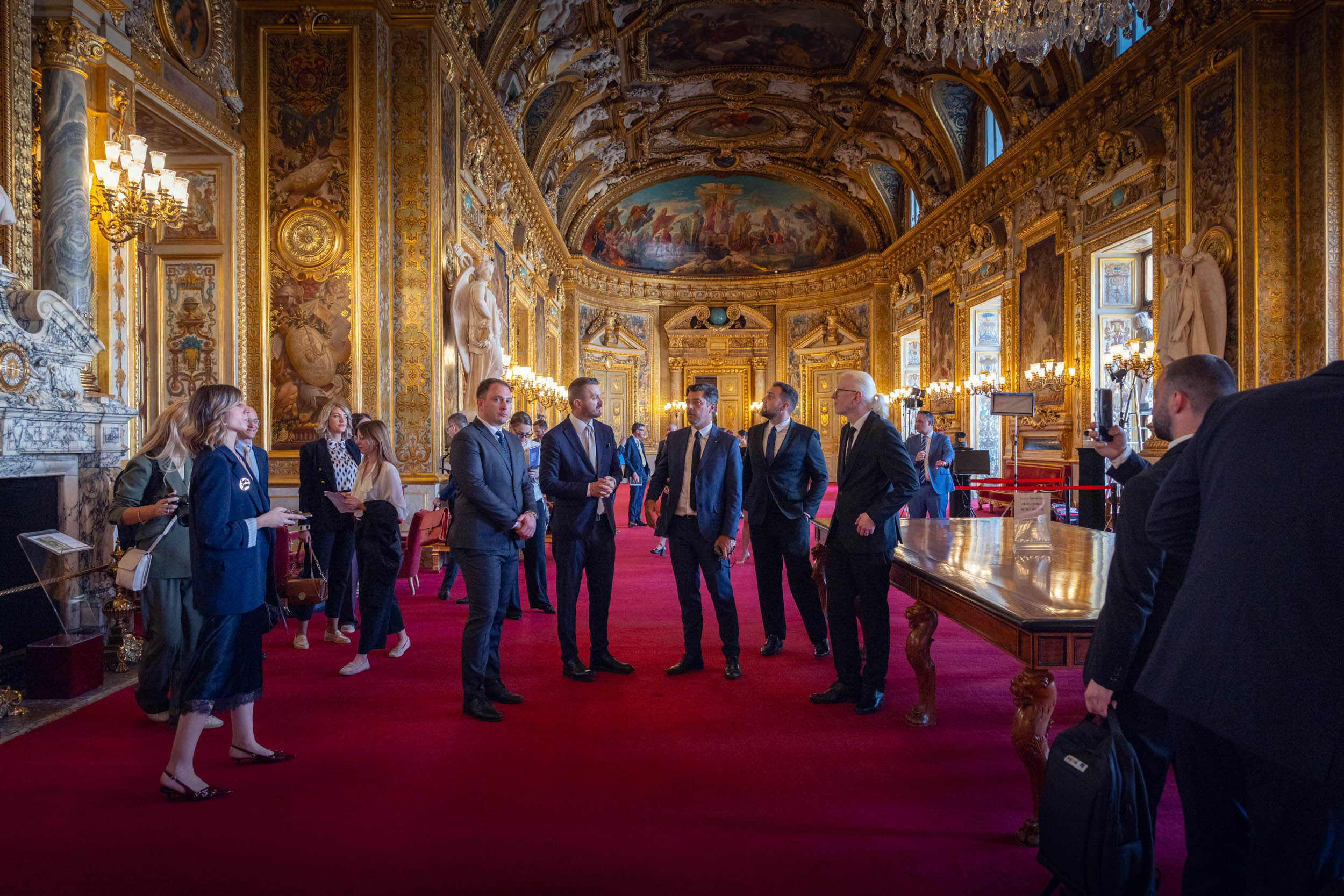
For the American side, the bond was as much familial as strategic. Stupak told The Epoch Times the summit was the place to understand European industry, and noted the United States is “weeks away from celebrating our 250th anniversary, an anniversary that would not exist but for the French people,” describing the goal as keeping “America’s oldest alliance” running.
He described himself as a German, Dutch, and Slovak American and said cutting the country off from Europe would be “bluntly idiotic … because the affinity we feel for one another runs so deep.”
These comments came as the United States is reducing the number of troops allocated to NATO as part of its strategic pivot toward other theaters, although its military presence in Europe remains substantial, NATO senior military advisrr Col. Martin O’Donnell said in May.
Lee drew a line between politics and practice.
“There is the political rhetoric, and then there is what happens in the back room, and what is happening in the back room is quite constructive,” he told The Epoch Times.
The Western democracies, he said, “whether they like it or not, are allied in this global technology war right now,” and at the working level, “we all know who our adversaries are.”
King told The Epoch Times the partners were “all democracies on the front lines,” and pressed for dialogue that is “operational” rather than academic, warning that “networks have no borders” and that the knock-on effects of attacks such as WannaCry, the 2017 global ransomware outbreak, “will only scale in their ferocity.”
“We have to work together collectively,” she said.
 Friends Read Free
Copy
Facebook
Tweet
Friends Read Free
Copy
Facebook
Tweet