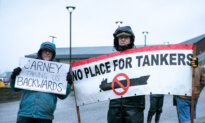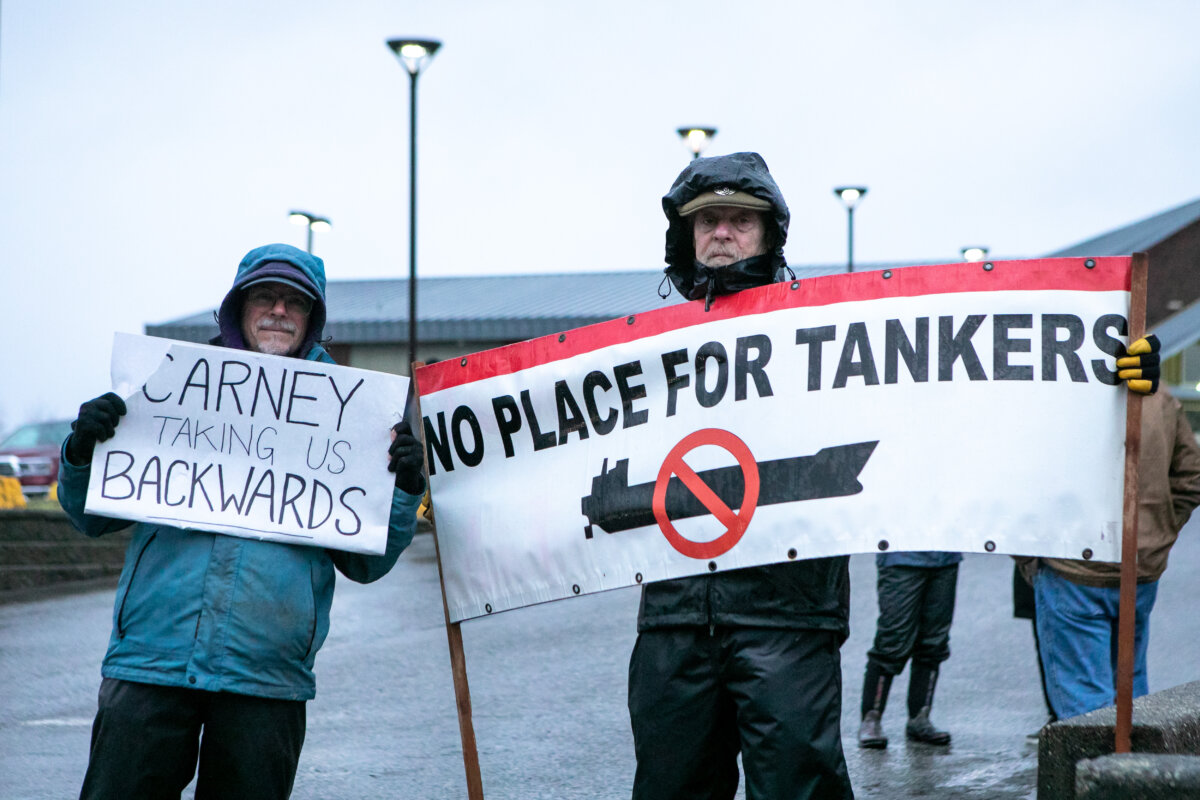

After meeting with Prime Minister Mark Carney on Jan. 13, B.C. First Nations alliance Coastal First Nations says its stance on the potential oil pipeline from Alberta to British Columbia has not changed, citing concerns about a lack of technology to clean up oil spills.
“Coastal First Nations along with Lax Kw’alaams and the Haisla Nation oppose any projects that propose to bring oil tankers to the north coast,” Marilyn Slett, president of the Coastal First Nations and elected chief of the Heiltsuk Nation, said at a Jan. 13 press conference.
“We reiterated that there is no technology that can clean up an oil spill at sea and that it would take just one spill to destroy our way of life.”
Slett said the oil tanker ban is “not partisan legislation” and is the result of 50 years of consultation and engagement with coastal First Nations communities. “It is foundational to keeping our coast healthy and our economy strong,” she noted.
The Coastal First Nations “made it clear” to Carney that they will always support the oil tanker ban on B.C.’s north coast, and called on him to support it, Slett added.
Ottawa signed a memorandum of understanding (MOU) with Alberta on Nov. 27, proposing to build one or more pipelines from Alberta to British Columbia’s north coast if a private proponent comes forward. The proposed pipeline route is said to be capable of carrying roughly 1 million barrels per day of bitumen.
The MOU changes key energy policies introduced by the previous Trudeau government, including changes to the oil tanker ban to allow oil to be shipped to Asia. Smith has long called for the tanker ban, which bans oil tankers carrying more than 12,500 metric tons of crude oil from docking or loading at ports on B.C.’s northern coast, to be overturned to allow oil to be shipped to international markets.
As part of the agreement, Alberta has also made certain commitments in exchange to reduce emissions, including increasing its industrial carbon tax, reducing methane emissions, and establishing a carbon capture system.
Meanwhile, Alberta Premier Danielle Smith is urging Carney to expedite approvals for the pipeline in light of the recent events in Venezuela, as U.S. President Donald Trump has said U.S. oil companies will help rebuild Venezuela’s infrastructure and American refineries will “immediately” start refining and selling Venezuelan oil.
Smith told Carney in a Jan. 8 letter that the province plans to submit its proposal to Ottawa’s Major Projects Office (MPO) by June. She has called on Carney to approve it “no later than this Fall,” instead of the two-year fast-track timeline the MPO has promised.
The MOU has received criticism from the Conservatives, some Liberal MPs—including Steven Guilbeault, who resigned from cabinet the day the MOU was signed—the province of British Columbia, and some First Nations.
Slett said in November that a pipeline to B.C.’s northern coast would “never happen,” and criticized Ottawa for negotiating with Alberta without involving First Nations.
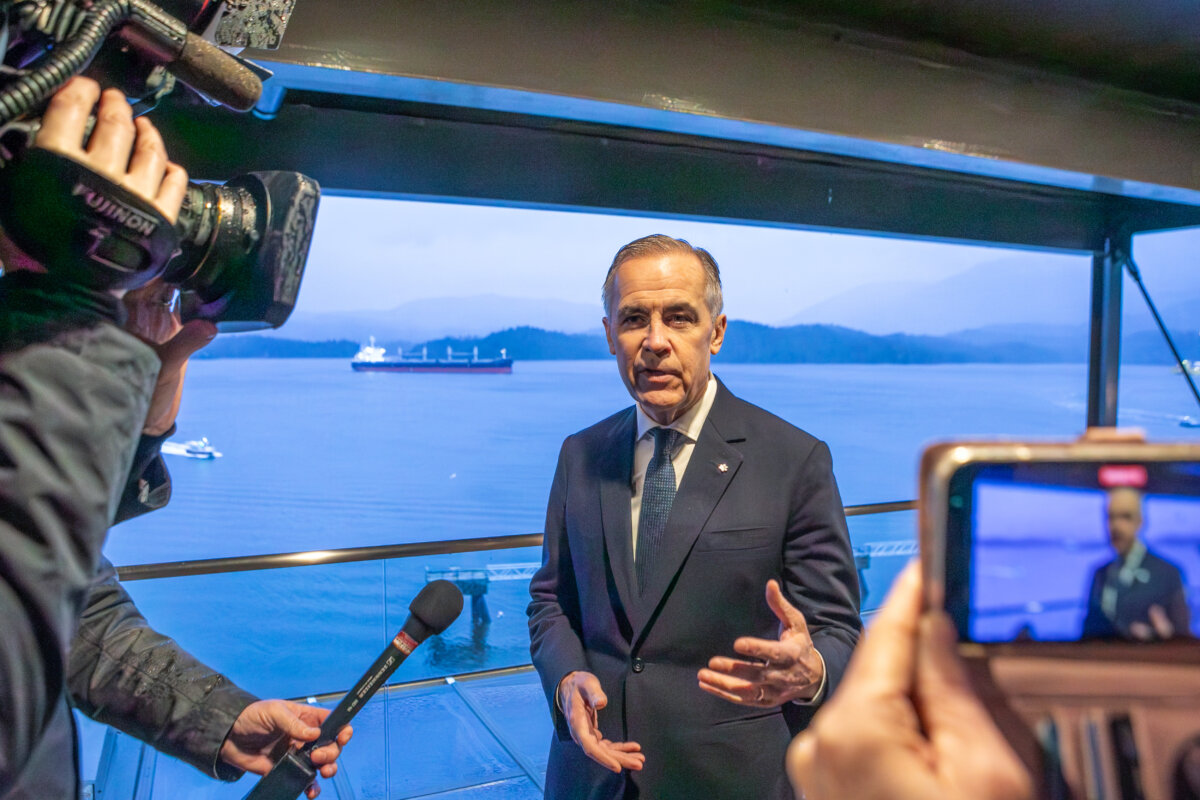
Carney, Energy Minister Tim Hodgson, and Housing Minister Gregor Robertson met with the Coastal First Nations group, which includes a number of members of B.C. coastal First Nations, in Prince Rupert, B.C., on Dec. 13, before leaving on his trip to China. It was the first time Carney and Hodgson had met the group.
The meeting’s discussions were expected to focus on major projects and how indigenous communities can be more fully included in strengthening Canada’s economy as it deals with trade tensions with the United States.
After the meeting, the Prime Minister’s Office (PMO) said discussions revolved around how the federal government and the Coastal First Nations can “work in partnership to strengthen marine conservation and ocean protection, and to build a strong and sustainable economy.”
The PMO also said Carney committed to renewing funding for the “Oceans Protection Plan Reconciliation Framework Agreement” in fiscal 2026–27, directed ministers to work with the agreement’s partners to present a five-year “funding pathway” by this spring, and pledged to conserve 30 percent of Canada’s land and waters by 2030, among other measures.
Carney said in December that he would host the first joint ministers meeting with First Nations in the beginning of 2026.
Matthew Horwood and Paul Rowan Brian contributed to this report.
 Friends Read Free
Copy
Facebook
Tweet
Friends Read Free
Copy
Facebook
Tweet