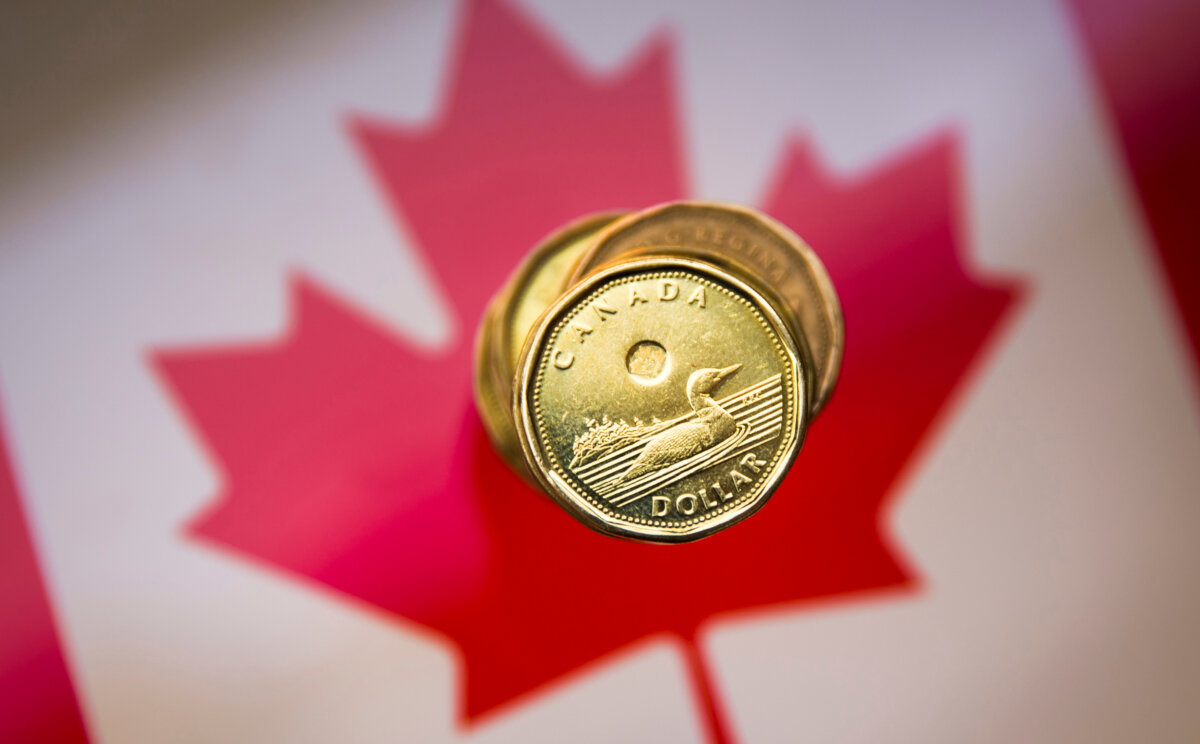

The Canadian economy is likely to avoid a technical recession—defined by two quarters of negative GDP growth—in 2025, according to a report by Deloitte Canada.
“We expect the economy to limp along in the third quarter but now think that a technical recession can be avoided with growth rates running below-potential but still on the positive side of the ledger,” the Sept. 29 report said.
Deloitte Canada said that while Canada’s economy “ground to halt” in the first half of the year due to U.S. tariff announcements that reduced consumer confidence, weighed on businesses, and harmed trade flows, Canada is likely to benefit from continued tariff exemptions for goods compliant with the United States-Mexico-Canada Trade Agreement (USMCA). The report said goods like steel, aluminum, copper, lumber, and automobiles will still face tariffs, but “on balance,” up to 95 percent of Canadian exports to the United States face “very low or zero tariff rates.”
The United States has placed 50 percent tariffs on steel, aluminum, and copper; 25 percent tariffs on vehicles and auto parts; and 10 percent tariffs on oil and potash. It has also put a general 35 percent tariff on Canadian goods not covered under the USMCA, and U.S. President Donald Trump has said he plans to implement additional tariffs on pharmaceuticals, semiconductors, heavy trucks, furniture, and foreign films.
The report said consumer spending was decent in the second quarter of the year but is expected to be weaker than usual for the remainder of 2025. A slowdown in immigration will also impact growth in the labour force, but unemployment is subsequently “unlikely to move much higher” than the recent high of 7.1 percent in August.
Deloitte’s chief economist Dawn Desjardins said inflation rates remain around 3 percent, which is the upper range of the Bank of Canada’s target, and there has been little evidence of tariffs resulting in consumer prices rising. Additionally, Ottawa’s decision to remove counter-tariffs has put downward pressure on inflation, so Desjardins anticipates that the central bank will lower interest rates further in 2025, from 2.5 percent to 2.25 percent.
Statistics Canada reported in August that the country’s real GDP fell 1.6 percent on an annualized basis in the second quarter. However, the Deloitte report expects that Canada’s real GDP will increase by 1.2 percent in the third quarter and 1.5 percent in the fourth quarter, before growing by 1.7 percent in 2026.
When announcing the decision to lower interest rates on Sept. 17, Bank of Canada governor Tiff Macklem said that consumption was stronger than expected in the second quarter of the year and housing activity increased, but low population growth and labour market weakness in the coming months would likely weigh on spending.
The Office of the Parliamentary Budget Officer has also said it does not anticipate a recession in 2025, with Diarra Sourang, director of economic analysis, telling the Standing Committee on Government Operations and Estimates on Sept. 25 that it merely projects “very moderate growth” in the economy. The office has projected a real GDP growth of 1.2 percent in 2025 and 1.3 percent in 2026.
 Friends Read Free
Copy
Facebook
Tweet
Friends Read Free
Copy
Facebook
Tweet