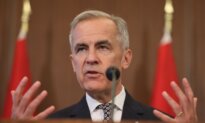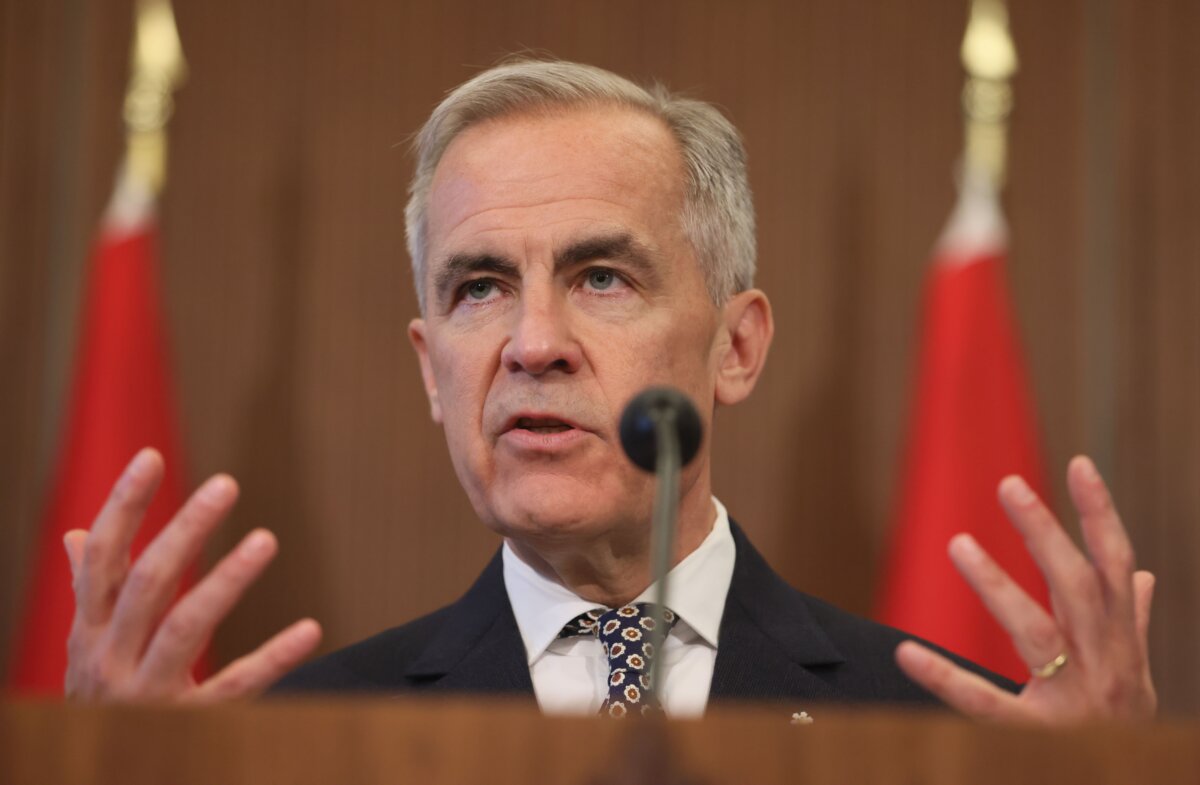

After U.S. President Donald Trump abruptly announced an end to trade talks with Canada, Prime Minister Mark Carney said his government will continue to engage with the country on trade.
Trump announced on Truth Social on June 27 that he was ending all trade negotiations with Canada because of its plan to impose a Digital Services Tax (DST) that would impact U.S. tech companies. Trump said that because of the “egregious” tax, he would terminate all discussions on trade and “let Canada know the Tariff that they will be paying to do business.”
The tax is a 3 percent levy on revenue earned from digital services provided to Canadian users and applies mainly to businesses such as Amazon, Netflix, and Google. It takes effect on June 30 and is retroactive to 2022 for U.S. companies.
Carney and Trump had most recently met in person on June 16 during the G7 summit in Alberta, where they agreed to reach a deal on trade within 30 days.
In a statement to media on June 27, the Prime Minister’s Office said the Canadian government would continue to “engage in these complex negotiations with the United States in the best interests of Canadian workers and businesses.”
The Liberal government initially proposed the DST in 2021 and presented further details in 2021, framing the tax as an interim measure to apply until an acceptable multilateral agreement comes into effect to address the issue through international negotiations among the members of the Organization for Economic Co-operation and Development.
Ottawa agreed to pause the tax’s implementation until the end of 2023 and only impose it if no multilateral approach had come into force by then. No multilateral solution was reached and the government went ahead with the tax.
The U.S. government has repeatedly voiced its opposition to the tax, with members of the U.S. House Committee on Ways and Means saying Canada “could face significant consequences” if it proceeded with the “discriminatory” tax. The committee also questioned whether the tax would constitute a violation of Canada’s obligations under the United States-Mexico-Canada Agreement.
The Liberal government had not signalled it would back down from implementing the tax, with Finance Minister François-Philippe Champagne telling reporters on June 19 that the government would move ahead with it but they were “considering” the tax as part of “broader discussions” with the United States.
Champagne also said Canada had explained to the United States that, similar to the Value Added Tax (VAT) seen in the European Union, the tax “is neutral,” and that this had been brought up at the G7 meeting a few weeks ago.
Speaking to reporters in the White House on June 27, Trump also said Canada had been “a very difficult country to deal with” on trade, and that Canada had tried to “copy Europe” with its DST. “It’s not gonna work out well for Europe either, and it’s not gonna work out well for Canada. They were foolish to do it, so I said, ‘we’re gonna stop all negotiations with Canada right now until they straighten out their act,’” he said.
Trump added that Ottawa could remove the “very severe” DST to change his mind, and added, “They will, but … it doesn’t really matter to me. We have all the cards.”
Besides the DST, the United States has also expressed concern about Canada’s supply management system during different occasions when it comes to trade talks. During the first Trump presidency, Canada had to further open its markets to U.S. dairy farmers before Washington signed on to the U.S.–Mexico–Canada Agreement (USMCA).
Conservative Leader Pierre Poilievre said in a statement on the X social media platform that he was “disappointed” trade talks had stopped and hoped they would resume soon. “As always, Conservatives are ready to help get a good deal for Canada. We must put Canada First,” he said.
Poilievre said the government needed to take “emergency action” to boost Canada’s economy by repealing the Impact Assessment Act, the industrial carbon tax, the ban on oil tankers operating off the coast of northern B.C., and the electric vehicle mandate to “create a strong, self-reliant and sovereign Canadian economy.”
 Friends Read Free
Copy
Facebook
Tweet
Friends Read Free
Copy
Facebook
Tweet