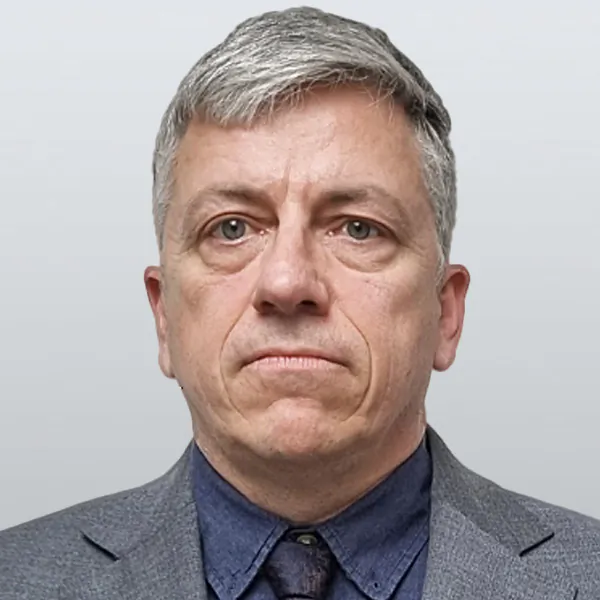
Cypriot President Nikos Christodoulides said on March 19 that after the conflict in the Middle East is over, he wants to discuss the future of Britain’s military bases on the island.
The bases at Akrotiri and Dhekelia have been UK sovereign territory since a treaty was signed in 1960, when Cyprus was granted independence from the British Empire.
On March 1, an Iranian drone was shot down and crashed on the air force base at Akrotiri, causing no injuries and only “minimal” damage.
Speaking as he arrived at a meeting of the European Council in Brussels on March 19, Christodoulides described the bases as a “colonial consequence.”
“When this situation is over in the Middle East, we are going to have an open and frank discussion with the British government,” said Christodoulides, who was elected in 2023.
10,000 Cypriots on Bases
“We have more than 10,000 Cypriot citizens within the British bases. We have a responsibility for those people,” he said.
Christodoulides said he did not plan to “negotiate publicly” with the British government.
In a statement on March 19, the European Union’s council said it stood “firmly and unequivocally” in support of member states close to the conflict zone in the Middle East.
“The European Council acknowledges the intention of Cyprus to initiate a discussion with the UK on the UK bases in Cyprus and stands ready to provide assistance as needed,” the statement said.
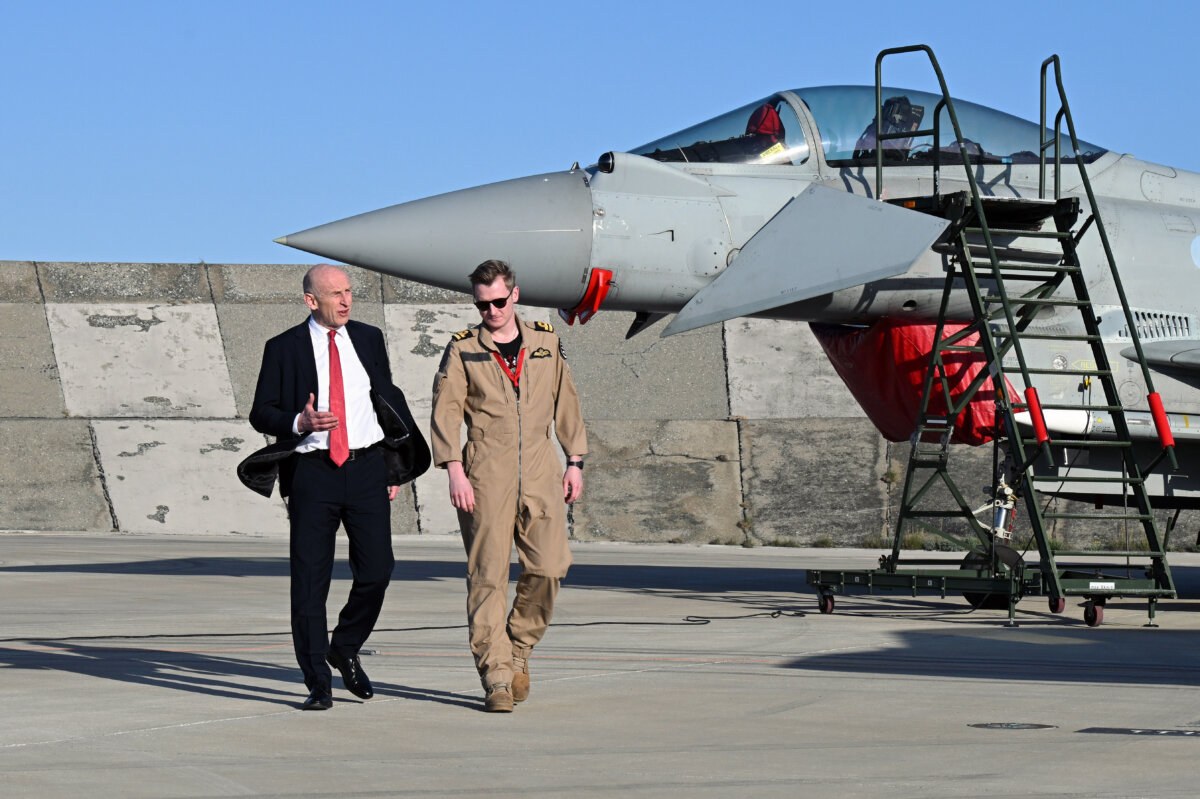
“Our sovereign base in Cyprus is not in question,” UK armed forces minister Al Carns told the House of Commons on March 16, and said when the Defence Secretary, John Healey, visited Cyprus on March 5, “the Cypriot national guard reaffirmed that our relationship is closer now than ever before.”
Britain has often used the bases in Cyprus to conduct operations in the Middle East.
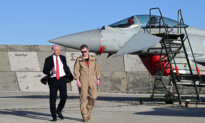
In the most recent conflict, with Iran, Royal Air Force jets have been flying sorties out of Akrotiri, and it was a British pilot who shot down the drone on March 1.
The Cypriot government’s representative in London criticized the British response after the Iranian drone attack on Akrotiri.
“Let’s say that the people are disappointed, the people are scared, the people could expect more,” the Cypriot High Commissioner to the UK, Kyriacos Kouros, told the BBC on March 4.
“The British people have to understand that the British bases in Cyprus cannot be seen separated from the whole of the island,” Kouros told Sky News on March 4. “There are Cypriots living in the British bases.”
On March 5, Healey met Cypriot defense minister Vasilis Palmas to discuss how Britain was reinforcing air defenses to support their shared security.
The UK’s Ministry of Defence stated in a March 4 post on X that the drone, which hit Akrotiri, was “not launched from Iran.”
The destroyer HMS Dragon left the English port of Portsmouth on March 10, but has not yet reached Cyprus.
The Royal Navy said the ship would use its Sea Viper missile system “to help safeguard UK assets and interests” in the eastern Mediterranean and would be assisted by Wildcat helicopters, equipped with Martlet missiles, to deter the threat from Iranian drones.
UK and Iran
The leader of Reform UK, Nigel Farage, has said the government’s response to defending the bases in Cyprus was proof that Britain was “too weak and puny” to get involved in the Iran war, even if British Prime Minister Keir Starmer had the appetite for it.
“We don’t have to join the offensive. I mean, how could we? It’s now 19 days since a sovereign base was attacked in Cyprus, and not a single Royal Naval Vessel has yet arrived,” Farage said on March 20.
Farage urged Starmer’s government to be more supportive of U.S. President Donald Trump and the military effort against Iran.
A UK Ministry of Defence spokesman said in a statement emailed to The Epoch Times, “Our bases on the island of Cyprus play a crucial role in supporting the safety of British citizens and our allies in the Mediterranean and in the Middle East.”
“We have been deploying additional defensive capabilities to Cyprus since January, including radar systems, counter-drone systems, F-35 jets, ground-based air defence, and 400 extra air defence personnel to protect our people and our interests,” said the spokesman.
In 2009, then British Prime Minister Gordon Brown offered to hand back half of the land within the Sovereign Base Areas in the event of a deal to reunify Cyprus, which has been divided since a Turkish army invasion in 1974.
The Turks invaded, claiming they needed to defend the Turkish Cypriot minority from persecution by extremists within the Greek Cypriot majority, who were planning to unify the island with mainland Greece.
A United Nations plan to reunify the island, the Annan Plan, failed in 2004, but there have recently been renewed efforts to solve the political stalemate.
On Dec. 11, 2025, Christodoulides and Tufan Erhurman, the leader of the self-declared Turkish Republic of Northern Cyprus, announced confidence-building measures, including allowing Turkish Cypriot manufacturers of halloumi cheese to reach markets in the European Union.
“Cyprus is far more important than its size suggests. It sits at the crossroads of Europe, the Middle East, and North Africa, in a region marked by instability, energy competition, and shifting alliances,” Nicolas Kyriakides, a Greek Cypriot and partner at one of the leading law firms in Cyprus, told The Epoch Times in January.
“A reunited Cyprus would be a rare example of conflict resolution in the Eastern Mediterranean,” Kyriakides said.
 Friends Read Free
Copy
Facebook
Tweet
Friends Read Free
Copy
Facebook
Tweet