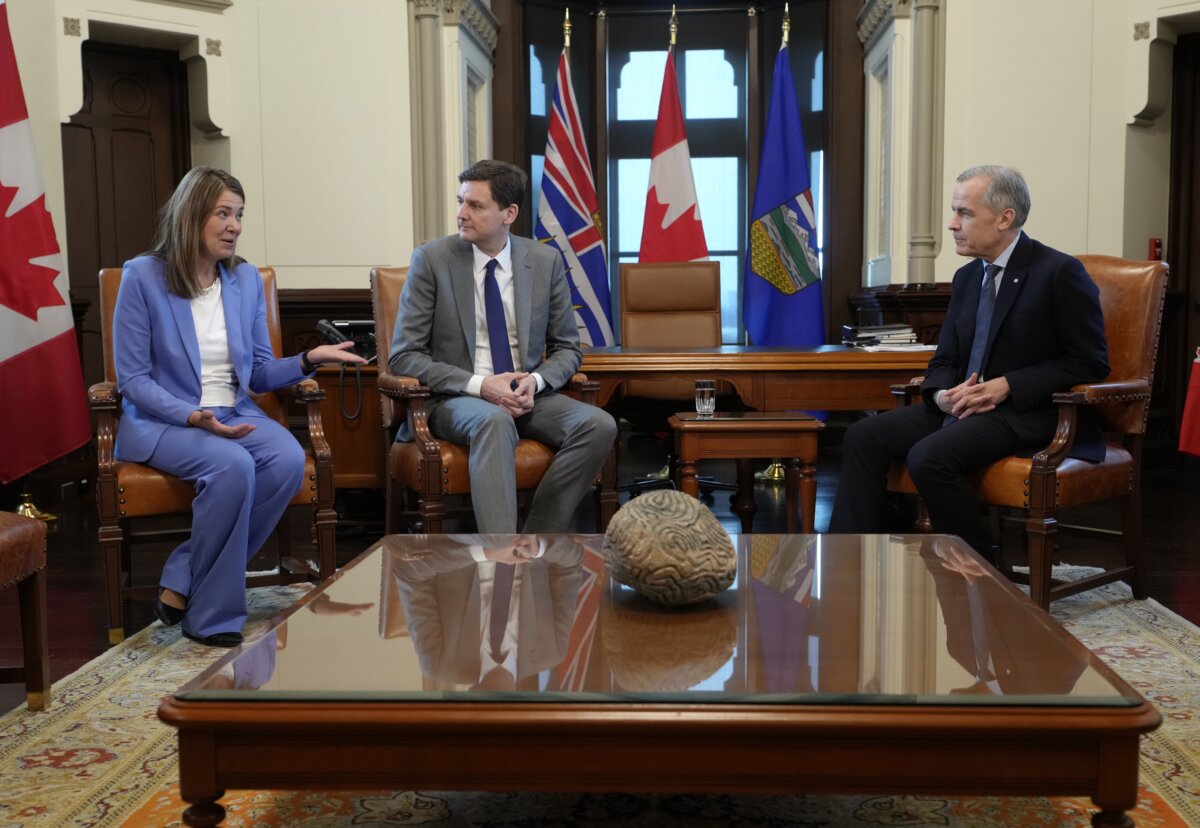
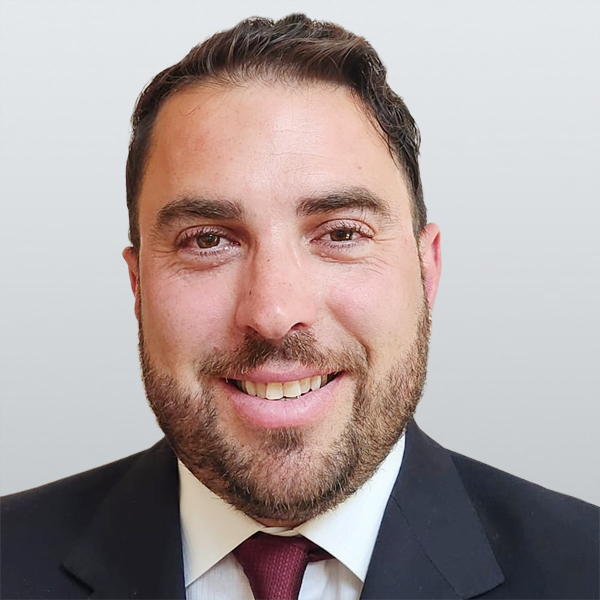
B.C. Premier David Eby said a Jan. 28 meeting with Prime Minister Mark Carney and Alberta Premier Danielle Smith was “civil” in tone but that his opposition to a proposed oil pipeline from Alberta to B.C.’s north coast hasn’t changed.
The trilateral meeting is the first since Carney and Smith signed a Nov. 27 memorandum of understanding (MOU), which included the proposal for one or more oil pipelines from Alberta to the B.C. coast, scrapping or relaxing various Trudeau-era energy regulations, and “adjustments” to the oil tanker ban on B.C.’s north coast as necessary.
Eby said the meeting was “borderline friendly,” while Smith said the meeting was “productive” and that she and Eby found areas of “shared priority” on issues including electricity interties, development of liquefied natural gas, and expansion of the Trans Mountain oil pipeline.
The B.C. premier reportedly met with Carney separately one-on-one before the meeting with Smith and was mostly focused on other matters regarding international trade and a rash of extortion crimes in B.C. during his federal visit. Eby said this led to an agreement with Carney to increase RCMP levels in B.C. to boost an ongoing task force response as well as to hold a meeting of between federal agencies and authorities from Alberta, Manitoba, Ontario, and B.C. within the next two weeks.
Eby said he also brought up the ongoing softwood lumber dispute with the United States, ensuring adequate security exists for the upcoming 2026 FIFA World Cup games in Vancouver, and the importance of U.S.-Mexico-Canada Agreement trade talks set to take place this July.
Pipeline
In terms of discussion of the proposed pipeline, Eby said no substantive changes or developments on the pipeline itself came out of the meeting.
He added that he informed Carney and Smith on Jan. 28 that he considers last November’s signing of the MOU between Ottawa and Alberta without B.C. as “backwards.” Eby has also previously said that the province and the indigenous people whose territory the pipeline would affect should have the right to say no.
The MOU mentions talks and consultation with B.C. and indigenous peoples, something Smith has said Alberta is committed to, but does not mention a veto for either party. By Supreme Court precedent, the federal government has the right to approve and regulate interprovincial pipelines it considers to be in the national interest.
However, Carney has also said he won’t override a province’s objections in order to get a project of national importance built. The prime minister has also said he won’t override First Nations opposition to the pipeline. In early December last year, a gathering of Assembly of First Nations chiefs unanimously voted against any potential new pipeline from Alberta to B.C.
Alberta is currently developing the pipeline proposal and plans to submit it to the Major Projects Office this June, calling on Carney to approve it by the fall instead of in the two-year window for approval decisions that the office pledges to stick to for projects in the national interest. Smith has said she is confident a private proponent will come forward once the project is approved by Ottawa.
Nova Scotia Premier Scott Houston and Saskatchewan Premier Scott Moe have both publicly stated support for an oil pipeline from Alberta to B.C. as mentioned in the MOU. Conservative Leader Pierre Poilievre also supports the pipeline and recently called on Carney to approve it within 60 days of receiving the proposal.
Eby has consistently said he opposes any partial or full lifting of the oil tanker ban, which has been in place since 2019, and has also criticized the oil pipeline being developed by Alberta as “not a real project” due to it not yet having a private proponent.
In terms of outcomes from the Jan. 28 meeting, Eby said Alberta has pledged to keep B.C. updated and the situation is “what it is.”
“They’re going to work on it with the feds,” Eby said. “They’ve committed to keep us updated—and that’s going to be what it is.”
 Friends Read Free
Copy
Facebook
Tweet
Friends Read Free
Copy
Facebook
Tweet