
Ontario and Ottawa will spend just under $9 billion to cut development charges in municipalities across the province by up to 50 percent in a bid to revitalize a struggling housing market.
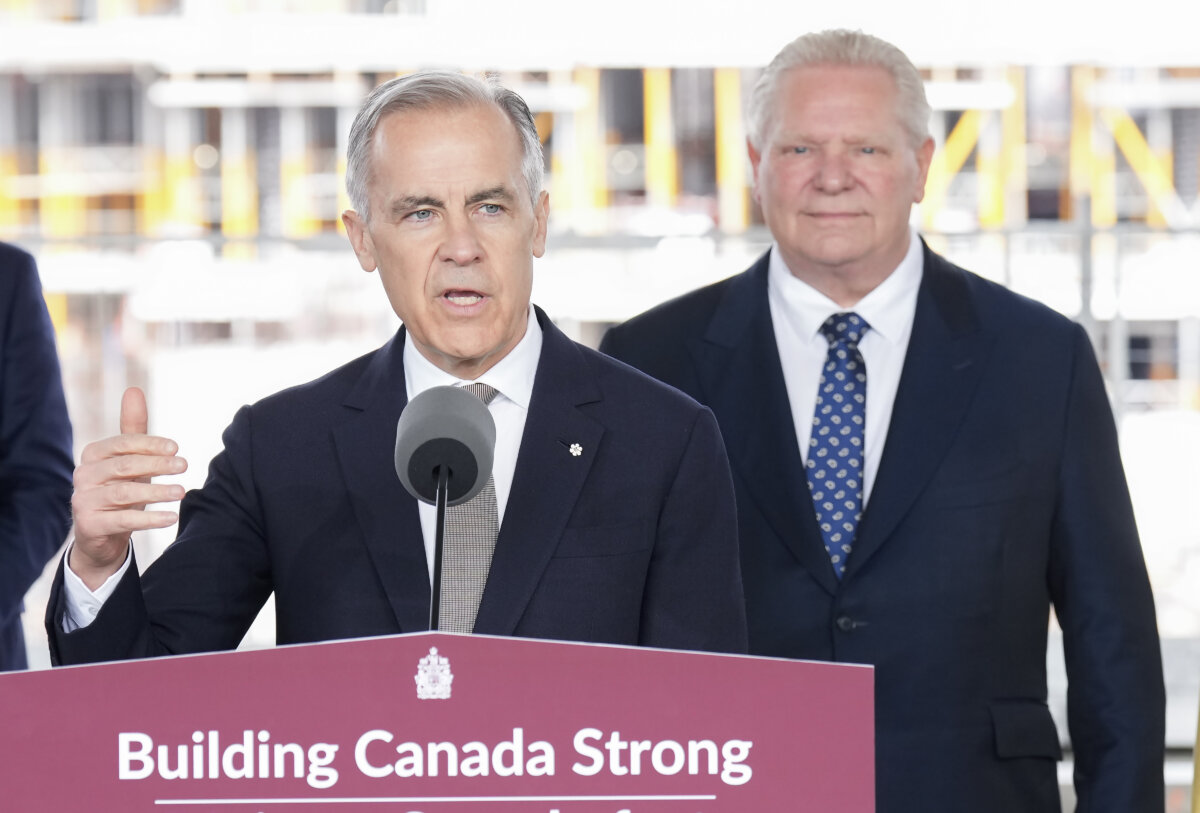
The federal and provincial governments are set to spend $4.4 billion each over the next decade on housing-related infrastructure in Ontario, Prime Minister Mark Carney and Premier Doug Ford announced March 30 at a joint press conference in Etobicoke.
The bulk of the $8.8 billion in funding will help cover infrastructure costs for any city that lowers development charges (DCs) by up to 50 percent, Carney said.
Municipalities use development fees to pay for infrastructure such as roads, sewers, and water systems. But these fees have increased expenses associated with home construction in recent years, creating “a major hurdle” in the housing market, Carney said.
“In recent years, they’ve been growing at an unsustainable rate, increasing the cost of every new home, compressing margins for builders,” the prime minister said. “And they’ve been stalling new builds, stalling construction.”
Carney said the funding would remain in place for three years and municipalities will have to cover some of the costs related to the reductions.
Ford said the funding will be prioritized for municipalities willing to lower development charges by up to 50 percent, as well as for those that have made reductions in recent months.
“You come to the table, and we’re going to give you the infrastructure you need and save the taxpayers within your community a tremendous amount of money,” Ford said. “So to all my great 444 mayors… if you don’t cut [development charges], you aren’t getting any money. But if you do, we will be there to support you.”
Toronto Mayor Olivia Chow, who was also at the press conference, said her city has already taken steps to cut development charges on new homes.
“Today’s development charge announcement… will mean thousands of new homes that can be built right here in Toronto,” she said. “For people who just want a home they can afford, this will make a real difference. It lowers the cost of building. That means more homes built faster.”
Ottawa’s funding deal with Ontario is the first announced through the federal government’s Build Communities Strong Fund, a 10-year, $51 billion fund designed to boost Canadian local infrastructure and essential services starting in 2026-27.
HST Cut
Ford announced last week that the province would temporarily eliminate the Harmonized Sales Tax (HST) on new homes worth up to $1 million for one year. A partnership with the federal government means the full tax is waived instead of just the province’s portion of the HST.
The 13 percent tax will be removed from new homes worth up to $1 million from April 1, 2026, through March 31, 2027. Homes valued between $1 million and $1.5 million will be eligible for the maximum rebate of $130,000, which will diminish gradually to $24,000 for properties valued at $1.85 million or more.
Removing the HST, along with reduced development fees, could lower the purchase price by as much as $200,000 “for people getting onto the housing ladder,” Carney told reporters during the March 30 press conference.
He said the measures should help “unfreeze” the condo market in Toronto “and make sure it’s on the right track to provide the housing that Ontarians need at prices they can afford.”
The Toronto condo market “deep freeze” is driven by a perfect storm of evaporated investor demand, high construction costs, and elevated interest rates, according to a report from RBC. Investors are selling due to negative cash flow, while high inventory and low affordability is creating a standoff between buyers and developers.
Transit Funding
A smaller portion of the funding announced on March 30 will be allocated toward a number of major transit projects, according to a provincial press release.
The province did not indicate how much of the funding would be used for transit in southern Ontario, but listed four major projects that would benefit.
The Ontario government, the federal government and the City of Toronto said they are collaborating to advance a high-speed rail network along the Toronto-Quebec City corridor and improve and create GO lines in the Greater Golden Horseshoe.
Funding is also earmarked for the Waterfront East Transit line serving Toronto’s eastern waterfront and for subway projects in the Greater Toronto and Hamilton Area.
 Friends Read Free
Copy
Facebook
Tweet
Friends Read Free
Copy
Facebook
Tweet