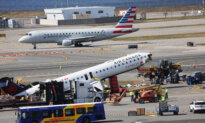

A firefighter in the truck involved in the deadly crash with an Air Canada Express jet last month at New York’s LaGuardia Airport heard an air traffic controller shout “stop, stop, stop” but didn’t realize the warning was for him, U.S. federal investigators say.
The preliminary report from the National Transportation Safety Board pointed to a series of failures contributing to the March 22 crash that killed Capt. Antoine Forest and First Officer Mackenzie Gunther and injured half of the 72 passengers on Air Canada Express Flight 8646.
The local air traffic controller cleared the jet, which was en route from Montreal, to land on LaGuardia’s runway 4 at 11:35:07 p.m., the report said.
A fleet of fire trucks was dispatched from the station to the opposite side of the airport 21 seconds later after an odour in the cabin of a United Airlines plane.
The same controller gave the go-ahead for the fire trucks to cross the active runway at 11:37:04 p.m., nearly two minutes after the plane was given clearance to land, the report said. The jet was only 40 metres above the ground and less than a kilometre from the runway at the time and the red stop lights installed in the taxiway ahead of the truck were lit, signalling the truck should stop.
Seven seconds later, the plane crossed the end of the runway and the controller shouted, “stop stop stop” on the radio just moments later. He then yelled “truck 1, stop stop stop,” the report said.
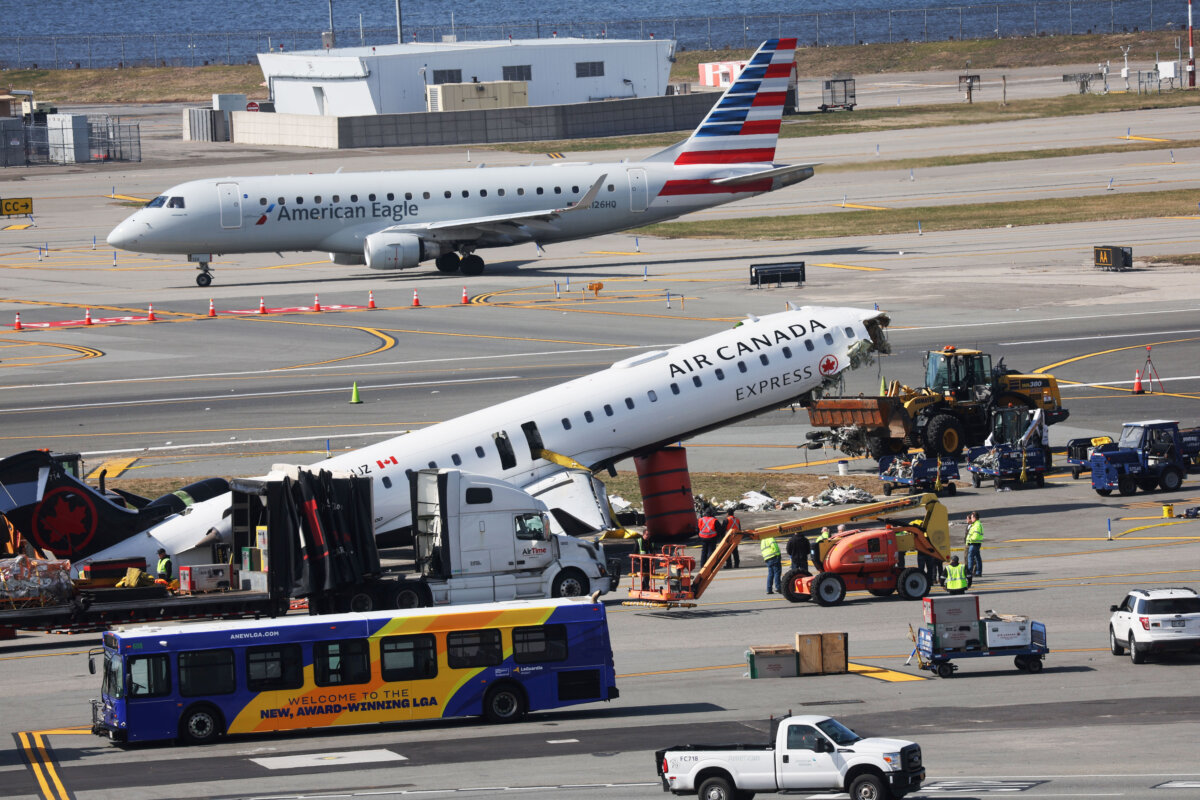
The plane slammed into the fire truck four seconds later at a speed of 104 miles per hour, or roughly 167 kilometres per hour, the NTSB found. The impact destroyed the plane’s nose and flipped the truck, injuring two firefighters in the truck.
Busy Airport
Traffic volume was unusually high at LaGuardia on the night of the crash. Flight delays led to a surge in arrivals and departures after 10 p.m., more than double the planned schedule, according to aviation analytics firm Cirium.
The tower controller had roughly 18 years of experience and had been on duty for less than an hour when the crash occurred, the report said. Another controller on duty that evening, with 19 years of experience, was acting as controller-in-charge and was managing the aircraft on the ground.
“Both were qualified and current on all control positions” at the airport, the NTSB said.
Aircraft were arriving every few minutes, with approximately 12 flights landing between 11 p.m. and the time of the crash less than 40 minutes later. The controllers were forced to shuffle their duties while this was going on to deal with the odour issue on the United plane.
The more senior controller was overseeing the United emergency response, while the other controller took over directing vehicles on the ground, while also authorizing takeoffs and landings, the report said.
The warning lights, called runway entrance lights, were activated until the fire truck got to the edge of the runway, roughly three seconds before impact, the report said. According to the report, they are programmed to deactivate two or three seconds prior to a plane arriving at a runway intersection.
The absence of a transponder on the firetruck played a role in the crash because the airport surface detection equipment system was “unable to correlate the track of the airplane with the track of Truck 1 (or any of the other vehicles in the group) and did not predict a potential conflict with the landing airplane,” the report said.
One of the firefighters told investigators he heard the initial call from the tower to stop, but didn’t realize it was for their truck until they were on the runway and saw the plane approaching, the report said.
The order occurred roughly nine seconds before the crash, when the controller frantically shouted ,“Stop, stop, stop, stop. Truck 1. Stop, stop, stop, stop.”
The driver of the fire truck had three years of experience and the firefighter operating the turret of the truck had 12 years. Both were less than half-way through a 12-hour shift, according to the report.
Forest, the plane’s captain, was hired by Jazz Aviation, which is owned by Air Canada, in December 2022, and was upgraded to captain in December of 2025, the report says. He had accrued a total of 3,560 flight hours, including 1,600 hours with Jazz. Gunther, the first officer, was hired in April 2024 and had 718 flight hours, including 435 while working for Jazz.
“The accident flight occurred on the first day of a four-day trip for the flight deck crew,” the report noted. “The first day had three flights; the accident flight was the last scheduled flight.”
The first flight was from Montreal to Quebec City and the second was a return flight to Montreal. The third flight was to LaGuardia. The crew flew together one other time on Feb. 11, when they made two round trips between Montreal and Quebec City, the report said.
The report does not identify a likely cause for the collision. This information will be provided when the NTSB publishes its final report upon completing the investigation.
The Associated Press contributed to this report.
 Friends Read Free
Copy
Facebook
Tweet
Friends Read Free
Copy
Facebook
Tweet