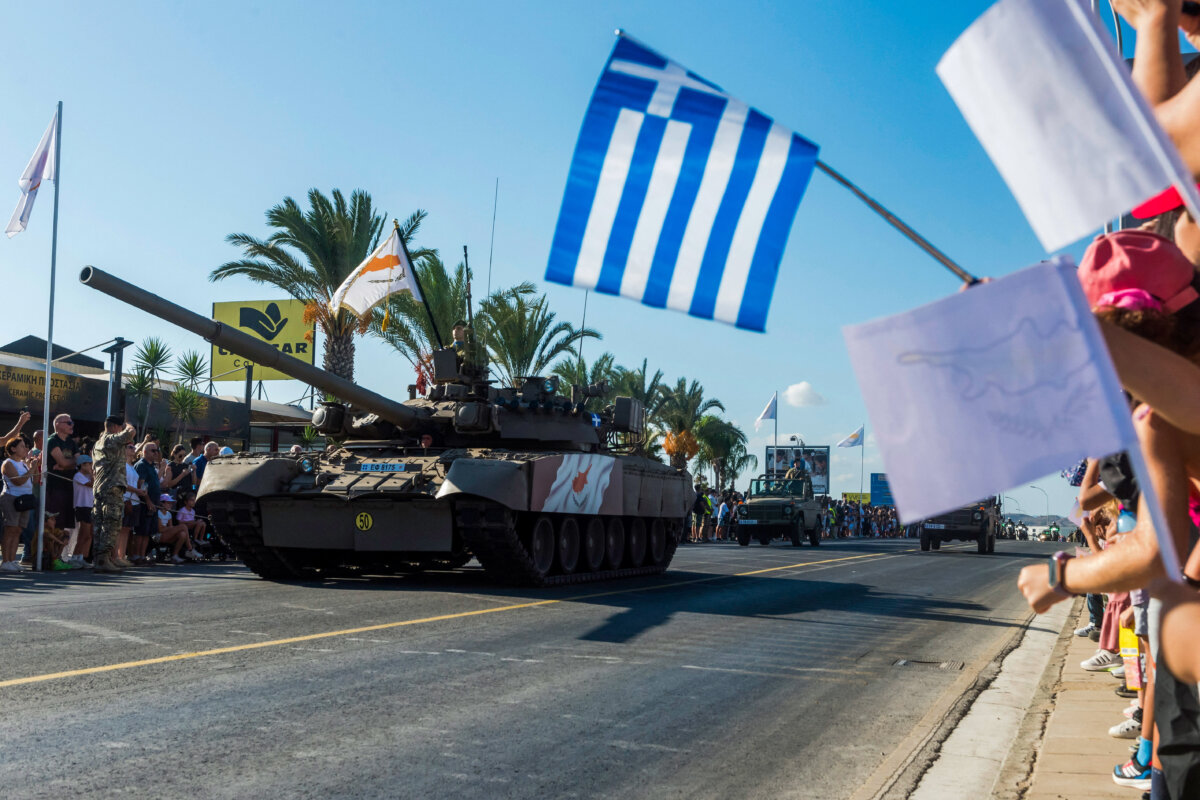
Cyprus’s Nicosia is the only capital city in the world still divided, as United Nations peacekeeping troops man a buffer zone between two communities.
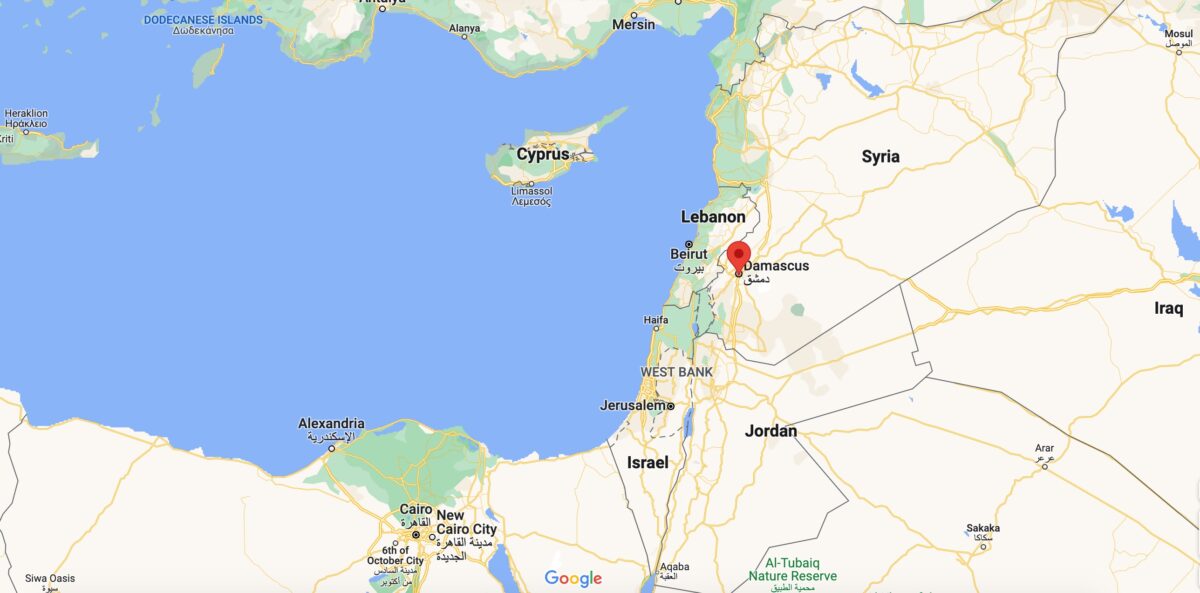
The island, which holds a strategically important position in the eastern Mediterranean and is only 250 miles from the coast of Israel, has been divided since 1974, when the Turkish army invaded, ostensibly to defend the Turkish Cypriot minority from extremists within the Greek Cypriot majority.
On Dec. 11, 2025, Nikos Christodoulides, the island’s Greek Cypriot president, and Tufan Erhurman, the leader of the breakaway Turkish Cypriots, announced confidence-building measures, including allowing Turkish Cypriot manufacturers of halloumi cheese to reach markets in the European Union.
Experts on both sides of the divide say there is renewed optimism of finding a solution.
“Cyprus is far more important than its size suggests. It sits at the crossroads of Europe, the Middle East, and North Africa, in a region marked by instability, energy competition, and shifting alliances,” Nicolas Kyriakides, a Greek Cypriot and partner at one of the leading law firms in Cyprus, told The Epoch Times.
“A reunited Cyprus would be a rare example of conflict resolution in the Eastern Mediterranean, sending a strong signal that diplomacy and international law can prevail over force,” said Kyriakides, who is also executive president of Cyprus Forum.
“It would enhance regional energy cooperation, strengthen EU credibility in its neighborhood, and reduce a long-standing source of tension between NATO allies. In practical terms, it would turn Cyprus from a security liability into a platform for cooperation.”
The discovery of hydrocarbons south of Cyprus may also prove significant.
On Jan. 8, the chief operating officer of Italian energy company ENI, Guido Brusco, said the company was in the “final stage” of deciding whether to develop a natural gas field within the Cyprus Exclusive Economic Zone.
In 2004, a plan for reunifying the island, led by U.N. Secretary-General Kofi Annan, was approved by the Turkish Cypriots but was rejected by seven out of 10 Greek Cypriots.
More talks between 2015 and 2017 in Crans-Montana, Switzerland, failed to reach a breakthrough.
“Two elements that were not agreed upon that kind of get in the way of finalizing the resumption of talks were sovereignty and security, and those two issues remain to this day,” Bilun Gunes, a Turkish Cypriot and editor-in-chief of Policypress, an independent civic journalism platform, told The Epoch Times.
The issue of sovereignty concerns the form of government, as the Turkish Cypriots, who fear being outvoted by the more populous Greek Cypriots, prefer a federal system with considerable autonomy.
When it comes to security, the issue is whether some Turkish troops should stay on the island, something to which the Greek Cypriots are adamantly opposed.
In October 2025, Erhurman was elected as the new leader of the so-called Turkish Republic of Northern Cyprus (TRNC), defeating the incumbent Ersin Tatar, who had favored a two-state solution, an option rejected by the Greek Cypriot side.
Seeking a Framework
About 5,000 people were killed during the fighting in July and August 1974.
The pain of the invasion in 1974 is not just a “historical footnote” for Greek Cypriots, according to Kyriakides; “it is a lived reality that continues to shape politics, family memories, and collective identity.”
“That said, readiness should not be confused with forgetfulness,” he said.
“The Greek Cypriot community does not need to ‘get over’ 1974 in order to support a solution. What it needs is a credible, fair, and secure framework that acknowledges that trauma and guarantees that it cannot be repeated.”
Cyprus was granted independence by Britain in 1960, but it retained two areas as military bases, at Akrotiri and Dhekelia, which remain UK sovereign territory.
Cyprus joined the EU in May 2004, but the northern third of the island—which is occupied by Turkish troops—is not covered by EU law and is a de facto separate nation.
The TRNC is not recognized by any country other than Turkey.
In recent years, the government of Cyprus has been building strong political and economic ties with Israel.
An electricity interconnection project linking Cyprus and Israel is underway and is part of the India–Middle East–Europe Economic Corridor, which was launched in 2023.
The corridor would link India with the EU via the United Arab Emirates, Saudi Arabia, and Israel.
On Jan. 4, Christodoulides had a telephone call with Israeli Prime Minister Benjamin Netanyahu, during which they discussed agreements reached at a trilateral summit with Greece held in Israel on Dec. 22, 2025.
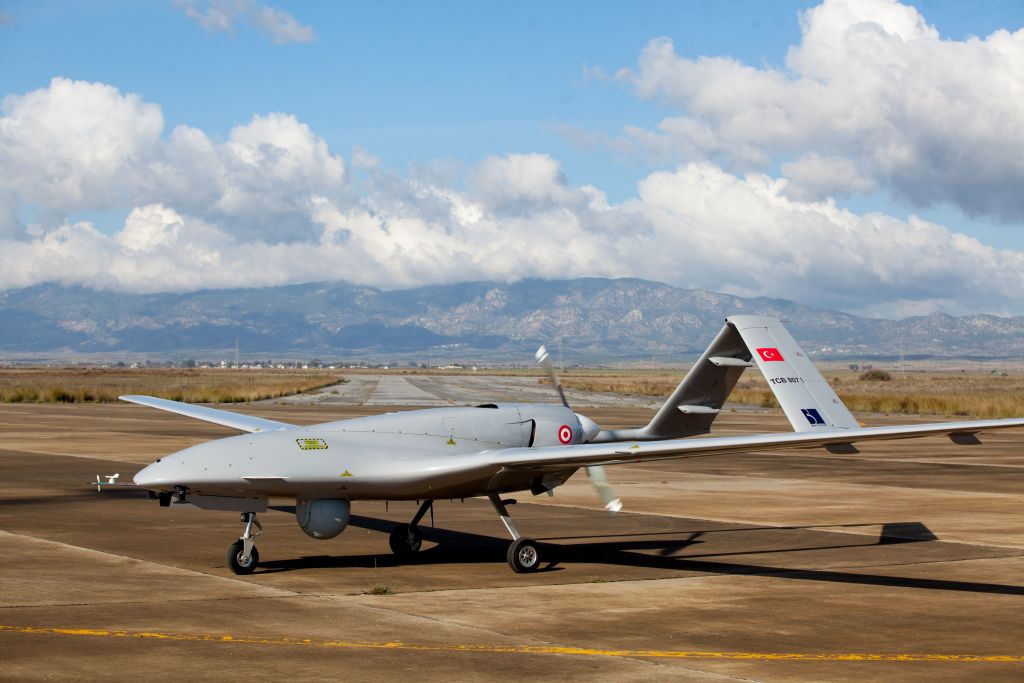
Gunes said the collaboration between Cyprus and Israel made economic and geographic sense, even if Turkey was not happy about it.
She said any deal would have to be approved by Turkey.
“It will depend on how Turkey decides to allocate the Turkish Cypriot community to take a share of this, if at all. So the [Turkish Cypriot] community itself feels a bit discarded and not included in the discussion,” Gunes said.
Kyriakides said: “While the solution must be Cypriot-owned and Cypriot-led, Greece and Turkey remain key stakeholders due to the system of guarantees, security arrangements, and their broader geopolitical interests. No agreement can be implemented or sustained without their consent and constructive engagement.”
“There is a silent but significant majority that understands the cost of the status quo and is open to reunification, provided it is based on a functional state, respect for human rights, and genuine security,” he added.
Gunes, who was born in the 1990s, said: “There is a significant difference in our parents’ understanding of what the divide means, as opposed to ours. We don’t have a shared memory of what living together looks like at all.”
Correction: A previous version of this article misspelled the name of Turkish Cypriot leader Tufan Erhurman. The Epoch Times regrets the error.
 Friends Read Free
Copy
Facebook
Tweet
Friends Read Free
Copy
Facebook
Tweet