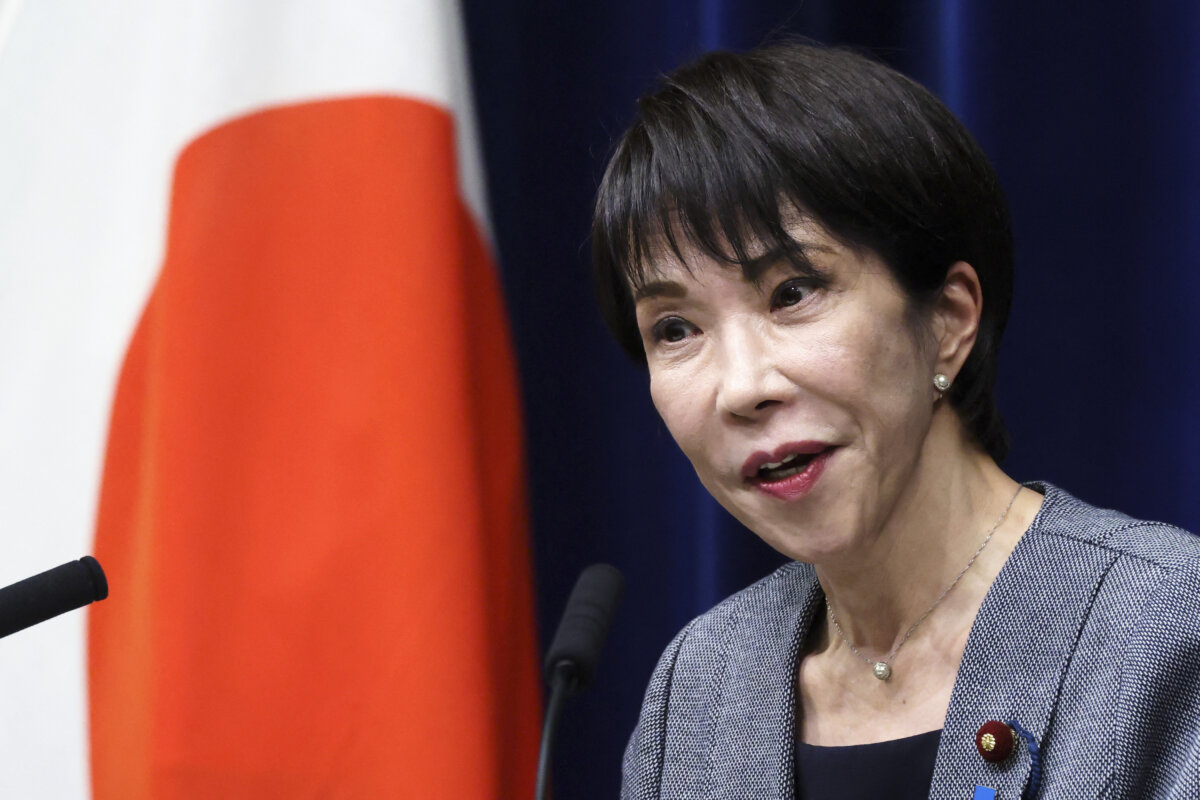

Japanese investment in Australia surged to record levels last year, a new report has found ahead of Prime Minister Sanae Takaichi’s expected visit to Australia in late April.
A joint report (pdf) published by global law firm Herbert Smith Freehills Kramer and the Australian National University (ANU) found a record 77 mergers and acquisitions and 53 partnerships in 2025, contributing to $159.5 billion (US$113.7 billion) in foreign direct investment (FDI) from Japanese entities.
The figure accounted for 12.5 percent of all FDI in Australia, an 11 percent increase on 2024.
Meanwhile, two-way trade reached $102.1 billion, making Japan Australia’s third-largest trading partner and second-largest export destination.
In addition, 17 Japanese companies entered the Australian market for the first time, spanning activities from restaurant chains and specialty food to AI data centres and financial leasing. It was the fourth consecutive year of record Japanese deal activity in Australia.
This year also marks the 50th anniversary of the Basic Treaty of Friendship and Cooperation, or NARA Treaty, which shifted the relationship between the two countries beyond trade to broader political and economic cooperation.
In an article published by the East Asia Forum, Shiro Armstrong, director of the Australia–Japan Research Centre at the ANU Crawford School of Public Policy, and Ian Williams, a senior adviser at Herbert Smith Freehills Kramer, said Australia and Japan were becoming more important partners amid global instability.
“The energy crisis arising from the US-Israeli war against Iran and the closure of the Strait of Hormuz, the rise of a more assertive China, a revisionist United States, and [the] US-China great power strategic rivalry all underline the challenges Australia and Japan face,” they wrote.
“Australia and Japan have never been closer politically or strategically. A major focus now must be economic security, or the ability to maintain resilience in the face of rising global shocks and risks, including from climate change, geopolitics, and more interventionist governments.”
Warnings on Over-Regulation and Skills Shortages
The report also warned that Australia’s complex regulation, low productivity growth and skills shortages in some areas are making the country less attractive to global capital and Japanese investors.
“Japanese investors have preferred brownfield investments (existing assets or projects) to greenfield investments (newly developed projects) because of the risks and difficulties associated with approvals and development timelines,” it said.
“Reducing uncertainty with reform, and deepening bilateral cooperation with Japan is needed to attract more new investment.”
A Shift in Japanese Investment
Energy and mineral resources remain the cornerstone of the economic relationship between the two countries, with Australia supplying more than a third of Japan’s energy needs through exports of natural gas and coal.
Specifically, Australia accounts for approximately 39 percent of Japan’s Liquid Natural Gas (LNG) imports and 66 percent of its thermal coal imports.
The report said these supplies were critical to Japan’s energy security and its pathway to achieving 2050 decarbonisation targets.
However, Armstrong and Williams pointed out that Japanese investors are no longer focused solely on resources but are seeking to expand into new markets in Australia.
“They are increasingly building long-term investment platforms in sectors such as financial services, real estate, infrastructure, and technology, using Australia as a base for expansion, consolidation, and long-term value creation,” they said.
“These platform-based investments are making significant contributions to Australia’s economy while also deepening commercial integration between the two countries.”
 Friends Read Free
Copy
Facebook
Tweet
Friends Read Free
Copy
Facebook
Tweet