
The centre-right Liberal Party have claimed victory in the Nepean by-election with the help of preferences in a likely preview of what to expect in the Victorian state election in November.
As counting continued in the Mornington Peninsula seat of Nepean—a Liberal Party stronghold—candidate Anthony Marsh appeared to be in a lead position in a positive for Opposition Leader Jess Wilson.
With close to 80 percent of the vote counted, Marsh had 38.5 percent of the primary vote, and 63.4 percent on a two-candidate basis after the distribution of preferences.
However, the Victorian Electoral Commission was initially running the two-candidate vote count as a race between the Liberals and independent Tracee Hutchinson, a journalist. Labor did not run a candidate, meaning their vote was splintered across current contenders.
Hutchinson was in second place early in the count, but later slipped behind One Nation’s Darren Hercus.
Hercus managed to secure 24.7 percent of the primary vote to Hutchinson’s 21.3 percent on his first outing.
In a speech to supporters, Marsh said he was “so glad I could bring it home for you tonight.”
“This is the honour of my life to be standing here as the next member for Nepean,” he said.
“I’ll be on the ground each and every single day fighting for the people of Nepean as we lead into one of the most important state elections that we’ve seen.”
Welcoming the result, Wilson said the party still had more work to do ahead of the November state poll.
Labor opted not to field a candidate in the by-election and while the Liberals retained Nepean, the party suffered close to a 10 percent swing against it on the primary vote.
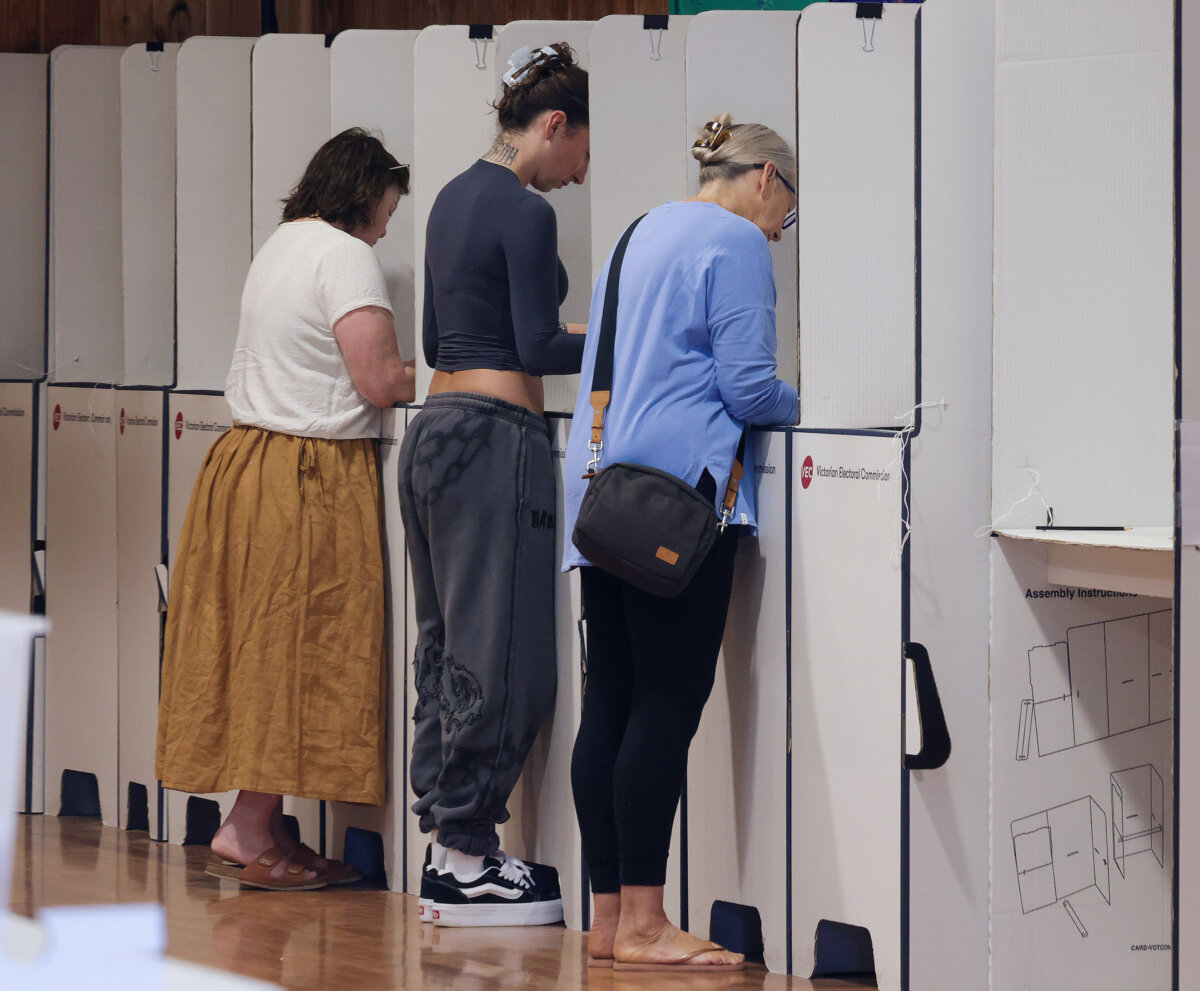
Saturday’s by-election was triggered by the sudden resignation of Victorian Liberal Deputy Leader Sam Groth, with the party holding the seat since its inception for all but four years when it fell to Labor.
Marsh was forced to admit he did not live in the electorate so couldn’t vote for himself on May 2, but said he had been mayor in the area three times over the past five years.
Hercus told reporters it was a tight race with a mixed response from voters fed up with empty promises.
“We’ve had a few Liberal voters come over to us for frustrations they’ve been feeling with their own party,” he said.
One Nation Leader Pauline Hanson campaigned alongside Hercus but was absent on polling day.
Ahead of the count, Hutchison told reporters a lot of voters were looking for an alternative as the area had been overlooked and let down by the major parties for decades.
“I am putting myself forward as someone who is of this place, who cares deeply about this place,” she said.
The strong One Nation showing is reflective of consistent poll results as well as the recent South Australian election result.
It could also bode poorly for the Liberals in the Victorian state election, senior politics lecturer at Monash University Benjamin Moffitt said.
“If they even do somewhat well in Nepean, that’s a real problem for the Liberal Party,” Moffitt said.
The electorate takes in the wealthy postcodes of Sorrento, Portsea and Flinders, and low socio-economic areas such as Capel Sound, formerly known as Rosebud West.
The Mornington Peninsula is officially part of metropolitan Melbourne, but does not have comparable services, with public transport and a planned revamp of Rosebud Hospital among key issues for locals.
Pollster Kos Samaras said Nepean was never a battlefield for One Nation.
“You’re dealing with a population that is older, more settled, asset-heavy, and plugged into a coastal economy, tourism, small business, retirees, lifestyle voters,” he wrote on X.
“It’s not the outer-metro mortgage belt, and it’s not the regional stressed towns where One Nation’s message bites hardest.”
By Duncan Murray, Callum Godde and Lloyd Jones in Melbourne
 Friends Read Free
Copy
Facebook
Tweet
Friends Read Free
Copy
Facebook
Tweet