
Australia has signalled strong support for keeping the Strait of Hormuz open, but remains cautious about committing to any direct role as tensions in the Middle East continue to escalate.
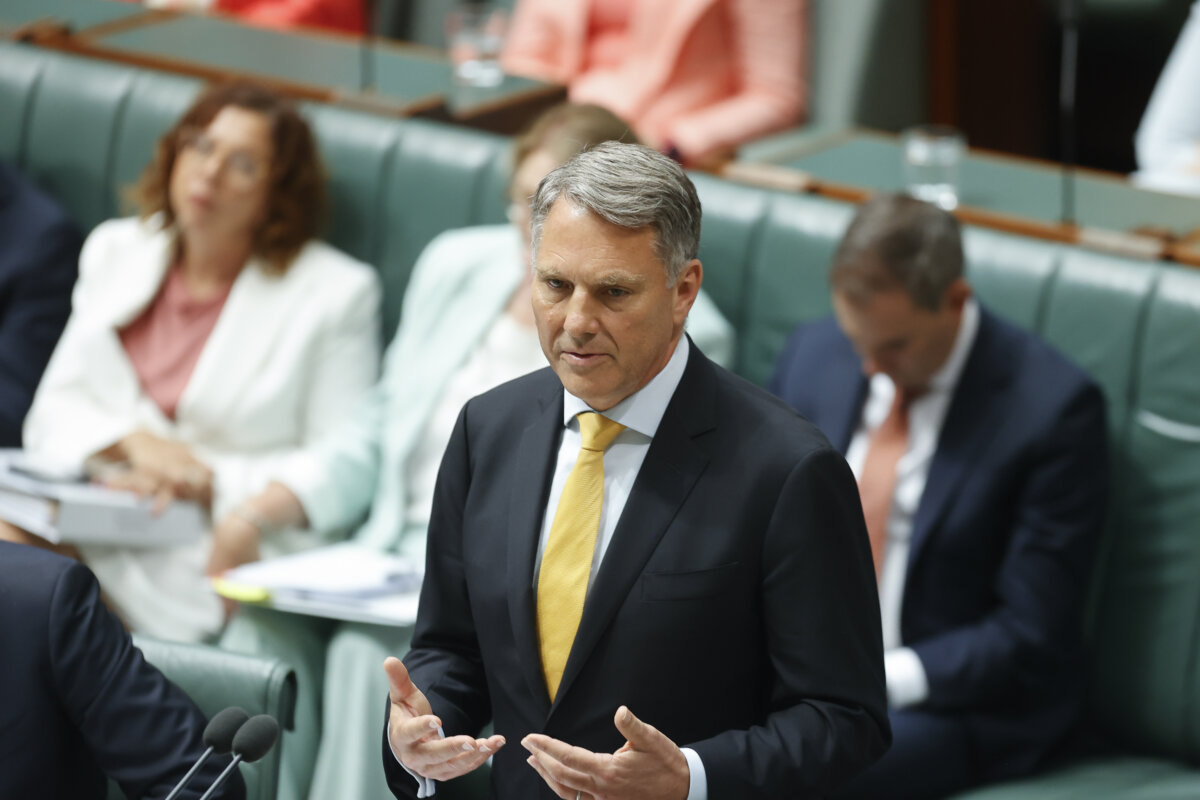
On April 14, Defence Minister Richard Marles said the government was closely engaged with international partners on maintaining the critical shipping route, while stopping short of outlining any immediate operational involvement.
“We are working with all of our partners around efforts that are being taken forward in respect of the straits of Hormuz and how Australia can best contribute,” he told ABC Radio.
Marles also stressed Australia’s position would depend on how the fragile ceasefire develops, reiterating that any contribution is contingent on a more stable outcome.
“All of those [efforts] are predicated on when conditions allow that to occur. And right now that is very uncertain, and we really need to see what plays out throughout the remainder of the ceasefire and as to what the circumstances are in the Strait of Hormuz which would allow some effort to begin,” he said.
The caution comes as the United States has moved to tighten pressure on Iran, enforcing a blockade on Iranian ports in the Strait of Hormuz after negotiations failed to produce an agreement.
The waterway has become a focal point in the conflict, with Iran using it as leverage in its broader confrontation with the United States and Israel, raising concerns about disruptions to global oil supply.
Australia Joins Global Push for Shipping Security
Meanwhile, Canberra is set to take part in a multinational effort to coordinate the protection of commercial shipping through the strait, alongside more than 40 other countries.
A senior Australian representative—either a military official or diplomat—will attend talks convened by the UK and France later this week.
British Prime Minister Keir Starmer said the discussions would focus on a “multinational plan to safeguard international shipping when the conflict ends.”
Defence Industry Minister Pat Conroy said Australia’s participation was still being finalised but emphasised the importance of diplomatic efforts.
“The key thing is there’s a coalition of nations that are really keen to see a diplomatic resolution of the conflict and for the Strait to be reopened via diplomatic means so that we can get ships moving through this vital waterway,” he told ABC Radio.
The Albanese government has consistently ruled out offensive military involvement, positioning Australia as a supporting partner focused on stability rather than direct engagement.
That stance was reinforced earlier this year when Foreign Minister Penny Wong said Australia would not send ground troops to Iran.
Instead, Australia’s contribution has centred on defensive support, including the deployment of a Royal Australian Air Force E-7A Wedgetail surveillance aircraft to assist the United Arab Emirates in protecting its airspace following Iranian attacks.
 Friends Read Free
Copy
Facebook
Tweet
Friends Read Free
Copy
Facebook
Tweet