Israeli Prime Minister Benjamin Netanyahu has condemned the act of an Israeli soldier after a photograph circulated on social media showed him using a sledgehammer to smash a statue of Jesus on the cross in southern Lebanon.
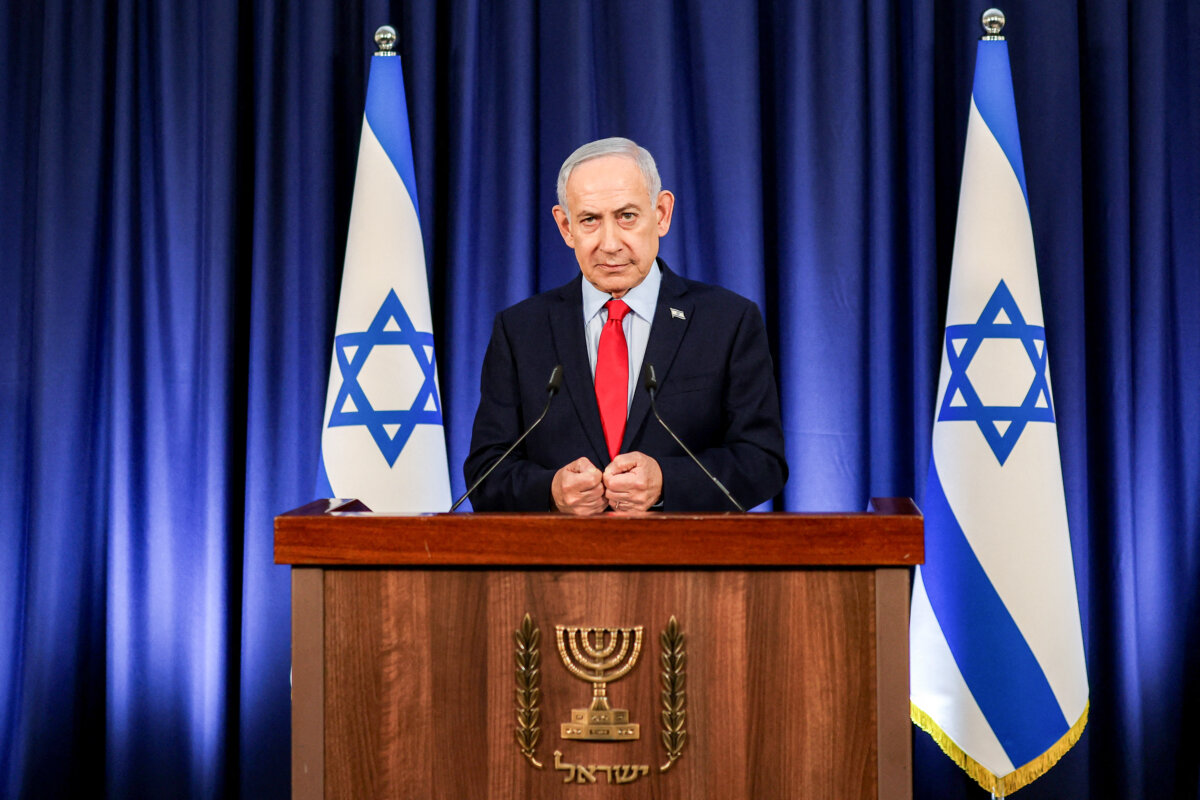
“We express regret for the incident and for any hurt this has caused to believers in Lebanon and around the world,” Netanyahu said in an April 20 post on X.
Netanyahu said he was “stunned and saddened” to learn that an Israel Defense Forces (IDF) soldier had damaged the Catholic religious icon in southern Lebanon.
“I condemn the act in the strongest terms,” he said, promising that the military authorities are conducting a criminal investigation and would take “appropriately harsh disciplinary action” against the offender.
The IDF confirmed on April 19 that the photo was authentic and pledged a full investigation by the army’s Northern Command.
“Following the completion of an initial examination regarding a photograph published earlier today of an IDF soldier harming a Christian symbol, it was determined that the photograph depicts an IDF soldier operating in southern Lebanon,” the IDF said in a post on X.
“The IDF views the incident with great severity and emphasizes that the soldier’s conduct is wholly inconsistent with the values expected of its troops.”
Earlier, Israeli Foreign Minister Gideon Saar apologized and said that the “damaging of a Christian religious symbol by an IDF soldier in southern Lebanon is grave and disgraceful.”
“I’m confident that the necessary strict measures will be taken against whoever carried out this ugly act,” he said. “We apologize for this incident and to every Christian whose feelings were hurt,” he added.
Reuters verified the location of the image as Debel, one of the few villages in southern Lebanon where residents remained through an Israeli military campaign against the Iranian-backed Hezbollah terrorist group that began on March 2 after the group fired rockets at Israel in support of Iran.

Although southern Lebanon is populated predominantly by Shia Muslims, there are thousands of Christians living in villages such as Debel, where the statue is believed to have been desecrated.
Israel and Lebanon agreed to a U.S.-brokered ceasefire on April 16, intended to halt fighting between Israel and Hezbollah.
On April 17, Netanyahu said he had agreed to the 10-day ceasefire to advance peace efforts with Lebanon, but he said the IDF would not withdraw from Lebanese territory.
In an April 19 post on X, the Israeli military also published, for the first time, a map of its “forward defense line,” which shows dozens of Lebanese villages as under its control.
IDF spokesman Avichay Adraee told residents in southern Lebanon on April 20 not to return home despite the ceasefire.
“During the ceasefire period, the Israel Defense Forces continue to maintain their positions in southern Lebanon in the face of ongoing terrorist activities by the Hezbollah organization,” Adraee said.
“For the sake of your safety and the safety of your families, and until further notice, you are required not to move south of the following villages and their surroundings: Beit Siyad Farm, Majdal Zun, Zabqin, Yatar, Sarbin, Hula, Beit Yahun, Shaqra, Majdal Salm, Qabriqa, Farun, Zutr al-Gharbiyya, Yahmar al-Shaqif, Arnun, Deir Mimas, Marjayoun, Abbel al-Saqi, Al-Mari, Kfar Shouba, Ain Qana, Ain Atta.”
He also said that people are not permitted to approach the Litani River area, Wadi Salhani, or Salouqi.
Last month, Israeli Defense Minister Israel Katz said thousands of homes along the Israeli border would be demolished.
“At the end of the operation, the IDF will establish a security zone inside Lebanon—a line of defence against anti-tank missiles—and will maintain security control over the entire area up to the Litani River, including the remaining Litani bridges,” he said in a March 31 statement.
The Associated Press and Reuters contributed to this report.
 Friends Read Free
Copy
Facebook
Tweet
Friends Read Free
Copy
Facebook
Tweet