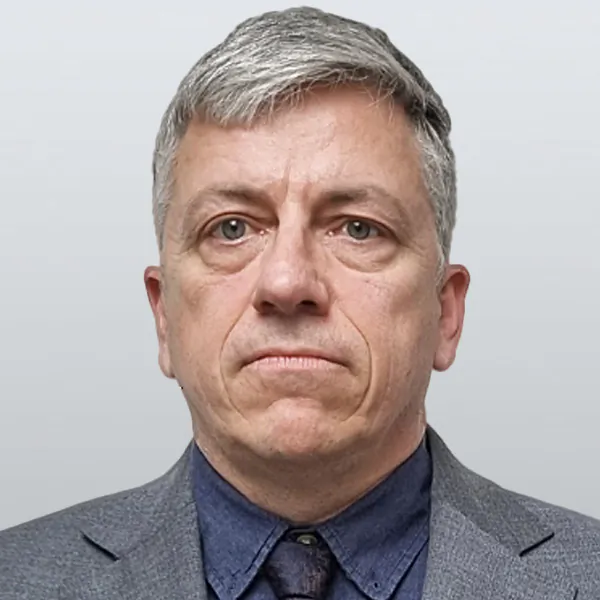
Israeli Prime Minister Benjamin Netanyahu has directed the Israeli military to take more territory in the Gaza Strip and has pledged to deal with the “remnants” of the Hamas terrorist group.
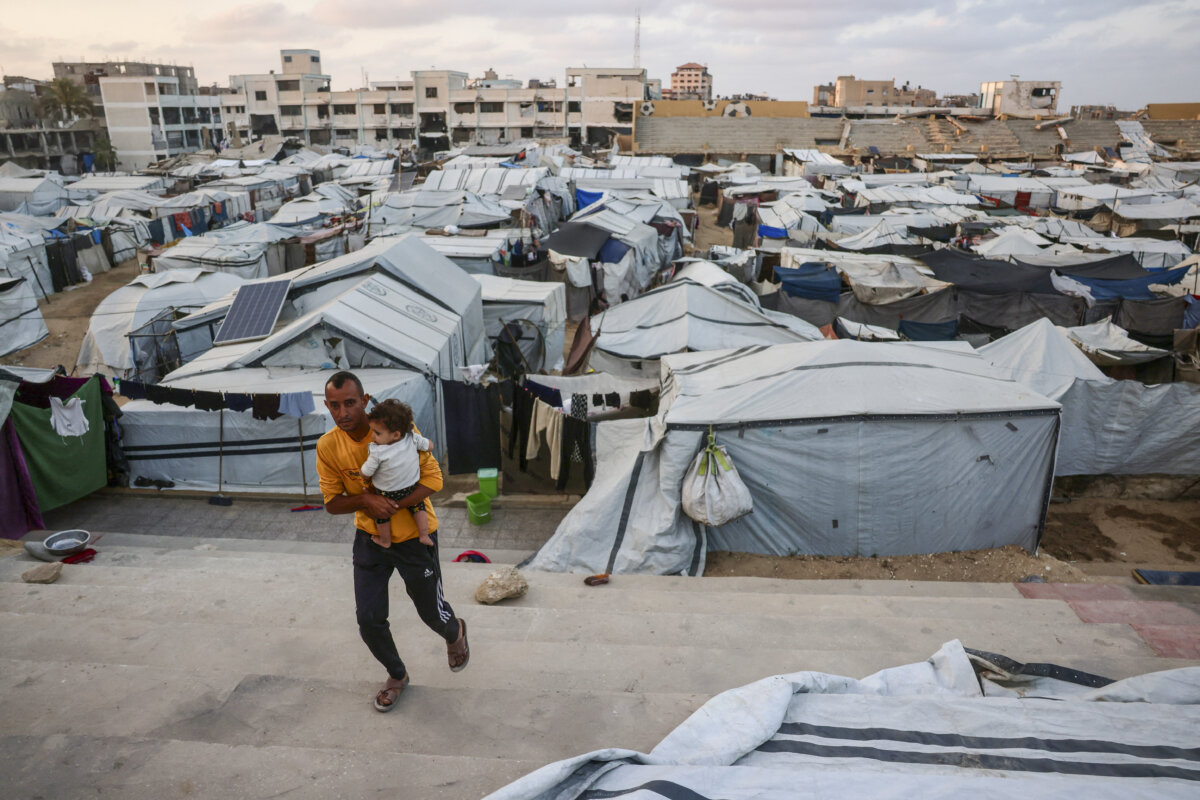
Israel effectively controls 64 percent of Gaza—which is home to 2.4 million Palestinians—after a military offensive that followed the Oct. 7, 2023, terrorist attacks by Hamas, which killed 1,200 Israelis.
Netanyahu, speaking at a conference in a settlement in the occupied West Bank, said on May 28 that he planned to increase Israeli control to 70 percent of the territory, and may go further.
“We were at 50 [percent], we moved to 60. My directive is to move to, let’s go step by step, first of all, 70. Let’s start with that.” Netanyahu said.
“We’re pressing them from all sides. We’ll deal with the remnants,” he said, in a reference to Hamas.
On May 27, the Israeli military said it killed Mohammad Odeh, Hamas’s newly appointed military chief, in an airstrike in Gaza. Odeh was appointed after his predecessor, Izz al-Din al-Haddad, was killed by Israel on May 15.
Under a U.S.-brokered ceasefire agreed last October, the Israel Defense Forces (IDF) were meant to withdraw to a Yellow Line demarcating the extent of their control.
Yellow Line, Orange Line
The Yellow Line put the IDF in control of 53 percent of Gaza, with Hamas effectively ruling the remainder.
But in March, the IDF published a map that suggested it controlled 64 percent of Gaza, up to a so-called Orange Line.
Netanyahu has described the territory the IDF has seized in Gaza, southern Lebanon, and in the Mount Hermon of Syria, as buffer zones that can protect Israel proper from terrorist attacks like the one mounted in 2023, when Hamas terrorists crossed the border in paragliders and vehicles.
The first phase of the ceasefire specified that all hostages, alive and dead, were to be released in exchange for Palestinian prisoners held in Israel. The final live hostages were handed over in October 2025, and the remains of the last dead hostage, Ran Gvili, a police officer, were given to Israel in January.
Further talks were then due to take place to decide on the remaining issues between Israel and Hamas.
But there have been further Israeli air strikes in Gaza over the last few months, although the ceasefire itself remains in place.
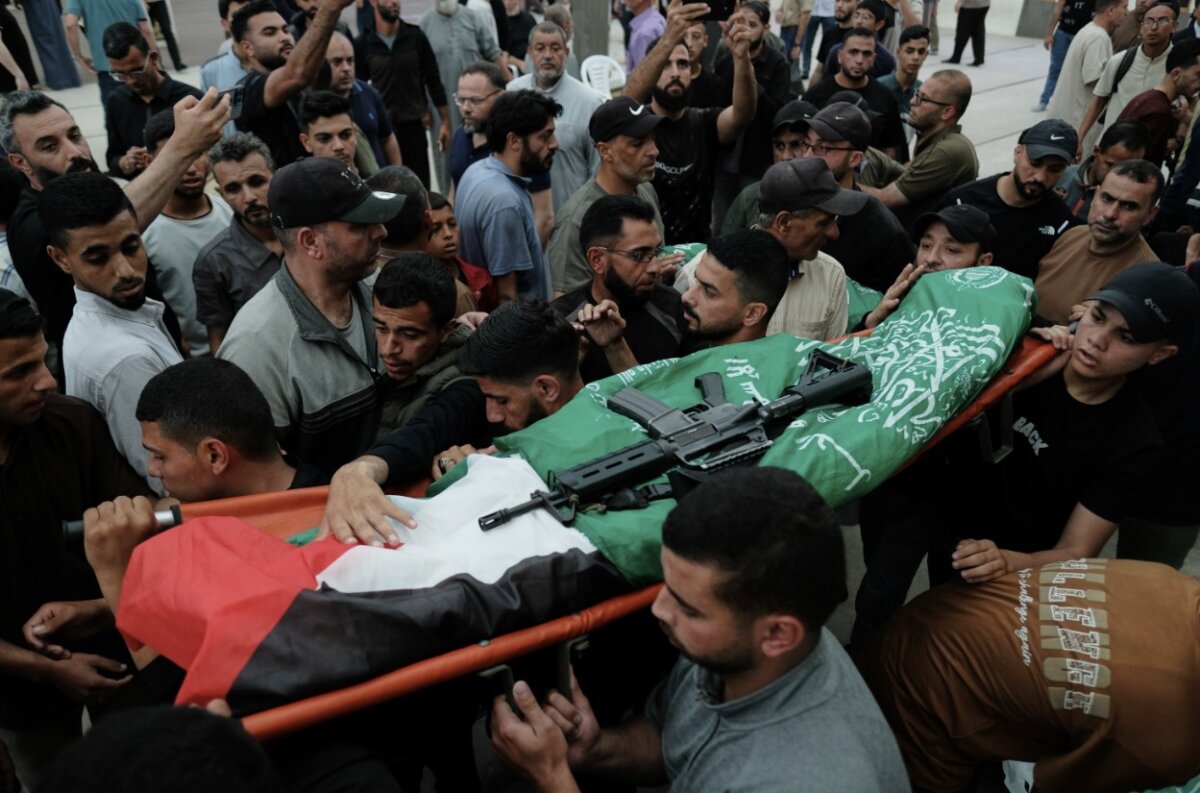
The Hamas-run Gaza Health Ministry said on May 26 that 906 people had been killed and 2,747 wounded since the ceasefire began on Oct. 11, 2025. The ministry said the overall death toll in Gaza since Oct. 7, 2023, was 72,803, with 172,855 wounded.
On May 27, commenting on the assassination of Odeh, Israeli Defense Minister Israel Katz posted on X, “We committed to eliminating everyone who led the October 7 massacre, and so it shall be: they are all sentenced to death, wherever they may be.”
‘Voluntary Emigration Plan’ for Gaza
“We committed that Hamas will not rule Gaza civilly or militarily, and so it shall be, and also the voluntary emigration plan from Gaza will be implemented—everything at the right timing and in the right manner,” he added.
In January, U.S. President Donald Trump announced the formation of a Board of Peace, a mechanism designed to oversee security, governance, and reconstruction in Gaza following the ceasefire.
The Board of Peace held its first meeting in February, but it has not met since. The Financial Times reported this week that, despite world leaders pledging $17 billion toward the rebuilding of Gaza, no money has actually been deposited in the BoP fund.
In February 2025, Trump suggested redeveloping Gaza as the “Riviera of the Middle East.”
In response to a reporter’s question on future plans for Gaza, Trump said that Palestinians would be able to live there, as would Jews, Arabs, and others from the Middle East.
“This is for everybody,” he said.
Egypt and Jordan have previously objected to taking in more Palestinian refugees in order to “clean out” Gaza completely and ensure peace in the region.
Reuters contributed to this report.
 Friends Read Free
Copy
Facebook
Tweet
Friends Read Free
Copy
Facebook
Tweet