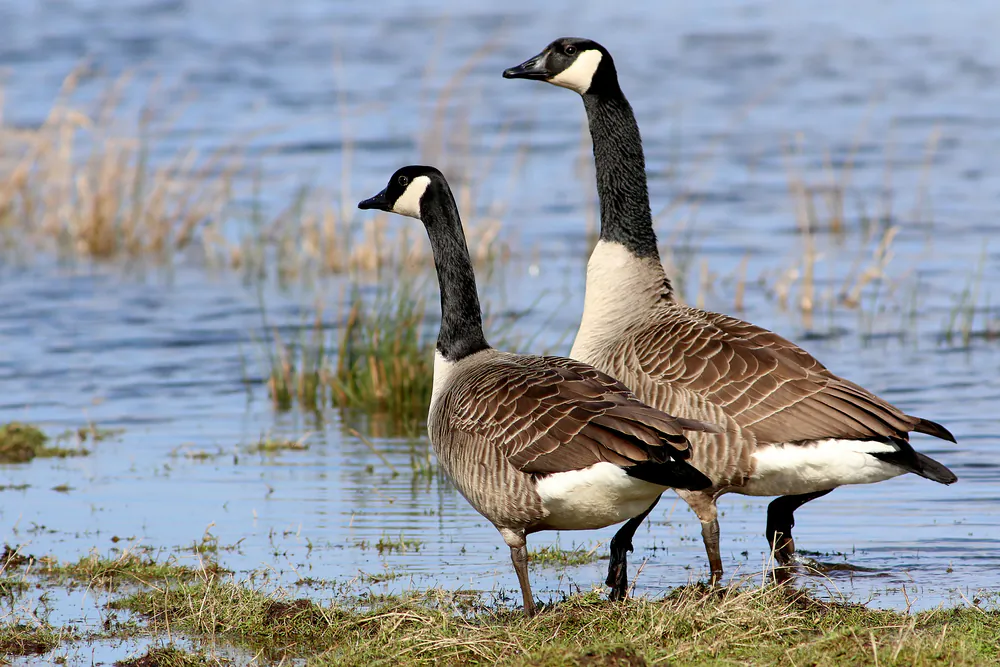

An Ontario man has been fined $1,000 after pleading guilty to charges of harassing and trying to harm Canada geese last year.
Essex, Ont., resident Joseph Brugge pleaded guilty in a Windsor, Ont., court earlier this year to capturing, harassing, and attempting to injure Canada geese, which are protected migratory birds, the Ontario Ministry of Natural Resources (MNR) said in a recent bulletin.
A conservation officer, “with help from the public,” determined Brugge was at the Belle River Marina on the shores of Lake St. Clair near the Ontario-Michigan border, where he captured a Canada goose gosling and tried to harm adult geese by throwing large rocks and “swatting at them with his hands,” the MNR said.
Provincial conservation officers collaborated with the Ontario Provincial Police in the investigation into Brugge’s alleged harassment of the birds last May.
Justice of the Peace David M. Horton heard the case on Feb. 2 in the Ontario Court of Justice in Windsor where Brugge pleaded guilty to the charges under the federal Migratory Birds Convention Act.
The $1,000 fine will go to Ducks Unlimited Canada, to help with the management, enhancement, or protection of migratory bird habitats in the area where the offence occurred.
Migratory birds, including Canada geese, are federally protected by the 1994 Migratory Bird Convention Act and the Migratory Birds Regulations of 2022. It is illegal to kill, disturb, or destroy migratory birds or their eggs without a permit.
“Canada geese are federally protected migratory birds, and the public is not permitted to catch them with their hands or attempt to injure them,” the ministry added.
Fines under Canadian law for harming protected birds can start at $400 per bird for summary offences and reach up to $300,000 for serious indictable offences.
Fines for second or subsequent offences can range from $10,000 to $600,000.
More serious violations, such as illegal commercial hunting or intentional destruction of nesting colonies, come with higher penalties. Convicted individuals can face fines of up to $1 million and imprisonment of three to five years, depending on the section of the act that has been violated.
 Friends Read Free
Copy
Facebook
Tweet
Friends Read Free
Copy
Facebook
Tweet