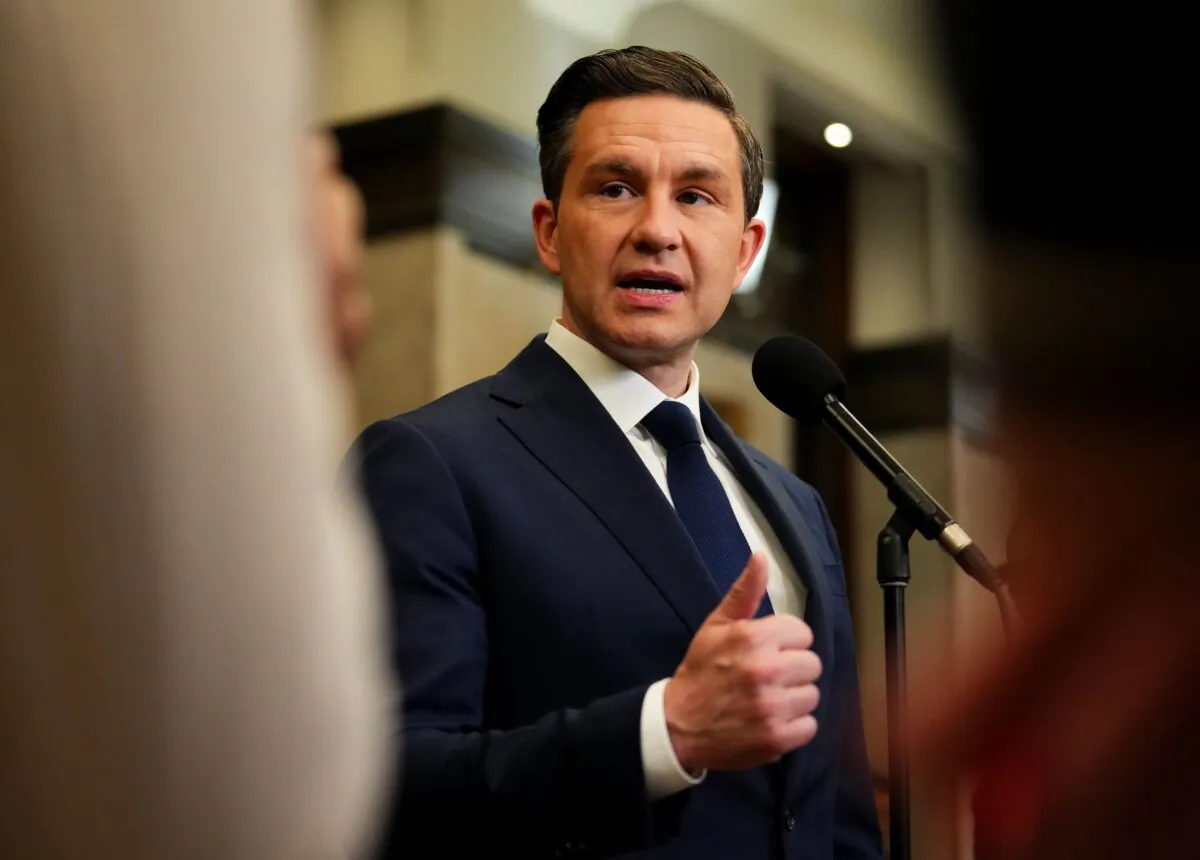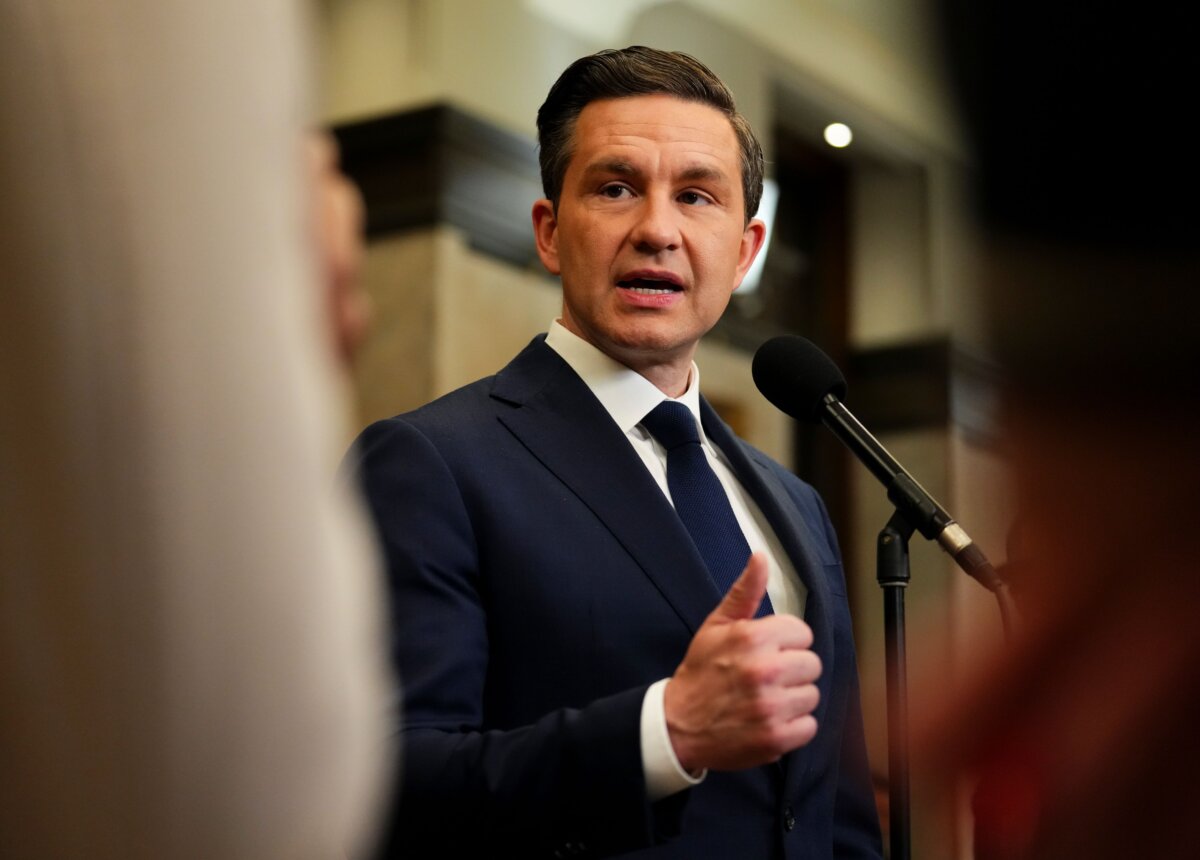

Conservative Leader Pierre Poilievre made his case for a closer alliance between the Commonwealth nations of Canada, Australia, New Zealand, and the United Kingdom (CANZUK) during a speech in London.
The Conservative leader told the audience at an event organized by the Centre for Policy Studies that such a pact would build on security and freedom by “bringing together the long-standing ties” that have united Anglo-nations in the past.
He said that a CANZUK alliance would remove trade barriers between the four countries, expand skilled labour mobility, and strengthen military ties.
“When the treaties and agreements that allow us to trade freely face upheaval, we need to double down and deepen our ties with our old and most trusted friends. Instead of shrinking markets behind tariffs, we should expand opportunities among friends,” Poilievre told the audience on March 3.
Poilievre said while the countries already have a free trade arrangement through the Comprehensive and Progressive Agreement for Trans-Pacific Partnership (CPTPP), they “must go further, because tariffs are not the only, or even the biggest, barrier to our trade.” During the process to expand a previous trade agreement to include 12 countries on the Pacific Rim, U.S. President Donald Trump announced in 2017 that the United States was withdrawing from the partnership, and the remaining countries formed the CPTPP.
The Tory leader said trade between the four nations is slowed by regulations, product proof of licensing, and rules around procurement. As an example, Poileivre said Canadian beef cannot be sold in certain areas of the U.K. because of regulatory obstacles.
Poilievre said if he formed government, he would implement the automatic recognition of certifications for products, and professional certifications for doctors, nurses, and engineers between CANZUK countries. “If you’re capable of doing a heart surgery in London, England, surely you can do one in London, Ontario,” he said.
Polievre also said the mobility of skilled workers should be increased between the four countries so that “our youth can travel and work between these different countries, filling shortages, boosting economic growth at home and abroad.”
Poilievre also proposed a strategic energy and mineral reserve which he said could be made available in the event of a war to countries that have agreed to provide tariff-free access to Canadian products. “We have 10 of the 12 NATO defence critical minerals, and we want them to be available on the side of freedom in the event they are needed,” he said.
Poilievre also said Canada should make liquefied natural gas (LNG) and nuclear energy deals with the three countries, which would ensure that the U.K.’s energy comes from Canada and “not from Qatar, not from Russia, and not from any other unstable or hostile supplier.”
The conflict between the United States and Israel and Iran has led to the Strait of Hormuz, through which 20 percent of the world’s oil passes, being virtually closed. Several commercial tankers in the region have been hit since the war began, and an accompanying rise in shipping insurance rates has led to very few vessels attempting to cross the waterway.
In his speech, Poilievre added that with the death of Iranian leader Ayatollah Ali Khamenei, he hoped that Iran would “join the council of nations.”
Poilievre’s speech is part of a week-long trip abroad, where he has so far met with several British MPs and members of the U.K. business community. He will travel to Berlin, Germany, on March 4 to give another keynote speech on the transatlantic relationship and meet with German officials and business leaders.
Poilievre will also be touring an LNG facility on the North Sea coast on March 7. Poilievre has previously spoken about how the LNG facility was built in just 194 days, and has cited it as an example of how Canada should speed up the building of major projects. Poilievre will leave Berlin and return to Canada on March 8.
 Friends Read Free
Copy
Facebook
Tweet
Friends Read Free
Copy
Facebook
Tweet