
Two Quebec judges have spoken out in recent days, criticizing efforts by Crown prosecutors and defence lawyers to seek reduced sentences aimed at preserving the immigration status of foreign nationals.
Quebec Court Justice Antoine Piché was the latest judge to comment on the matter when he accused Montreal Crown prosecutors this week of “regularly” reducing standard sentences to prevent offenders from being deported.
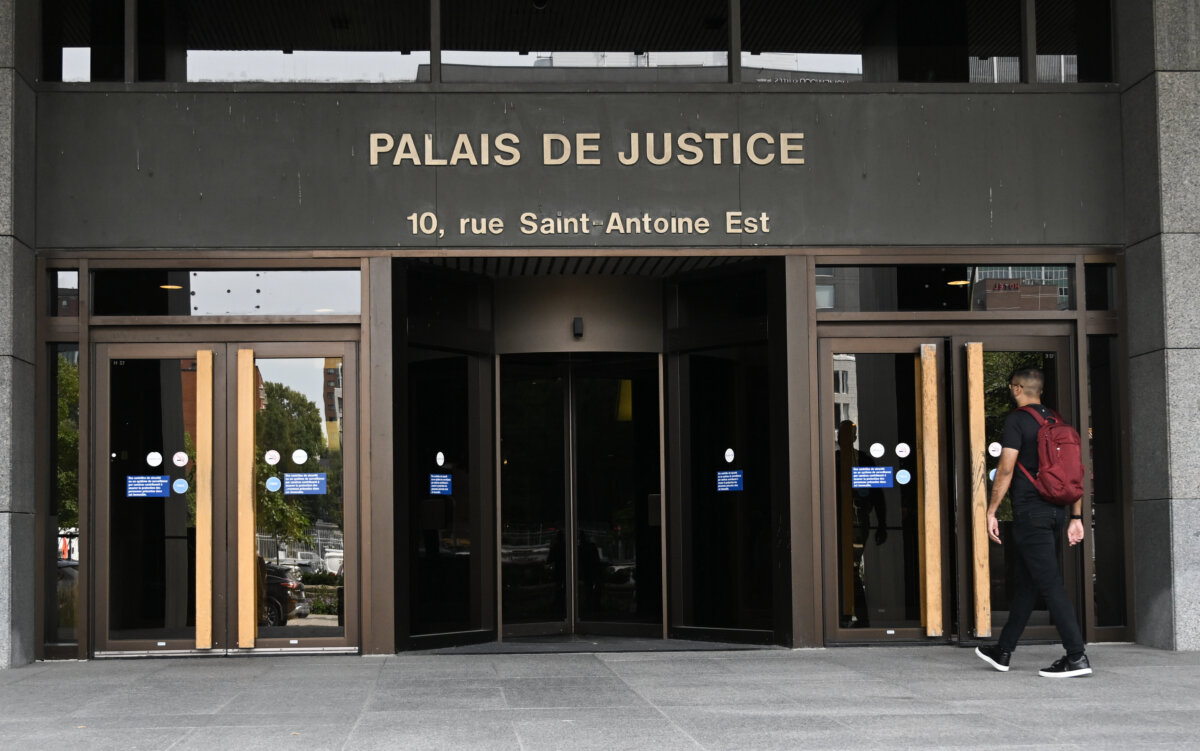
Piché broached the issue while delivering a decision at the Montreal courthouse on April 8 in the case of 23-year-old Guzman Bladimir-Castillo, who stole an SUV in 2024 and fled from police at speeds exceeding 200 kilometres per hour.
The Crown recommended six months less one day in jail, due in particular to the impact of the sentence on Bladimir-Castillo’s immigration status. Non-Canadian citizens sentenced to more than six months are typically subject to an inadmissibility order for “serious criminality” and have no right of appeal, according to the Immigration and Refugee Protection Act.
Piché said the sentence should have been between 12 and 21 months, particularly because Bladimir-Castillo posed “a risk” of reoffending.
“The court cannot help but fear that the artificial creation of a separate sentencing regime for non-citizens and the circumvention of the legislator’s intent exacerbate pre-existing social tensions and could be misused,” the judge said.
A 10-page ruling by Piché criticized the Director of Criminal and Penal Prosecutions (DPCP), citing its “widespread” practice in the Montreal district of consistently reducing sentences to evade the true intent of immigration law. The judge said he did not believe the DPCP developed the practice to cause harm, but had likely misinterpreted case law.
The law Piché referred to is R. v. Pham, a landmark Supreme Court of Canada decision in 2013, which established that collateral immigration consequences are a relevant factor to consider when sentencing a non-citizen.
The court ruling said that while immigration consequences are not formal mitigating or aggravating factors, they are part of the personal circumstances of the offender and can be considered during sentencing. It emphasized that a reduced sentence for immigration purposes must still be proportionate to the gravity of the offence and the degree of responsibility of the offender.
Piché, who is a former prosecutor with the DPCP in Montreal, clarified in his decision that the risk of deportation isn’t considered a mitigating factor by the higher courts, and should not result in a different set of rules than those that apply to Canadian citizens.
Conservative MP Pierre Paul-Hus, who represents a riding in the northern part of Quebec City, applauded Piché’s commentary.
“I support the judge 100%,” he wrote in an April 10 X post. “You’re not at home. You commit a crime, you have to serve your sentence and be deported. That’s it.”
Piché’s comments build on those of fellow provincial court Judge Dennis Galiatsatos who made similar remarks in one of his rulings last month.
He commented extensively on immigration status not interfering with proper sentencing in a March 23 decision dealing with the case of 46-year-old Raed Ahmad Sariss, a United Arab Emirates national who arrived in Canada in 2018.
Sariss, a married man of Pakistani heritage, wanted to make his 22-year-old girlfriend his second wife under Sharia Law and embarked on “an intense campaign” of harassment for six months after she broke up with him, Galiatsatos wrote in his decision.
He pleaded guilty to criminally harassing her and to breaching the terms of his release after again going to the victim’s home after his initial arrest.
His attorney requested a conditional discharge, which would prevent a conviction or a criminal record if the defendant met the terms of the sentence. It would also help prevent deportation or other consequences related to the offender’s immigration status.
The judge called the suggestion “inappropriate” and instead sentenced Sariss to 75 days in jail.
“Even if his immigration predicament will be aggravated by a conviction, this factor cannot dominate this sentencing,” Galiatsatos said.
“A short and sharp sentence of imprisonment in a custodial setting is warranted in order to impress upon the accused and other like-minded men that stalking of this nature is no trivial matter.”
Proposed Law Change
The federal Conservatives announced plans last fall to introduce legislation to amend the Criminal Code to address the issue of what they called two-tier sentencing.
Tory MP Michelle Rempel Garner tabled a private member’s bill, C-220, that would prohibit judges from taking into account the impact a sentence would have on an offender’s immigration status. She said Canadians and foreign nationals should not be sentenced differently.
Rempel Garner cited several examples of non-citizens receiving lighter sentences because of their immigration status, including one in which a permanent resident received a conditional sentence after being convicted of trying to purchase sexual services from a 15-year-old.
“It should be a stated policy of our system to get criminals out of Canada,” Conservative Leader Pierre Poilievre said last December, while speaking in favour of Bill C-220. He said a person’s immigration status should not be a factor in how the justice system responds.
“If someone is not a citizen, not a Canadian, and commits a crime, then they should be shown the door,” he said.
The bill was defeated at second reading on March 25 in the House of Commons with 171 votes against and 158 in favour.
The Liberals opposed the bill, saying it undermined judicial independence and was unnecessary because serious criminals are already deported under existing laws.
 Friends Read Free
Copy
Facebook
Tweet
Friends Read Free
Copy
Facebook
Tweet