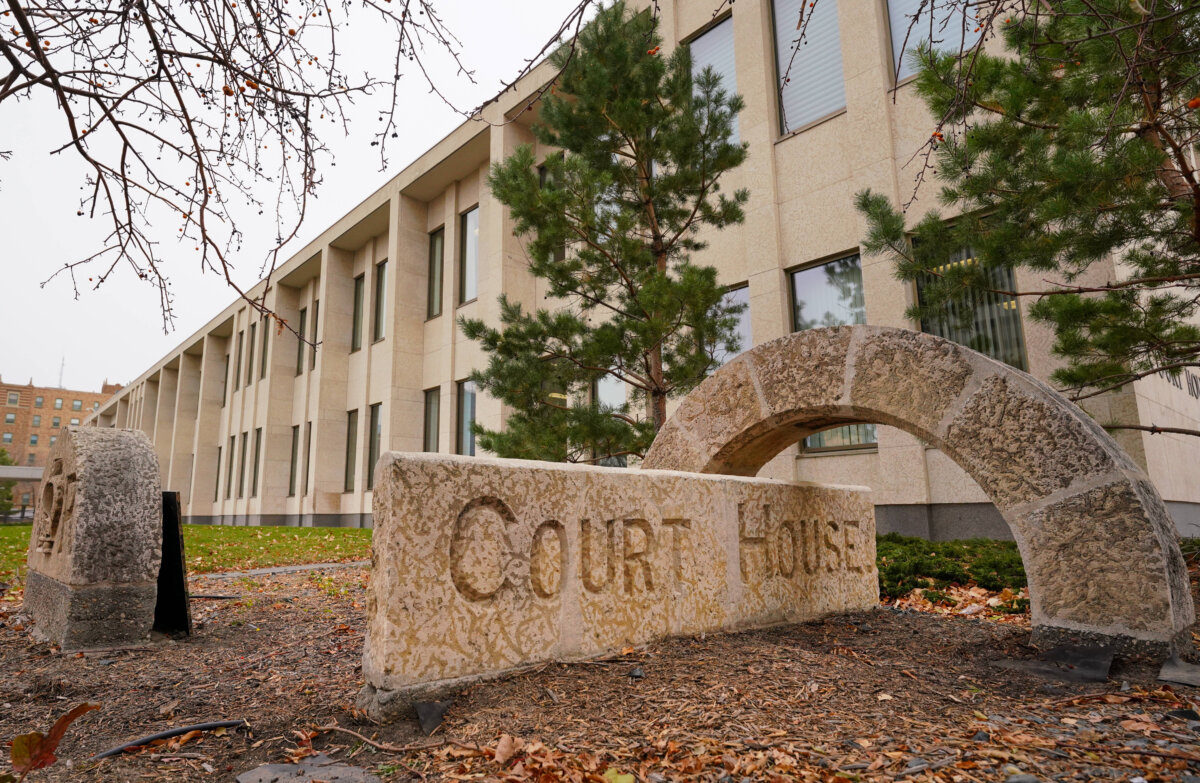
Saskatchewan’s Court of Appeal has ruled that a legal challenge to the province’s pronoun policy may proceed, finding that the government’s use of the notwithstanding clause does not prevent the court from assessing whether the law limits charter rights.
Chief Justice Robert W. Leurer concluded in an Aug. 11 ruling that the Court of King’s Bench has the jurisdiction to evaluate whether the province’s pronoun law infringes on students’ Charter rights despite the province’s use of Section 33 of the Charter of Rights and Freedoms, the notwithstanding clause. The pronoun law requires schools to have parental consent before students under 16 years of age can change their names or pronouns.
The decision says that while the notwithstanding clause enables a law to “operate regardless of whether it unreasonably limits a specified Charter right or freedom,” it doesn’t mean the law in question “does not limit the referenced Charter right or freedom … nor does it nullify the jurisdiction of the Court of King’s Bench to issue a declaration to that effect.”
The latest ruling stems from an appeal filed by the provincial government against a Feb. 16, 2024, decision that allowed a legal challenge by LGBT support group UR Pride to proceed, despite the government’s use of the notwithstanding clause in its pronoun law.
That decision also allowed UR Pride to amend its originating application, and rejected two motions brought by the government to have the advocacy group’s actions stayed or dismissed.
UR Pride is seeking declaration from the court that the pronoun law limits the rights of “gender diverse” students under sections 7, 12 and 15 of the Charter, which relate to the right to life, liberty, and security of the person; the right not to be subjected to any cruel and unusual treatment or punishment; and equality rights, respectively.
In its appeal, the government argued the use of the notwithstanding clause nullifies the jurisdiction of the Court of King’s Bench to rule on whether the pronoun law limits Charter rights. It also opposed the approval of the advocacy group’s amendment to its originating application, arguing it amounted to an “abuse of process”—an argument the court dismissed.
The Aug. 11 decision largely dismissed the province’s appeal, saying the advocacy group’s litigation may proceed but that part of its application seeking to have the pronoun policy declared unconstitutional must be struck due to mootness, as the pronoun policy was revoked.
The province revoked the pronoun policy and introduced related legislation under the notwithstanding clause after a court granted an injunction against the policy on Sept. 28, 2023, in response to a legal challenge by UR Pride.
“The revocation of the Policy, coupled with the absence of any allegation or evidence that any person has suffered harm because of it, renders the challenge to the Policy moot,” wrote Justice Leurer, adding he agrees with the province on this aspect.
Justices Georgina Jackson, Lian Schwann, and Jerome Tholl concurred with Leurer’s decision. Meanwhile, Justice Neal W. Caldwell wrote in dissent, saying the province’s appeal should be allowed.
Egale Canada, which served as legal counsel to UR Pride, welcomed the Aug. 11 ruling.
“The Court of Appeal’s decision upholds the rule of law in Canada and, in particular, reinforces the critical role of the courts in determining the constitutionality of government action,” the organization said in an Aug. 11 press release.
The group argues the pronoun law would cause “irreparable harm to vulnerable young people in Saskatchewan” by preventing recognition of their gender identity at school.
The Saskatchewan government did not respond to a request for comment by publication time.
Saskatchewan Premier Scott Moe has said the legislation is aimed at ensuring parental rights are protected.
“The default position should never be to keep a child’s information from their parents,” Moe wrote on social media in September 2023, following the announcement of the court injunction.
“It is in the best interest of children to ensure parents are included in their children’s education, in their classrooms, and in all important decisions involving their children.”
 Friends Read Free
Copy
Facebook
Tweet
Friends Read Free
Copy
Facebook
Tweet