
Saskatchewan’s government is asking Canada’s highest court to expedite its appeal of a ruling that permits a legal challenge to the province’s school “pronoun policy” to proceed. The province is calling the case a matter of national importance.
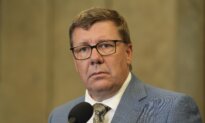
Premier Scott Moe’s government introduced a policy in 2023, requiring schools to seek parental consent if a student younger than 16 wanted to change his or her name or pronouns.
The province introduced legislation that enshrined the policy into law, and used the notwithstanding clause to protect it from legal challenges.
The Saskatchewan Court of Appeal ruled last month that a challenge of the law by LGBT advocacy group UR Pride can continue despite the province’s use of the clause, which can be used by governments to override certain Charter rights for five years.
UR Pride has said the provincial pronoun policy violates the Charter rights of “gender diverse” students, especially the right to life, liberty, and security of the person, the right not to be subjected to any cruel and unusual treatment or punishment, and equality rights.
The province has applied to the Supreme Court of Canada, saying the case raises questions over whether courts can make declarations about laws limiting Charter rights when the notwithstanding clause has been invoked.
Saskatchewan is asking the court to expedite the process, allowing its case to be heard alongside a challenge to a Quebec law that prohibits religious symbols to be worn by public sector workers. Quebec also invoked the notwithstanding clause for its legislation.
Lawyers for UR Pride sent a letter to the Supreme Court saying they also intend to seek a leave to appeal. The letter said they wanted the case to be heard alongside the Quebec challenge.
Chief Justice Robert W. Leurer wrote in an Aug. 11 ruling that the Court of King’s Bench has the jurisdiction to evaluate whether the province’s pronoun law infringes on students’ Charter rights despite the province’s use of the notwithstanding clause.
The court decision said that while the notwithstanding clause enables a law to “operate regardless of whether it unreasonably limits a specified Charter right or freedom,” it doesn’t mean the law in question “does not limit the referenced Charter right or freedom.”
The ruling says that the court can issue a declaratory statement on whether the law violates constitutional rights, even though it would not strike down the legislation.
Alberta Prepares to Invoke Notwithstanding Clause
Neighbouring Alberta also appears poised to use the notwithstanding clause to protect its own legislation on gender issues.
Premier Danielle Smith introduced three pieces of legislation last year, including one that limits gender transition procedures for youth, regulations for transgender athletes in female sports, and parental rights in schools.
A memo obtained by The Canadian Press said Smith’s office has directed officials to prepare legislation to invoke the notwithstanding clause on its gender laws for minors. The laws are facing legal challenges by transgender activist groups Egale Canada and the Skipping Stone Foundation.
The groups say the province is “weaponizing” the clause to “push through harmful legislation.” The groups argue that the laws “undermine constitutional protections in health care, education, and sport” and strip away “fundamental rights of Albertans, particularly youth.”
The Canadian Medical Association and three Alberta doctors have also filed Charter challenges to the legislation that prohibits gender transition procedures for youth, saying the law violates a physician’s freedom of conscience.
Department officials are expected to bring the proposal before cabinet on Oct. 21, according to the memo.
Alberta’s justice department said the notwithstanding clause would be used to protect children’s safety and well-being.
Justice department spokesperson Heather Jenkins previously told The Epoch Times that the government “will continue to vigorously protect the safety and well being of children using all available legal and constitutional means,” including the notwithstanding clause.
Smith has previously said she would use the clause “as a last resort,” saying the legislation is in the best interest of children and ensures that “they’re prepared to live with the consequences” when making a decision “that is not reversible.”
Notwithstanding Clause Limitations
Federal Justice Minister Sean Fraser announced on Sept. 18 that he had asked the Supreme Court to limit the manner in which provincial governments can use the notwithstanding clause. He said he filed a factum that outlines the government’s “position on constitutional issues raised” by the use of the clause.
Fraser said the government was looking beyond immediate issues before the court to determine how governments invoke the clause “for years to come.”
Both Smith and Moe criticized the move.
Smith called the clause “integral” and an “unassailable provincial constitutional right.” She said the federal government’s move to limit the use of the clause was a risk to “national unity” and she called on Ottawa to immediately withdraw the appeal to the Supreme Court.
Moe also said his government “will strongly oppose” federal attempts to limit the provinces’ ability to use the notwithstanding clause, calling Ottawa’s move “a significant infringement on the autonomy of provinces and their elected legislatures.”
He said the clause was included in the constitution because “when there is a ‘collision of rights,’ the will of the duly elected legislature, not the courts, should prevail.”
Olivia Gomm, Carolina Avendano, and The Canadian Press contributed to this article.
 Friends Read Free
Copy
Facebook
Tweet
Friends Read Free
Copy
Facebook
Tweet