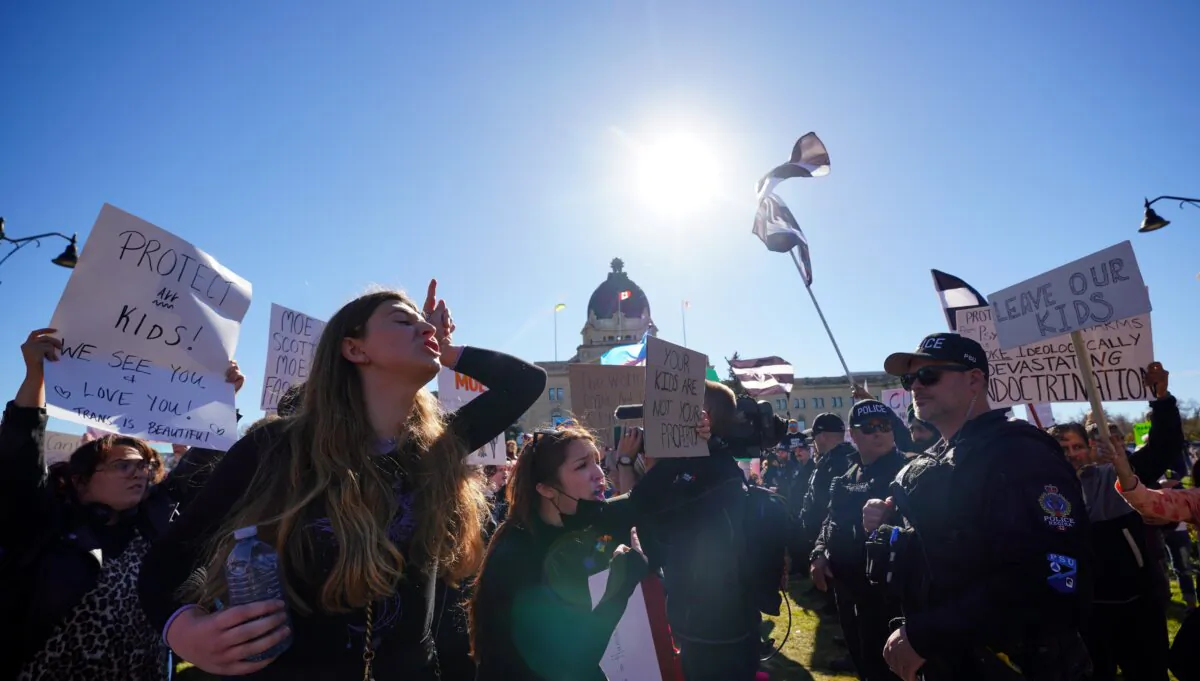

The Supreme Court of Canada says a legal challenge to Saskatchewan’s pronoun law can proceed.
Saskatchewan Premier Scott Moe’s government introduced the policy in August 2023, which requires schools to obtain parental consent if a student under 16 years old wants to change their name or pronouns. The policy was challenged by LGBT peer support group UR Pride.
Moe’s government later introduced legislation based on the policy in October 2023, invoking the notwithstanding clause to prevent legal challenges to the legislation.
Saskatchewan’s Court of Appeal ruled in August 2025 that UR Pride’s legal challenge could continue, saying the court can’t strike down the legislation due to the notwithstanding clause, but it can issue a judgment on whether it violates constitutional rights.
The group and the province both appealed, and asked the Supreme Court to expedite the case to be heard alongside a challenge of a Quebec law that prevents public sector workers from wearing religious symbols on the job. Quebec also invoked the notwithstanding clause for its legislation.
The court granted leave for the appeal on Nov. 6, but ruled that it would be heard separately from the Quebec challenge.
No date has been set for the court to hear cross-appeals from the province and UR Pride.
The Epoch Times reached out to the Saskatchewan Minister of Education and UR Pride for comment but did not receive a response by publication time.
UR Pride has argued the legislation limits the rights of “gender diverse” students, violating their Charter rights to life, liberty, and security of the person, the right not to be subjected to any cruel and unusual treatment or punishment, and equality rights.
The province has argued that the use of the notwithstanding clause nullifies the jurisdiction of the courts on whether the legislation limits Charter rights.
Saskatchewan Premier Scott Moe has said the legislation is aimed at ensuring parental rights are protected.
Saskatchewan’s Court of Appeal ruling said that the use of the notwithstanding clause does not prevent the court from determining whether the law limits Charter rights.
The provincial court said that while the notwithstanding clause permits a law to operate “regardless of whether it unreasonably limits a specified Charter right or freedom,” does not mean that the law does not limit Charter rights or freedoms or the court’s jurisdiction to issue a declaration to that effect.
Carolina Avendano and The Canadian Press contributed to this article.
 Friends Read Free
Copy
Facebook
Tweet
Friends Read Free
Copy
Facebook
Tweet